
Walk-In
Shower Screens
Melbourne
Custom walk in shower screens supplied and installed in Melbourne, including fixed panels, full height glass and half wall designs.
Fixed glass shower panels for open bathroom layouts
Walk-in shower screens are a simple way to create an open shower area without using a hinged door or sliding system.
Our walk in panels are part of our custom frameless shower screen range, with glass size, height and fittings selected to suit your bathroom.
Walk-in shower screens are commonly used in larger bathrooms, ensuites, wet room style bathrooms, half wall designs and renovations where a clean open entry is preferred over a standard hinged shower screen or sliding shower screen.
Planning a walk in shower? Send photos, plans or rough measurements for layout advice and a price. Request a quote or call 0422 494 143.
When a walk-in shower screen makes sense
Walk-in shower screens work best when the bathroom has enough room for an open entry layout. They keep the shower simple, easy to access and visually clean, without needing a door, track or bulky frame. They can also work well beside a tiled half wall or nib wall when the layout suits it.
No door or track to work around
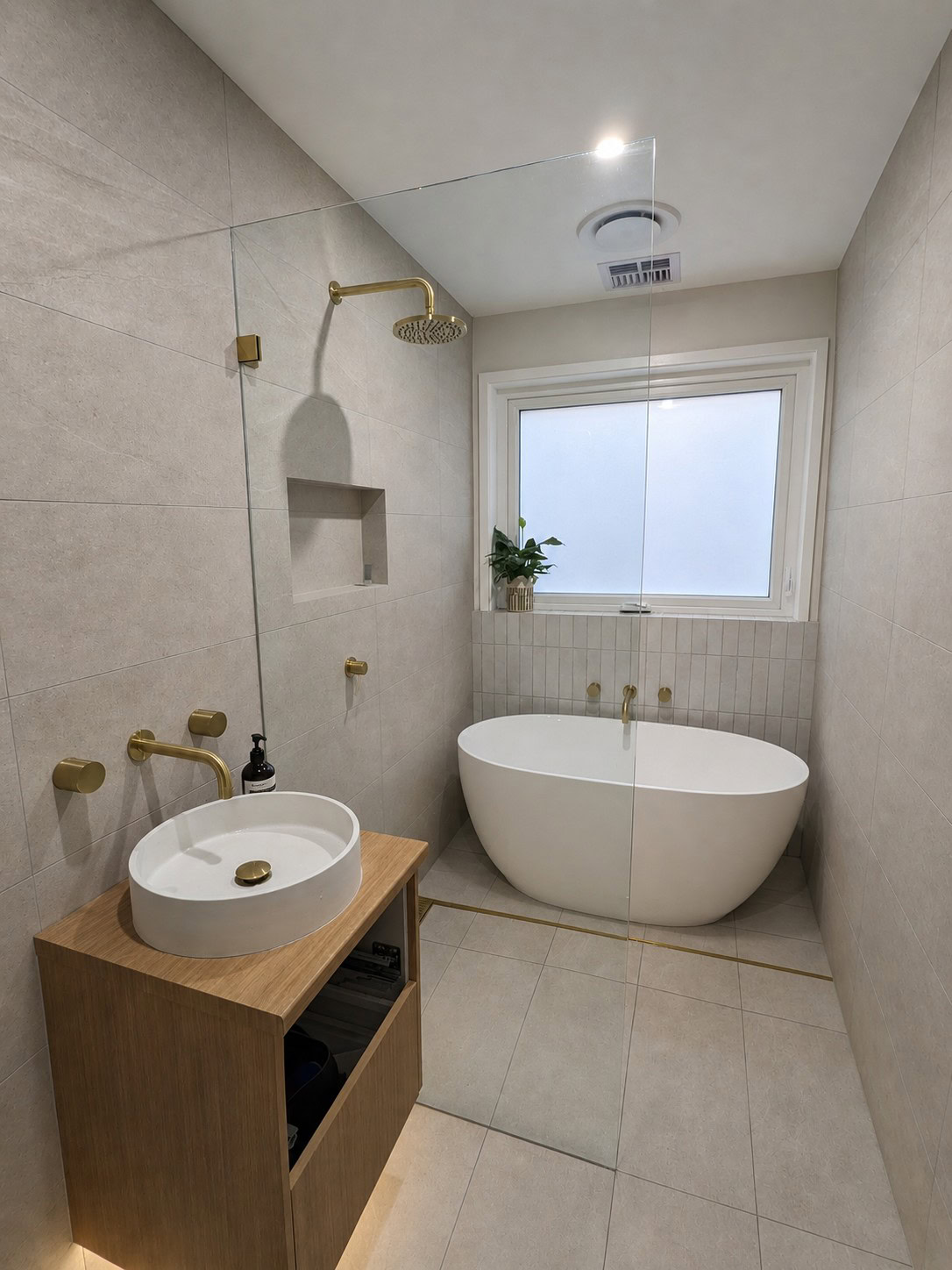
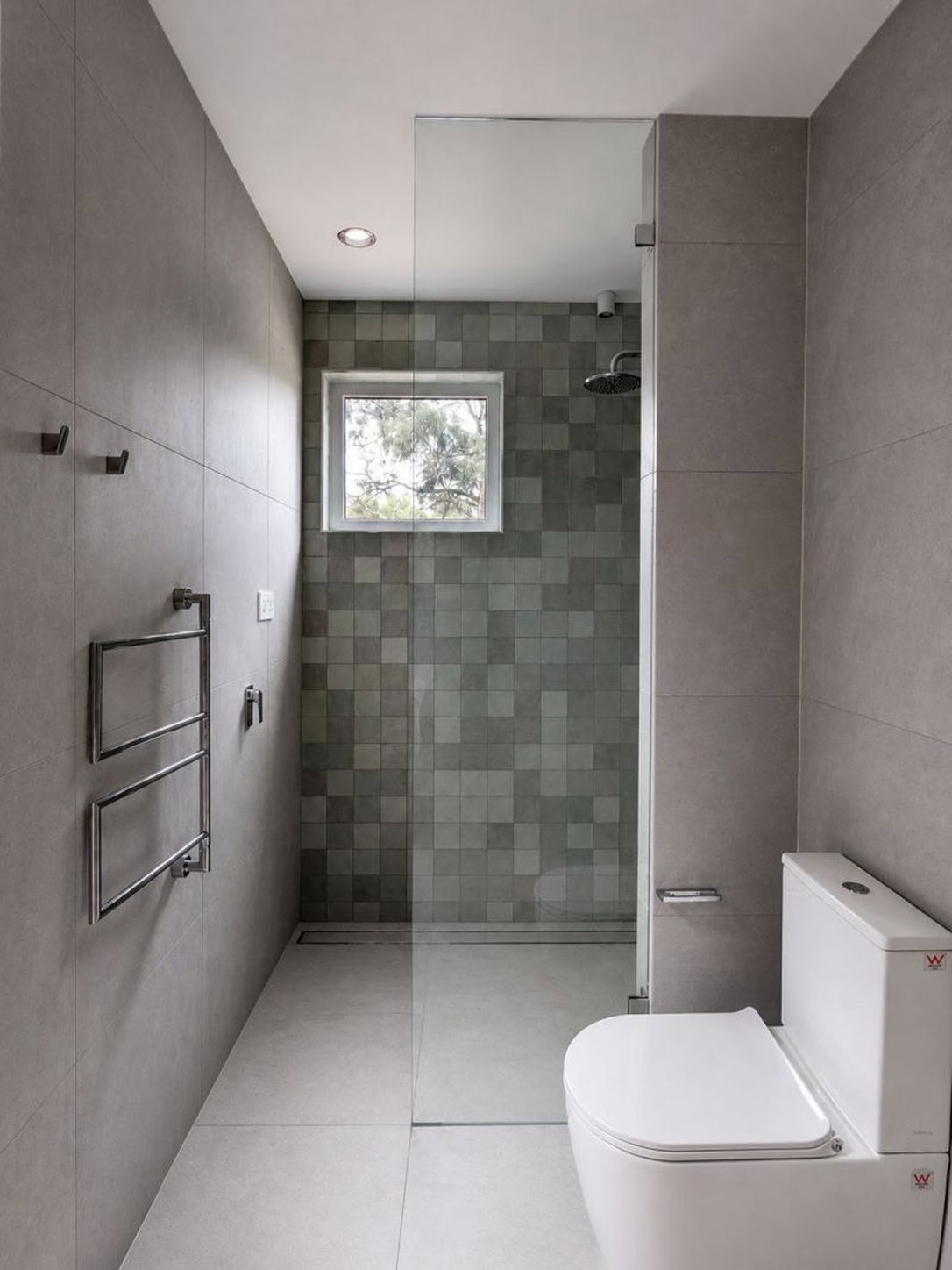
A fixed glass panel keeps the shower open without needing a hinged door, sliding track or overlapping glass system. For many bathrooms, a single walk-in glass panel is enough to create a clean entry.
Clean minimal look
With fewer moving parts and minimal hardware, walk-in screens suit bathrooms where a simple frameless finish is preferred.
Better for larger open layouts
Walk-in shower screens work especially well when the shower area has enough depth for a comfortable open entry and a practical fixed panel position.
Made around the finished bathroom
Panel size and fittings are selected to suit your bathroom, including taller glass and half wall layouts.
Walk-in shower screen layouts we can custom make
Walk-in shower screens are not all the same fixed panel. The layout depends on the bathroom size, shower head position, floor fall, half walls, ceiling height and how much of the shower needs to stay open.

Single fixed panels
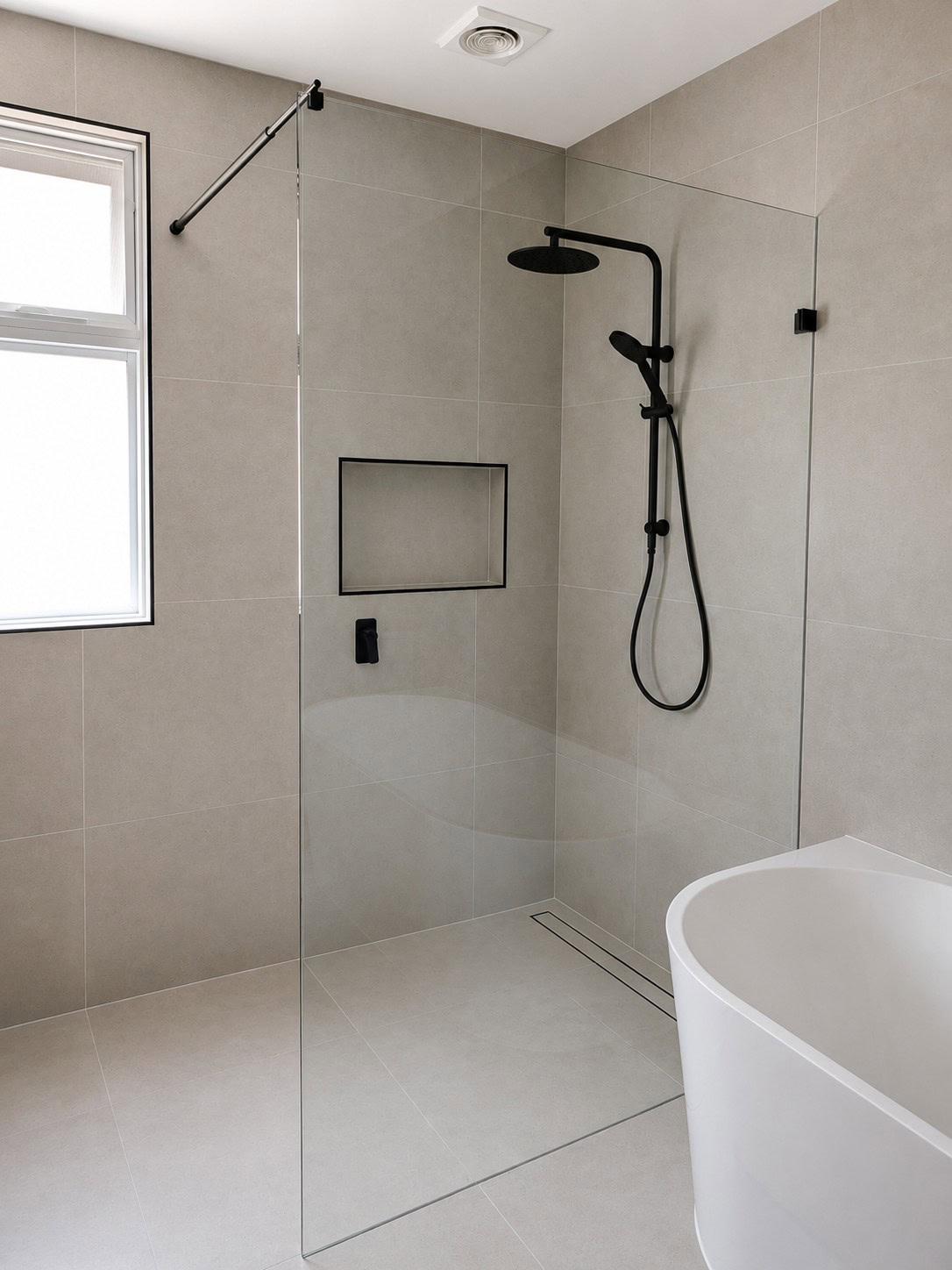
A simple fixed glass panel for open entry shower layouts, usually installed from the wall with brackets, channel or a support arm if needed.

Panels on half walls
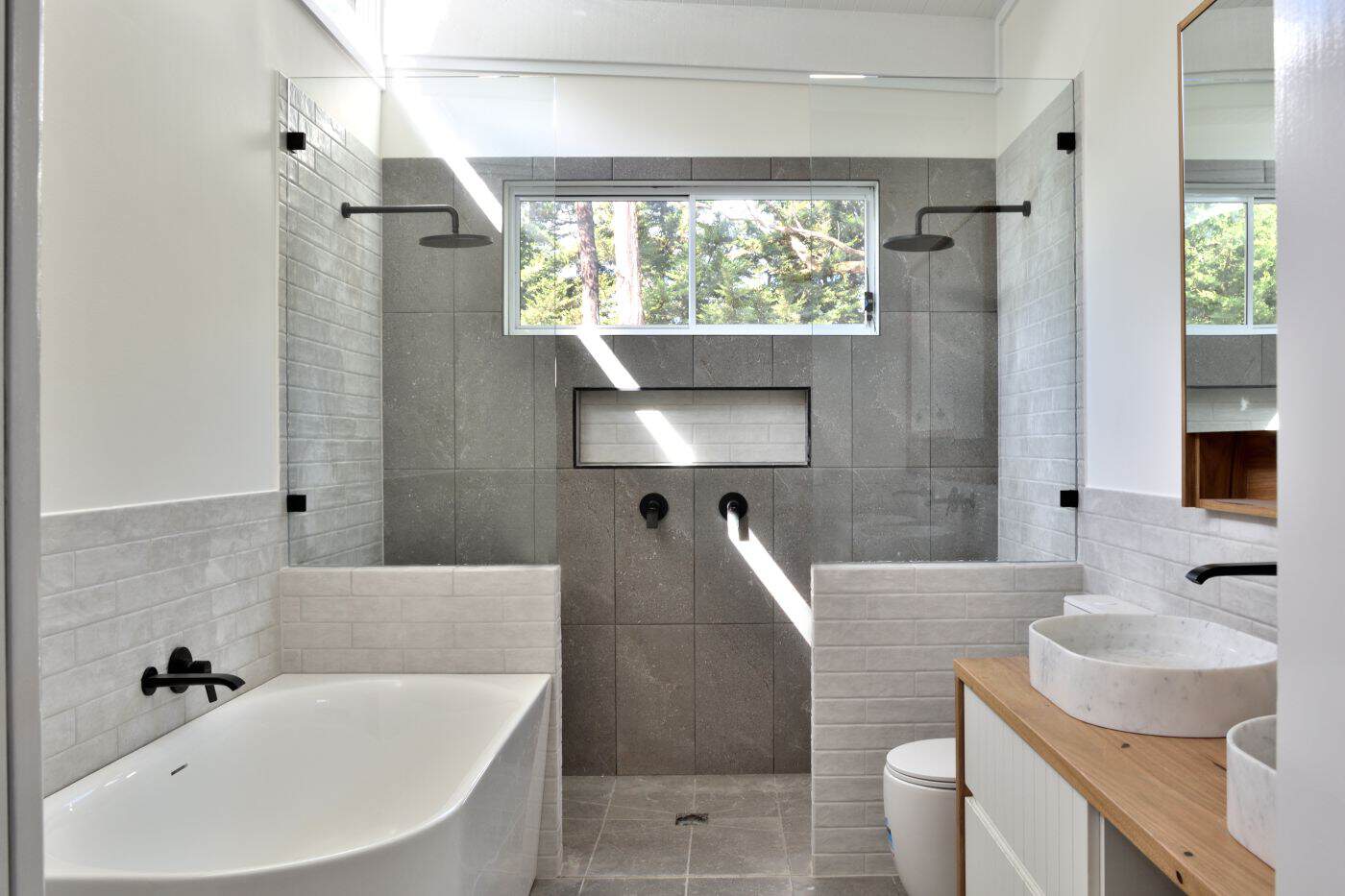
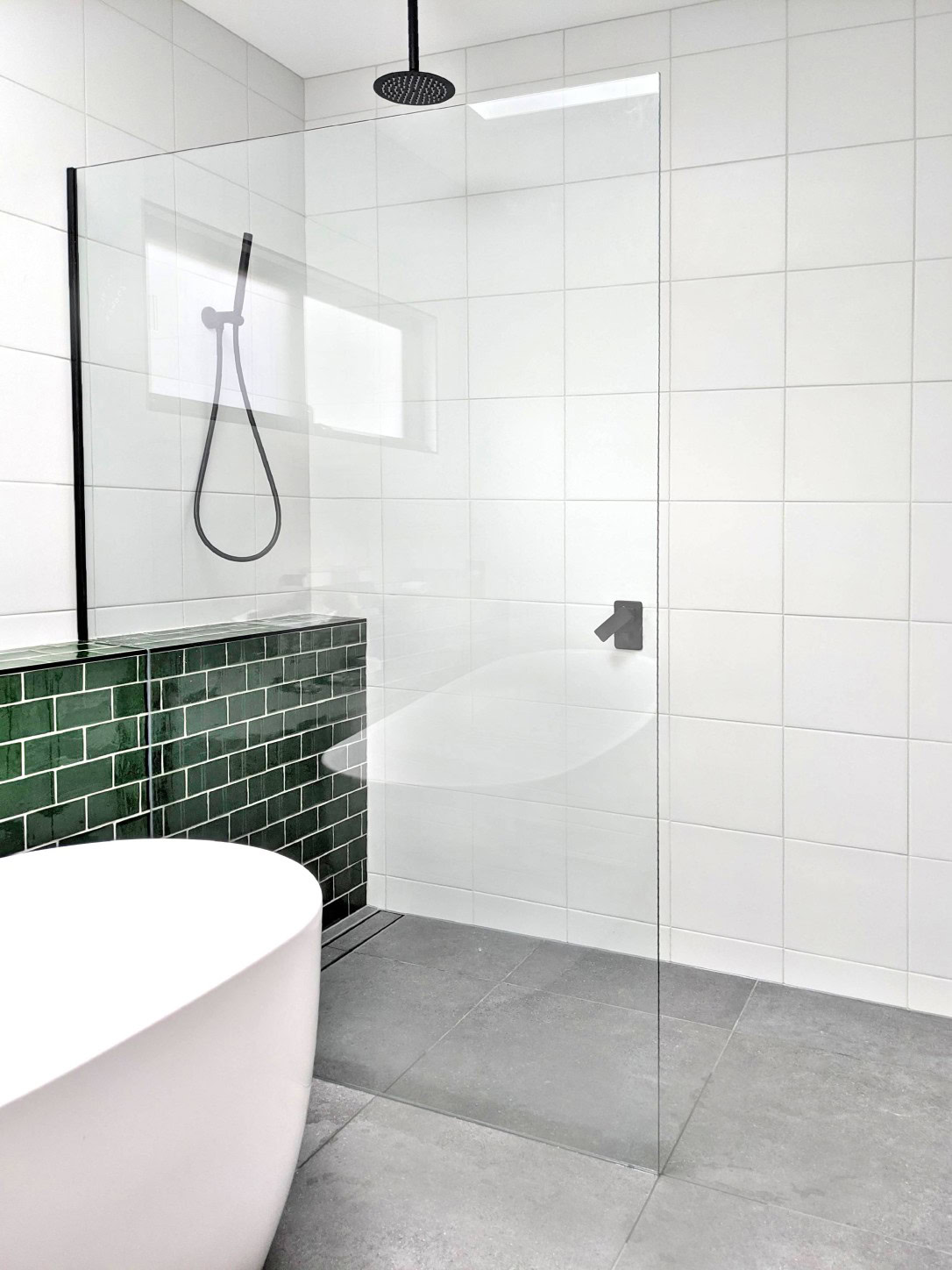
Glass can often sit on top of a half wall, but the glass position, tile finish, wall fall and shower floor line need to be planned properly.

Radius corner panels
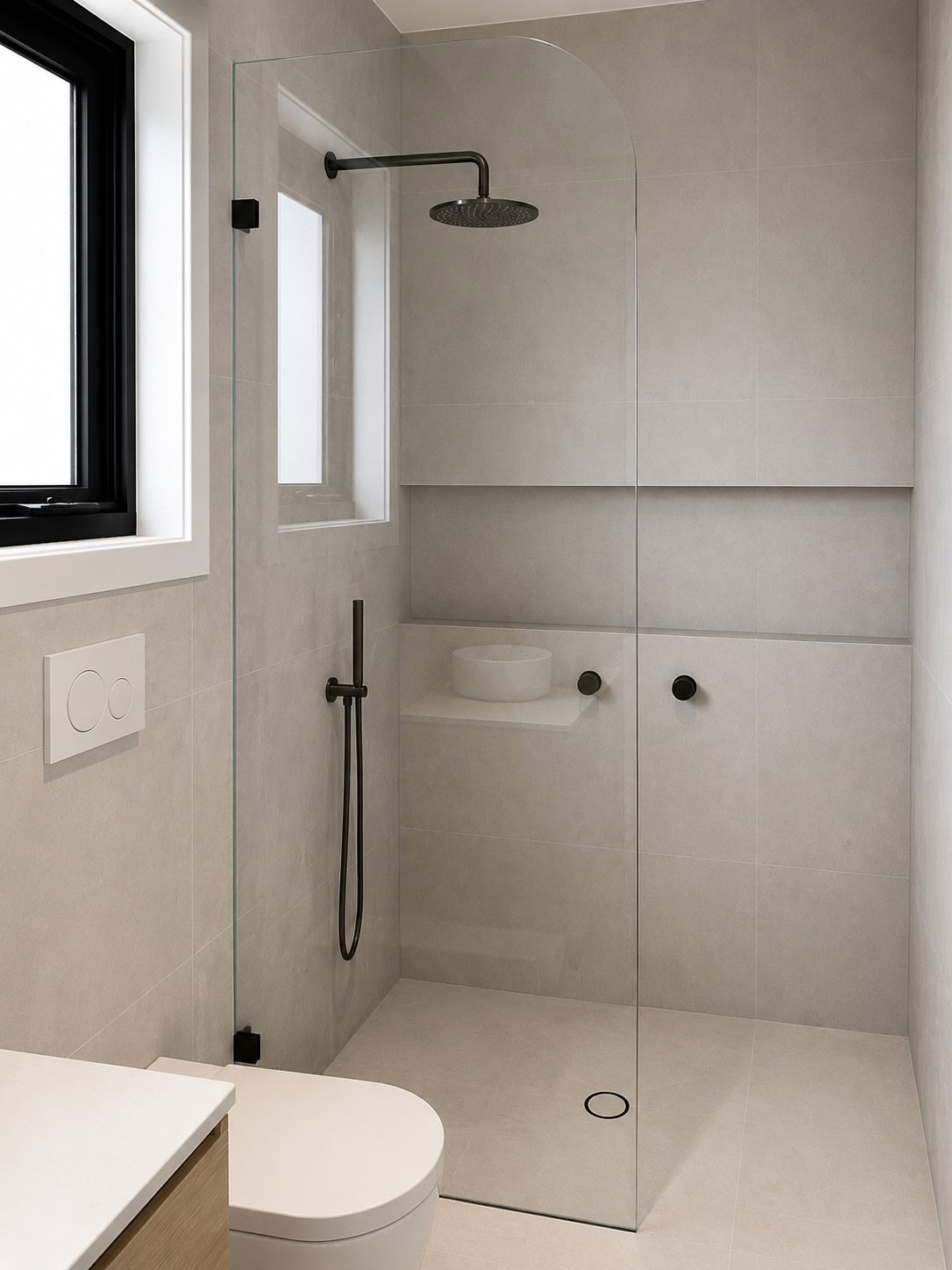
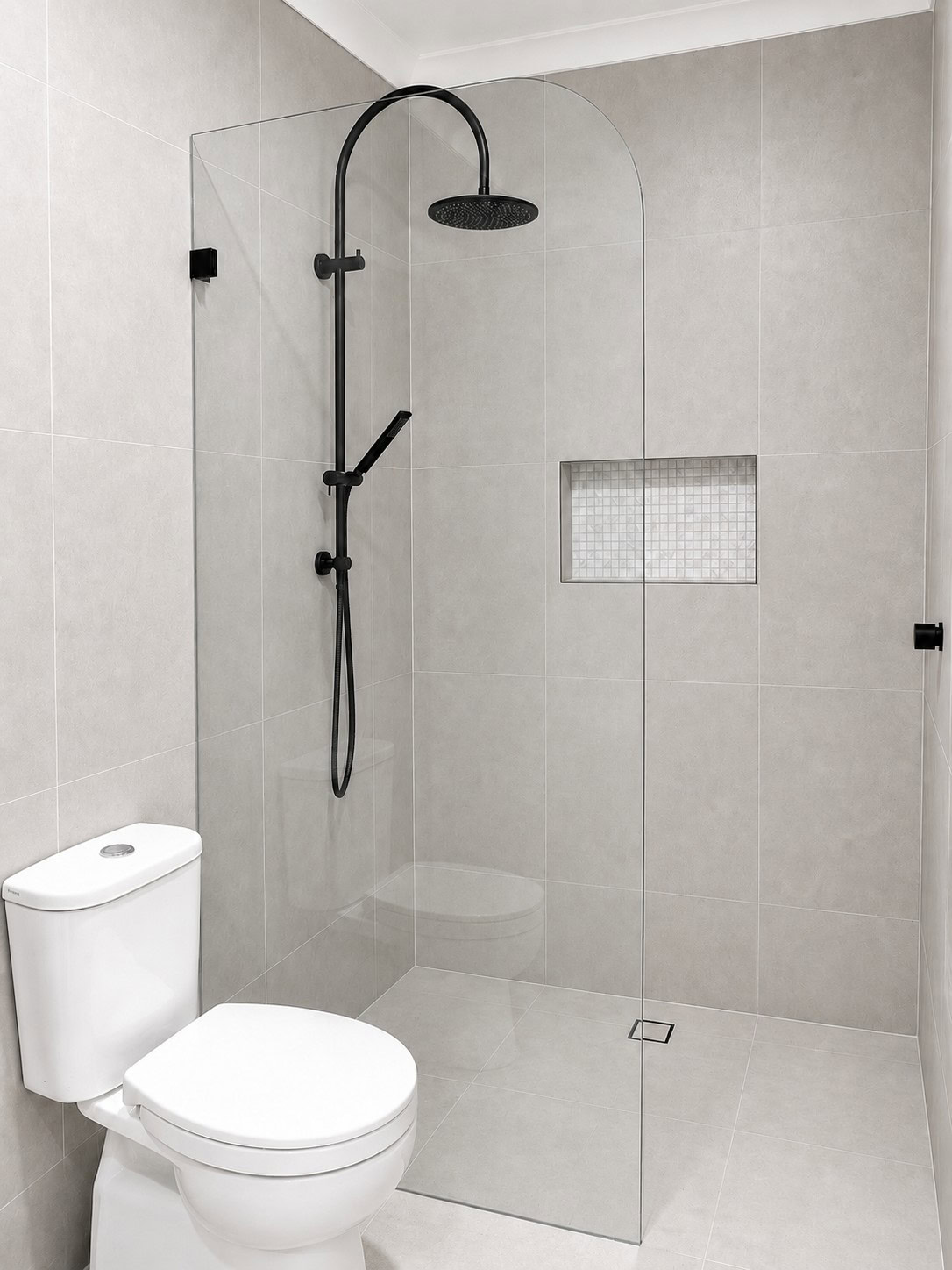
A curved or radius corner can soften the exposed edge of the panel where the shower entry is open to the bathroom.

Full height panels
A taller panel can create a more built in look where the glass is designed around ceiling height, tile lines and the overall bathroom layout.
Half wall shower screens: planning the glass position
Half wall shower layouts, also called pony wall layouts, define the wet area while keeping the bathroom open. They can add privacy and provide a tiled shelf.
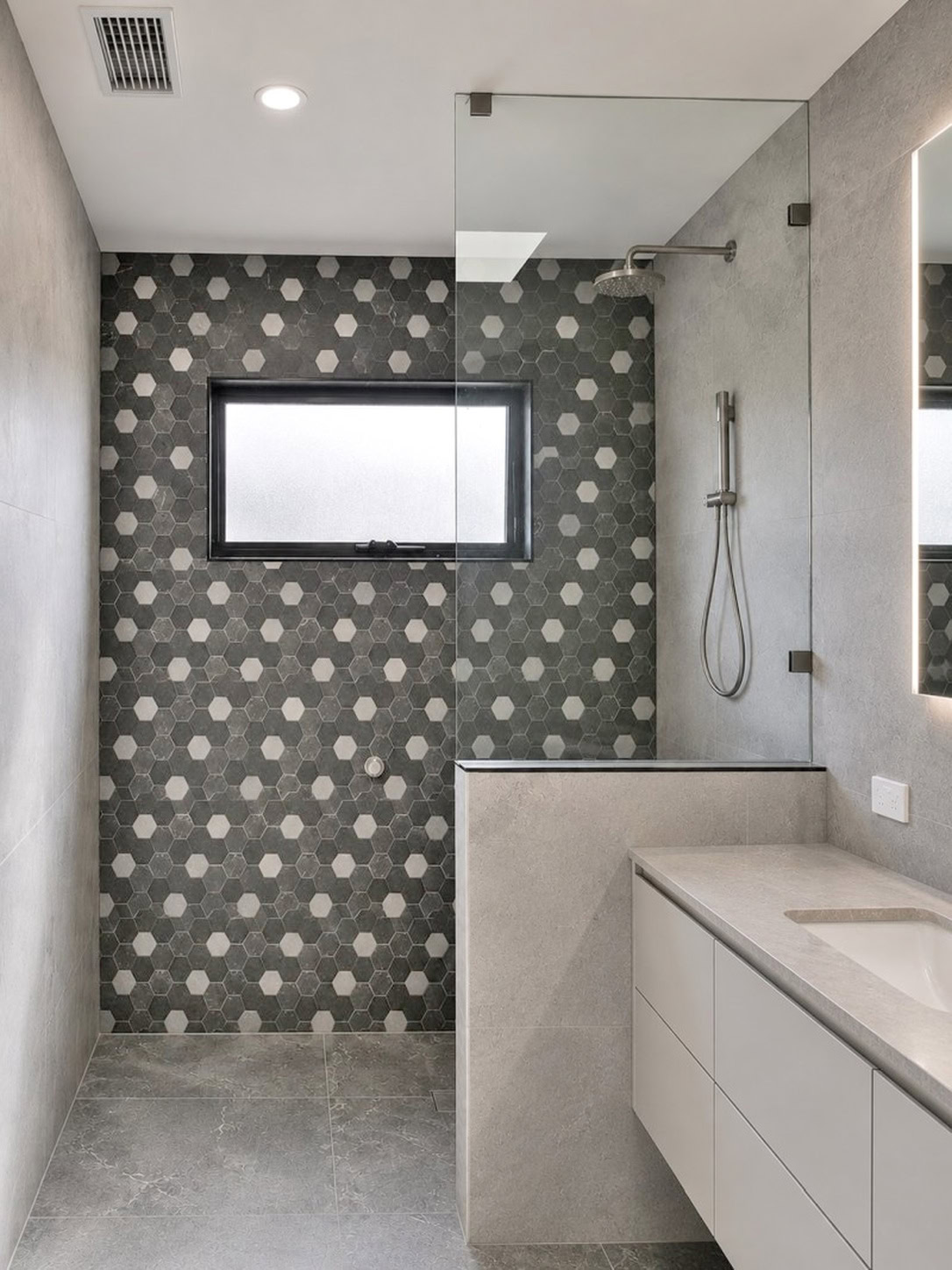
A half wall or pony wall can work really well with a walk-in shower screen, but the glass position needs to be planned before the bathroom is finished. The panel can sit centred on the wall or closer to one side depending on the layout, shower entry and how the wall will be used.
In some bathrooms, setting the glass toward the outside of the pony wall allows the inside face to work more like a shower shelf. That can be practical, but the tiled top needs sufficient fall so water drains back into the shower instead of sitting on the surface.
The glass position can also affect where the main wall tiles finish and where the shower floor line ends. If those details are not considered early, the finished screen may still be possible, but the available options can become more limited.
Centred or offset glass
The glass does not always need to sit in the centre of the half wall. The best position depends on water direction, the wall top, shower access and the finished bathroom layout.
Wall-top fall
If the pony wall is being used as a shower shelf, sufficient fall is important so water drains back toward the shower rather than pooling on the tiled surface.
Tile and floor lines
The glass position can affect the wall-tile finish, shower line on the floor and where the open wet area visually starts and ends.
Can a walk in shower be enclosed later?
A walk in shower can sometimes be enclosed later, but it is much easier when the layout has been planned with that option in mind from the start. If there is a chance you may want to add a door or extra glass later, the opening size, glass position and shower entry need to be thought through before the bathroom is finished.
The main issue is that a walk in shower is usually designed around open entry. If the fixed panel is placed in the wrong position, if the remaining opening is too narrow, or if nearby fixtures leave no room for a door to swing, enclosing the shower later can become difficult.
Planning ahead does not mean you have to enclose the shower now. It simply means the screen, half wall, floor fall and shower line can be positioned in a way that keeps future options open if you decide you want better water control, more warmth or a more enclosed shower down the track.
What to plan early
- The width of the open entry
- Whether a future door could swing safely
- Where the fixed glass panel sits
- Whether the glass is centred or offset on a half wall
- Where the shower head is positioned
- The floor fall and shower line
- Nearby vanities, toilets, towel rails and baths
If you are unsure whether an open walk in layout will be enough, we can look at the plan and suggest a layout that works now while still allowing for a more enclosed option later.
Walk-in shower screen glass options

Clear Glass
A clean everyday option for walk-in shower screens where you want the bathroom to feel open, simple and cost-effective.

Low Iron Glass
Reduces the green tint in the glass, which helps walk-in glass panels look clearer against white tiles, stone and brighter bathroom finishes.

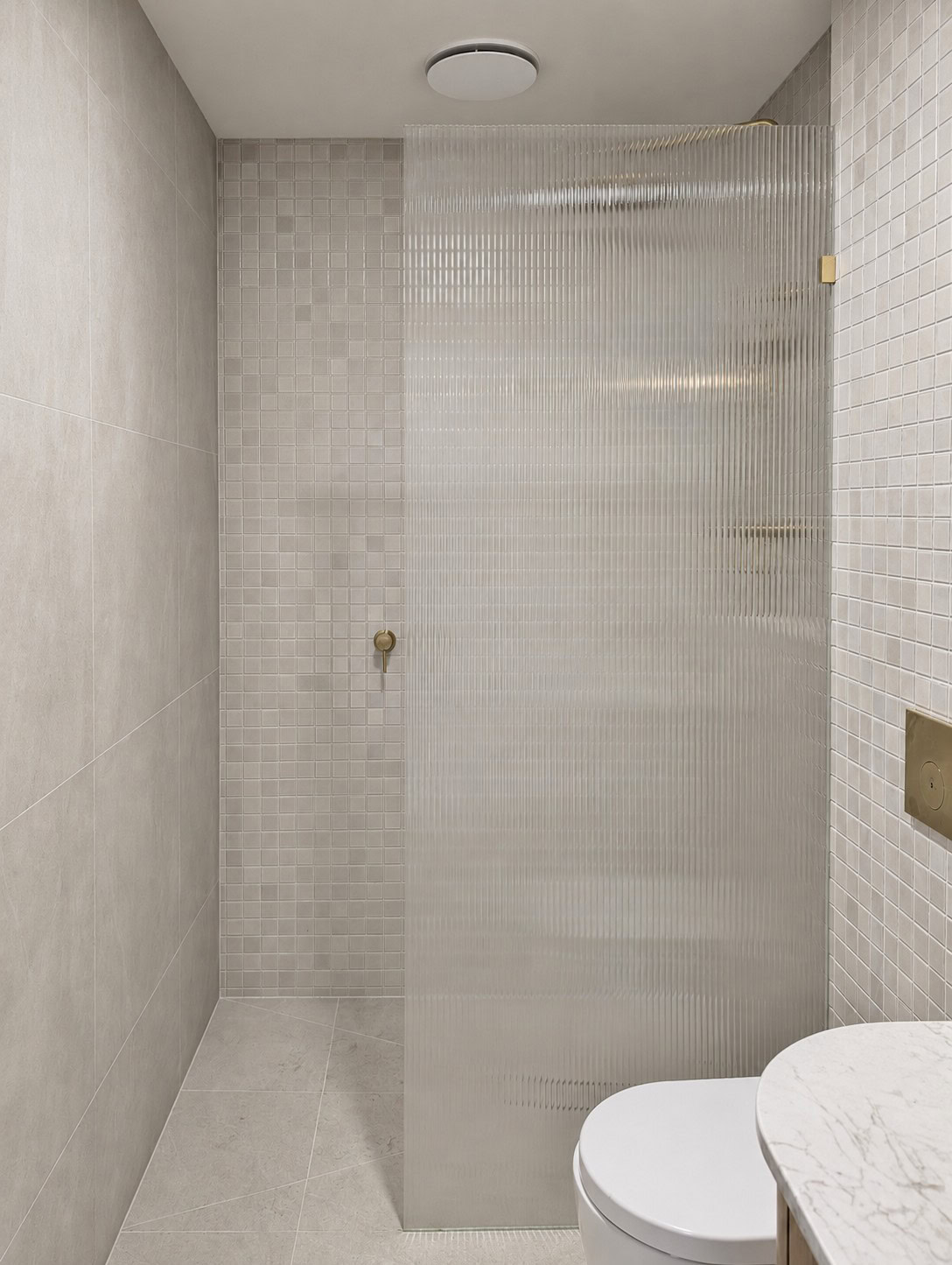
Fluted Glass
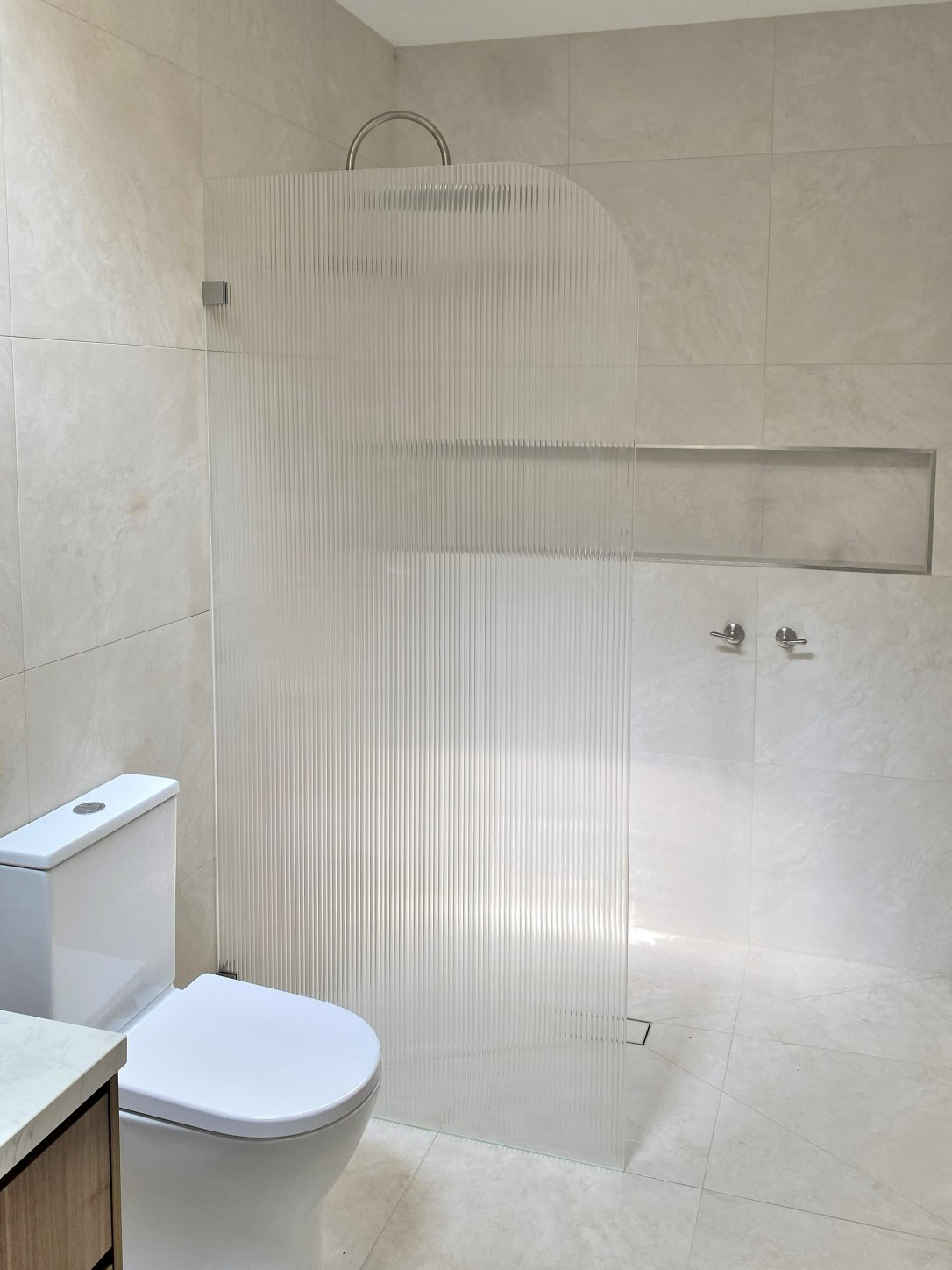
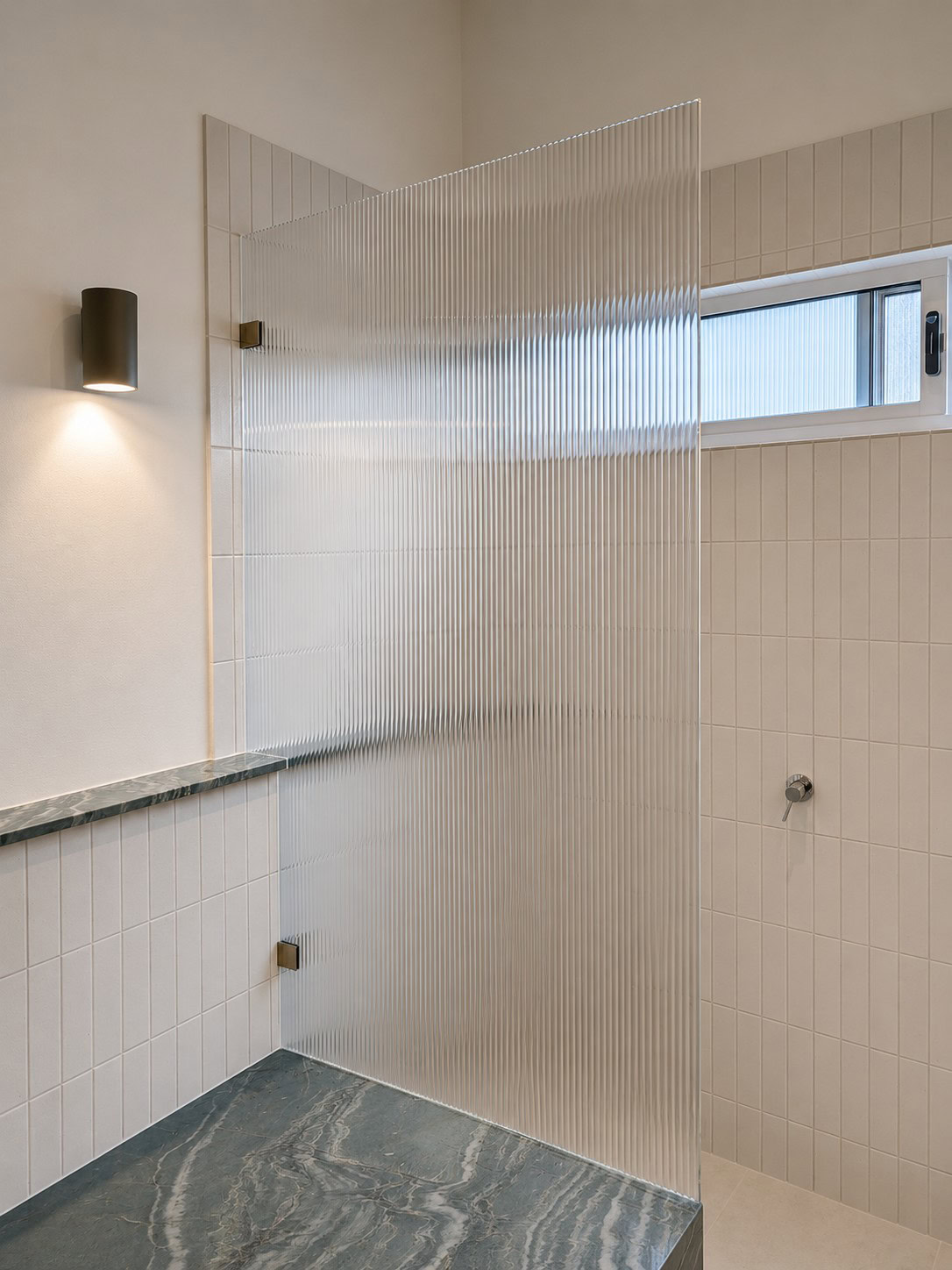
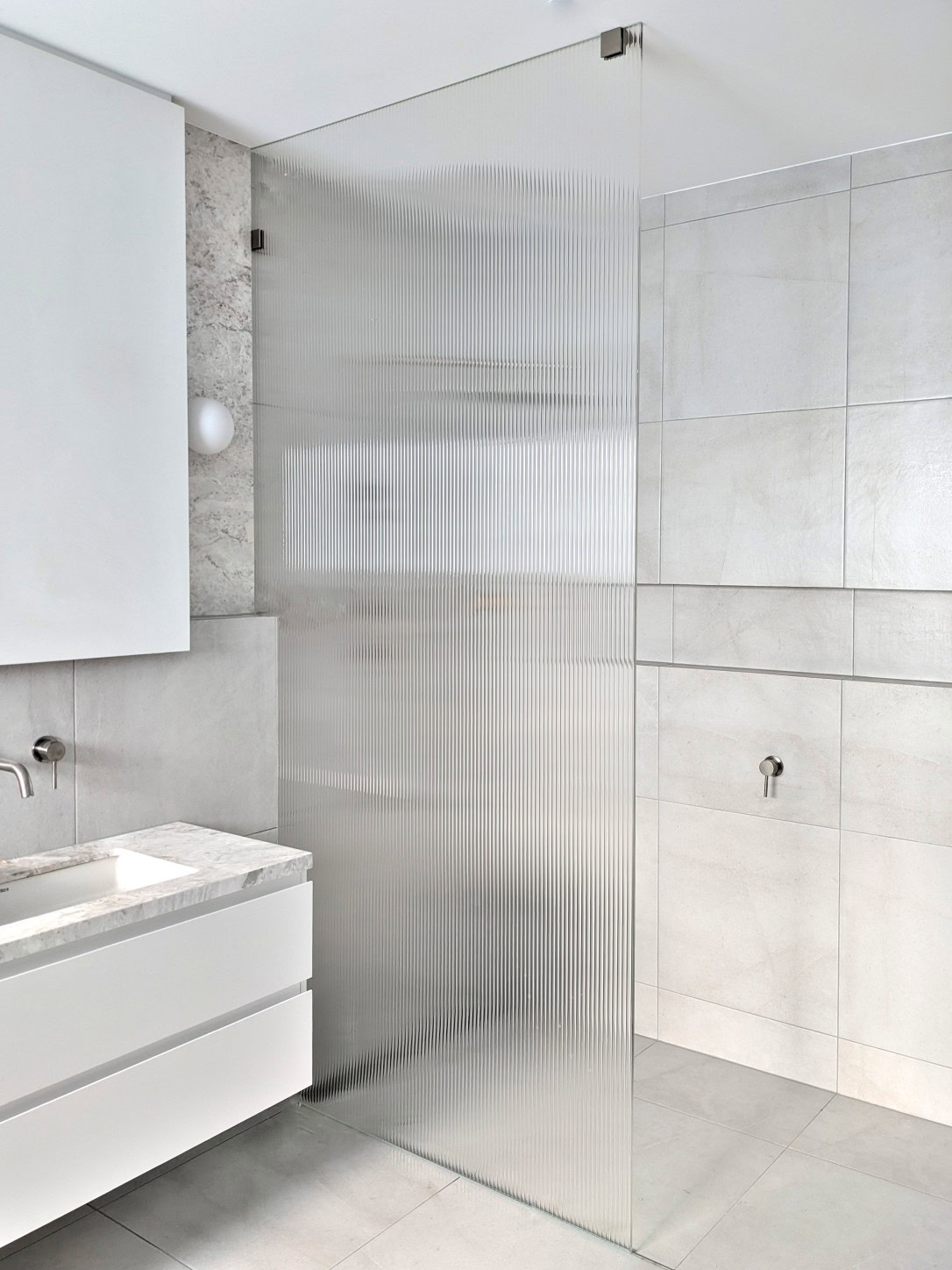
Adds privacy and texture to a walk-in shower panel while still allowing light through, making it useful for ensuites and open bathroom layouts.
Brackets, wall channels and hardware finishes
Walk-in shower screens are usually fixed with wall brackets, a slim wall channel or a combination of fittings. The right option depends on the glass size, wall alignment, panel position, half wall details and the finish you want.
Wall brackets
A minimal fixing option where small brackets secure the fixed glass panel to the wall, keeping the screen light and frameless.
Slim wall channel
A clean option where the glass sits inside a narrow wall channel. This can suit larger panels, uneven walls or bathrooms where a more continuous edge looks better.
Half wall fixing
Panels on half walls need careful planning around the glass position, finished tile surface, wall top fall and whether the panel sits centred or offset.
Hardware finishes
Walk-in shower screen fittings can be matched to the rest of the bathroom, with finish options including chrome, matt black, brushed brass, brushed nickel and gunmetal.
Recent walk in shower screen projects across Melbourne
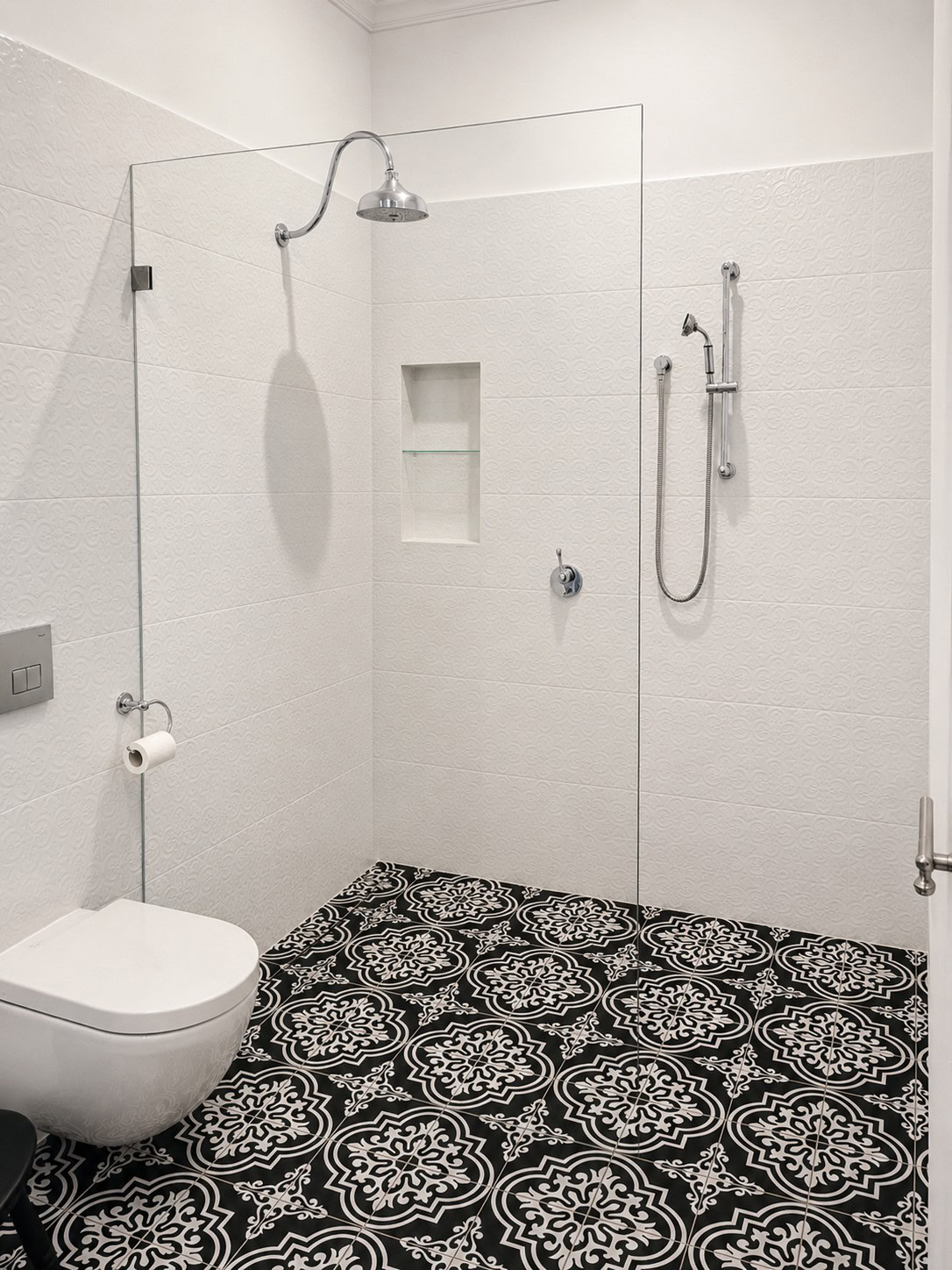
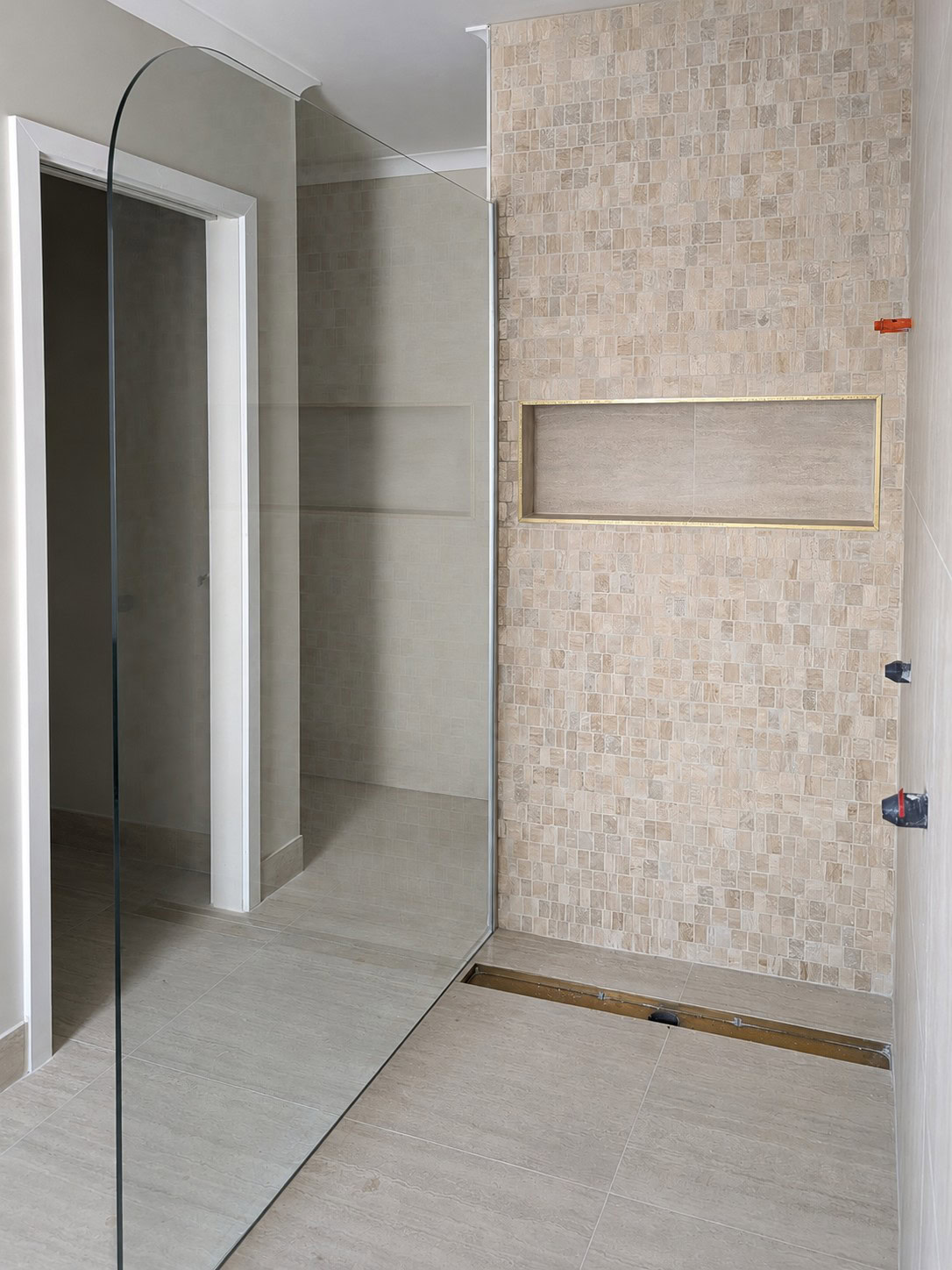
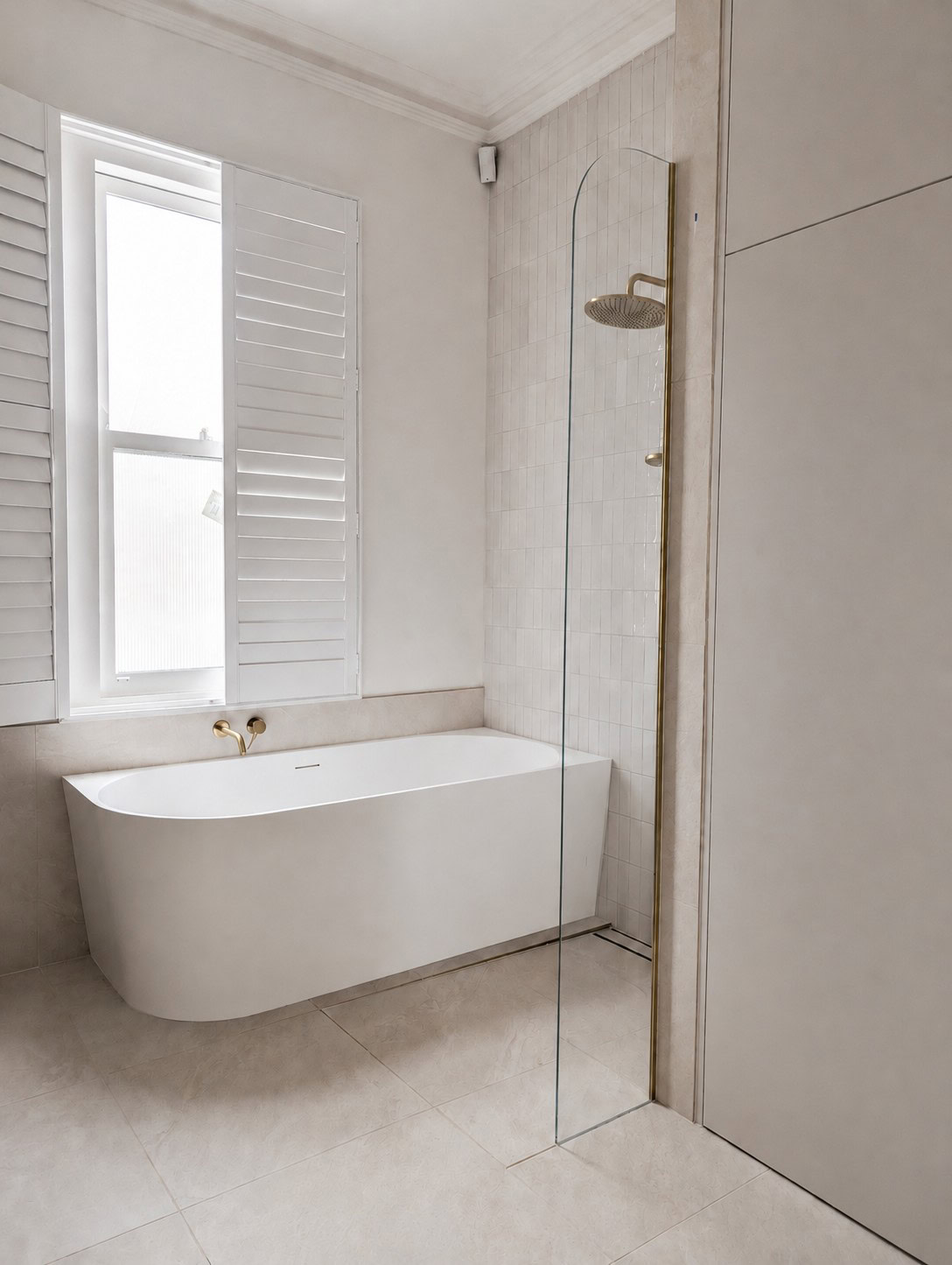
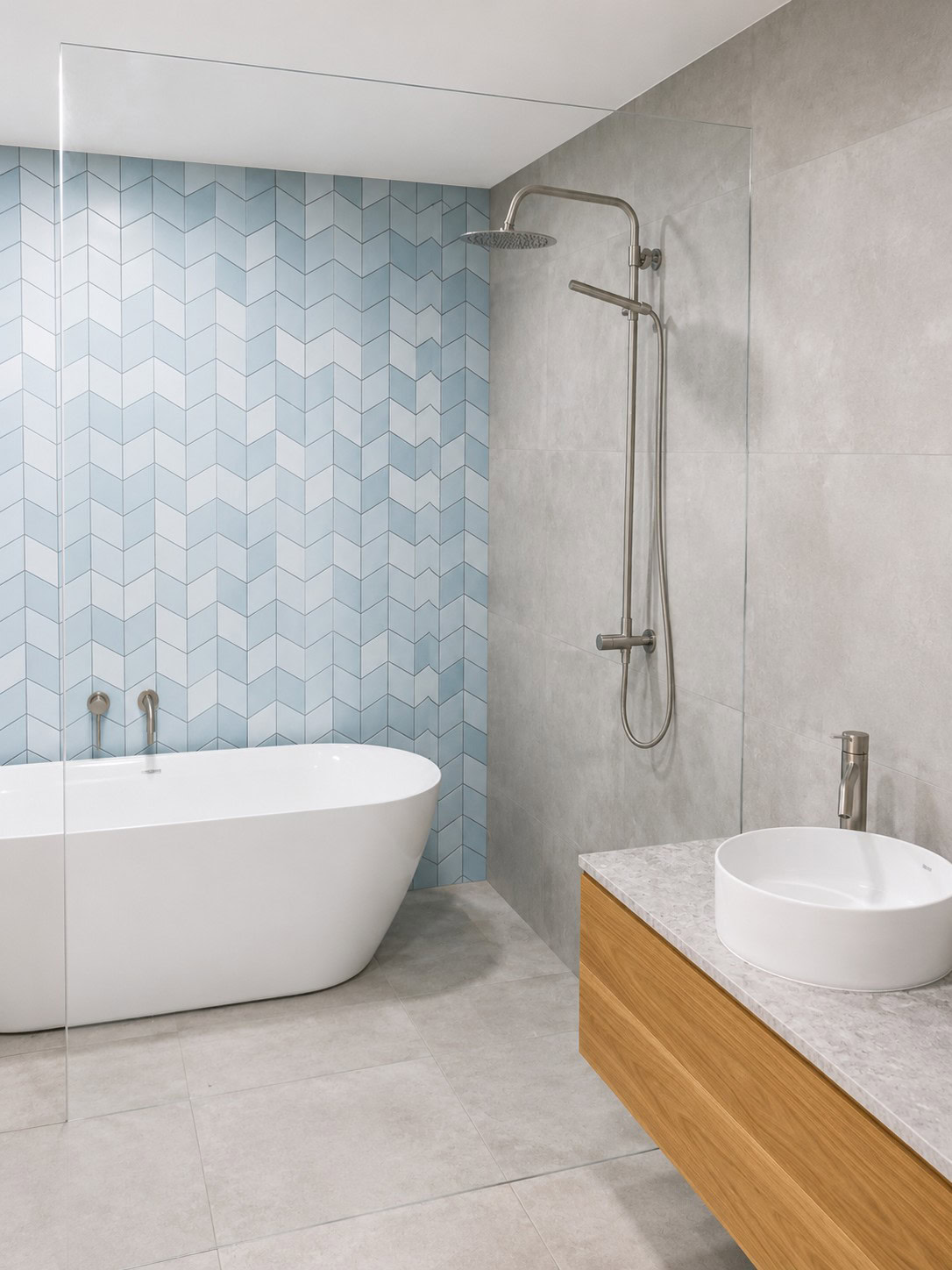
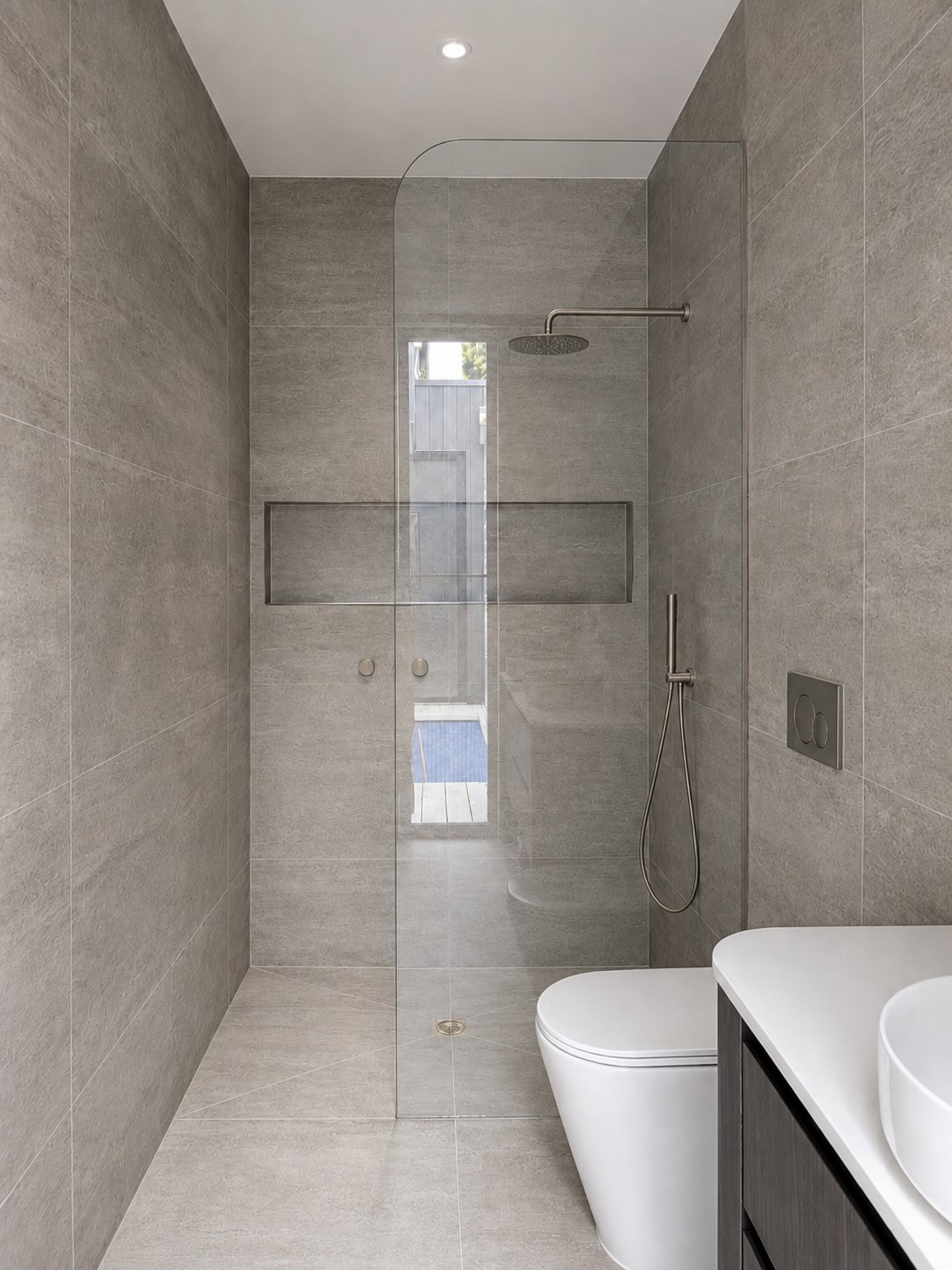
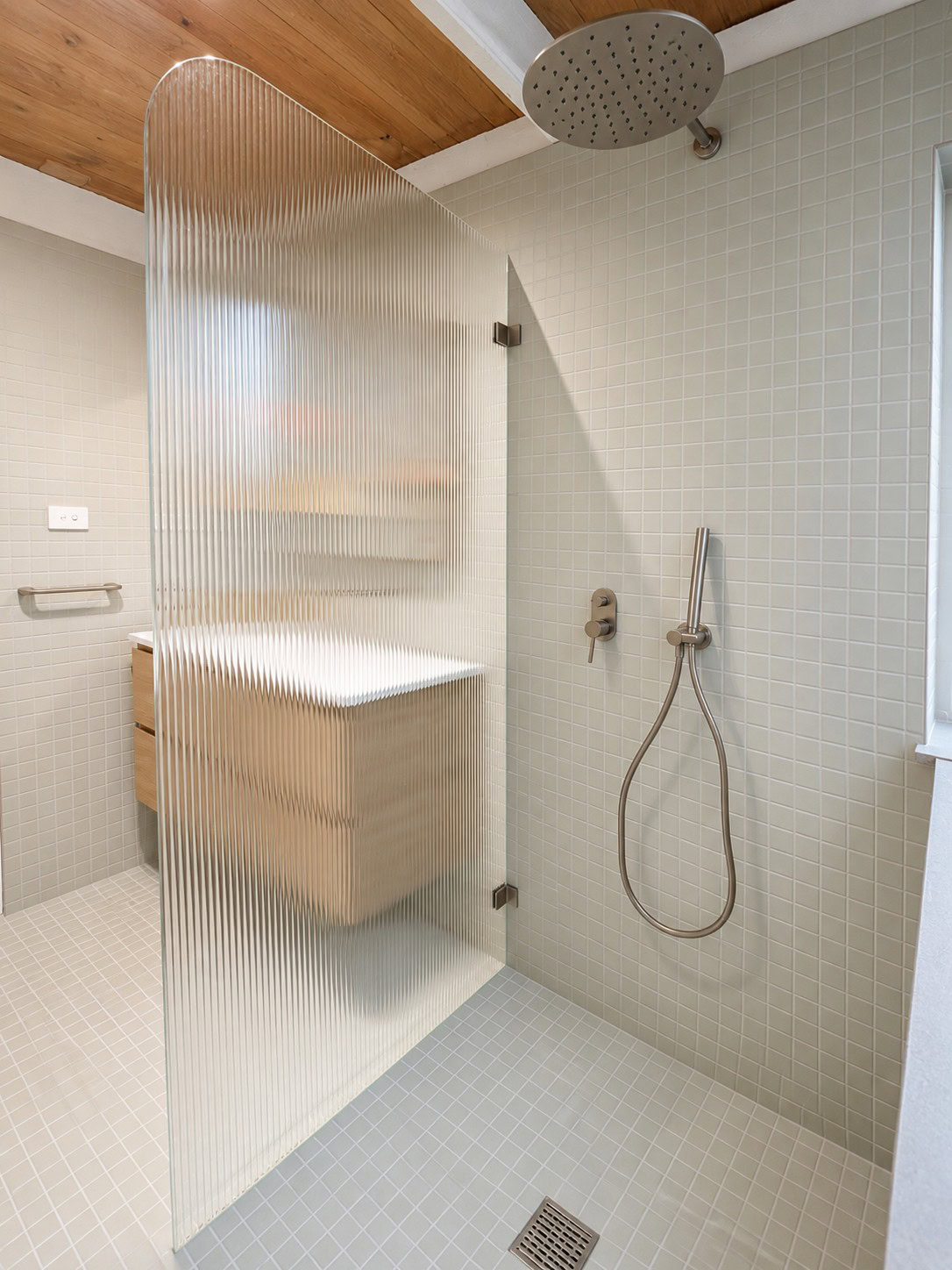
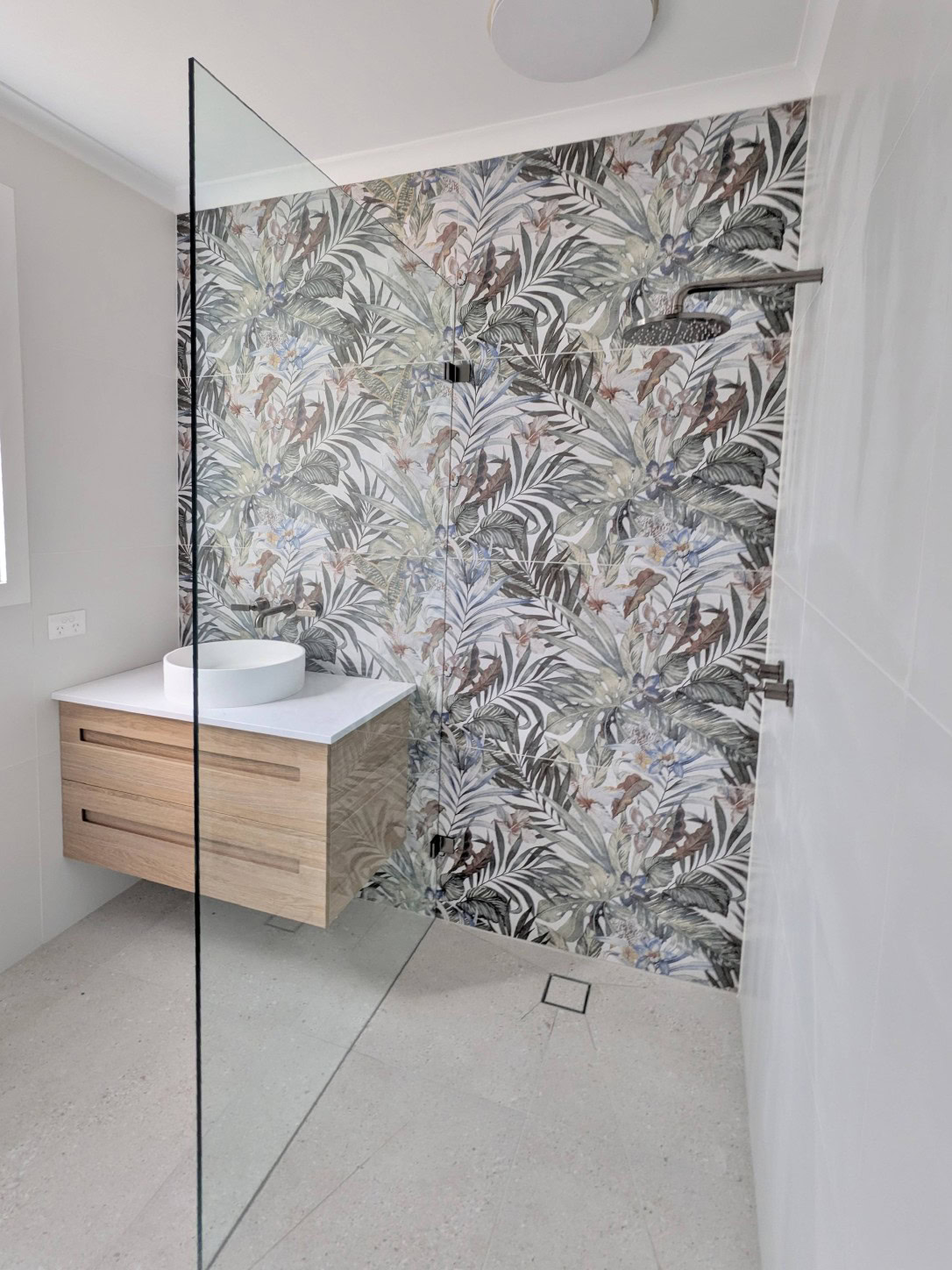
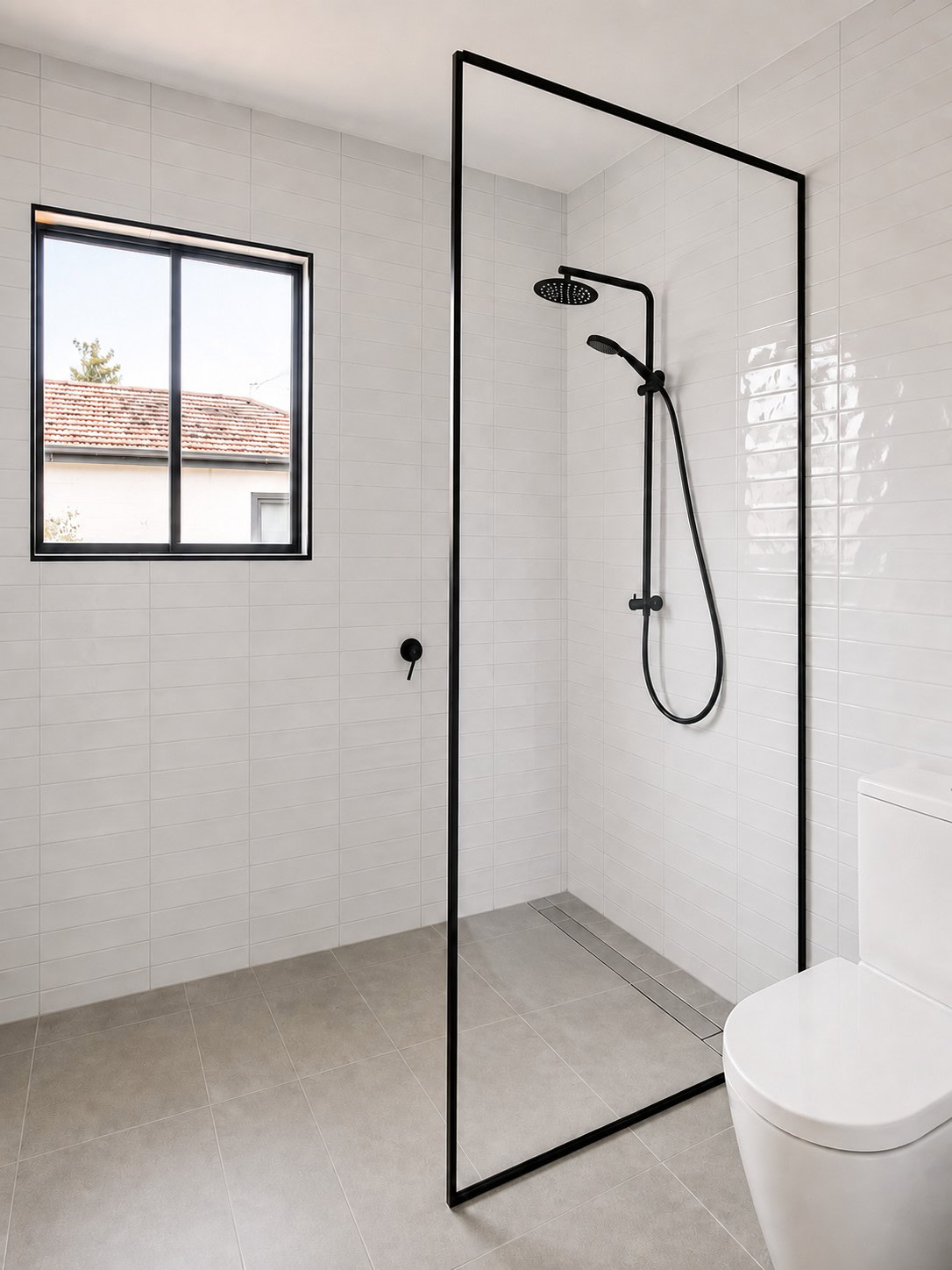
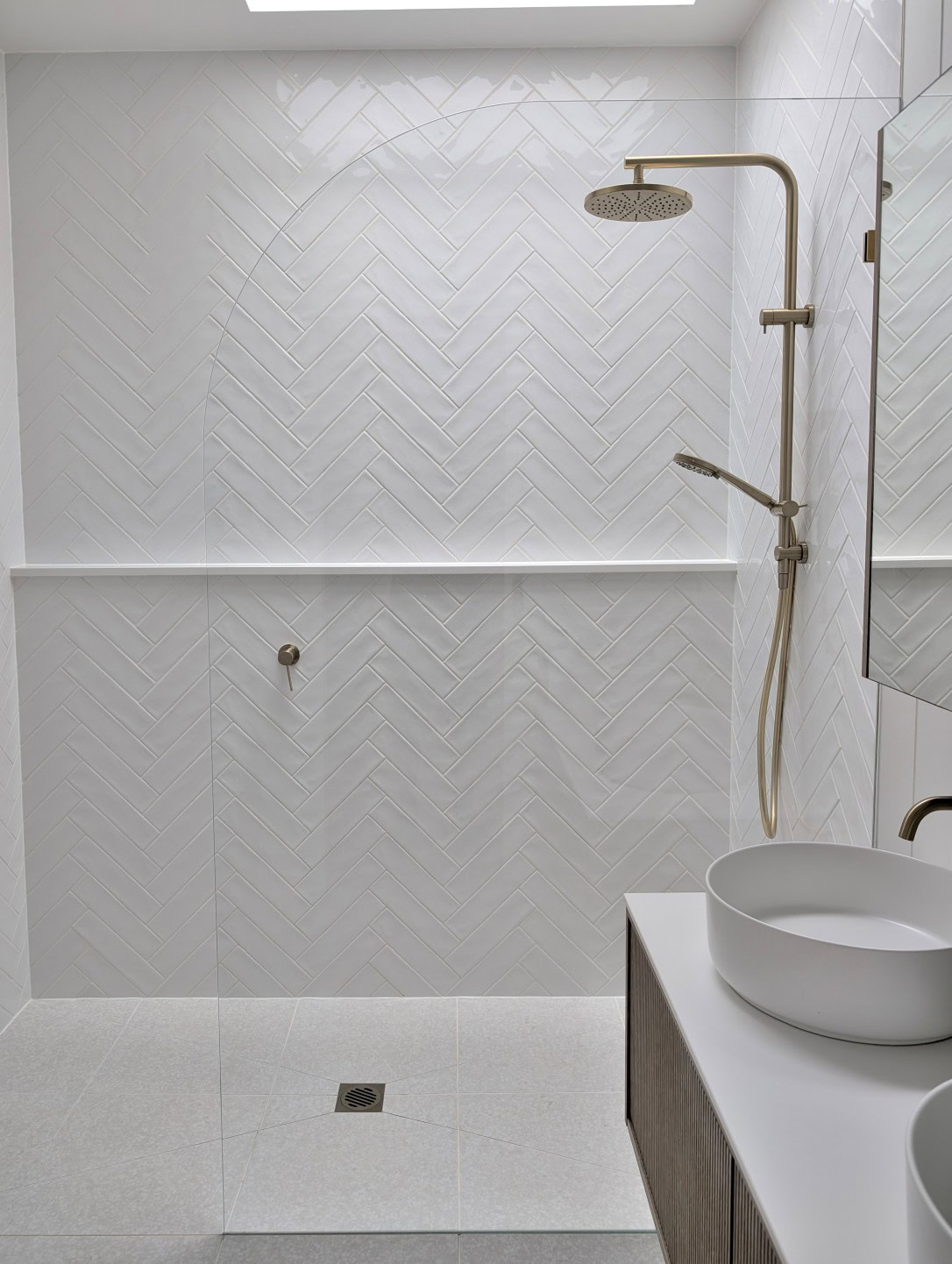
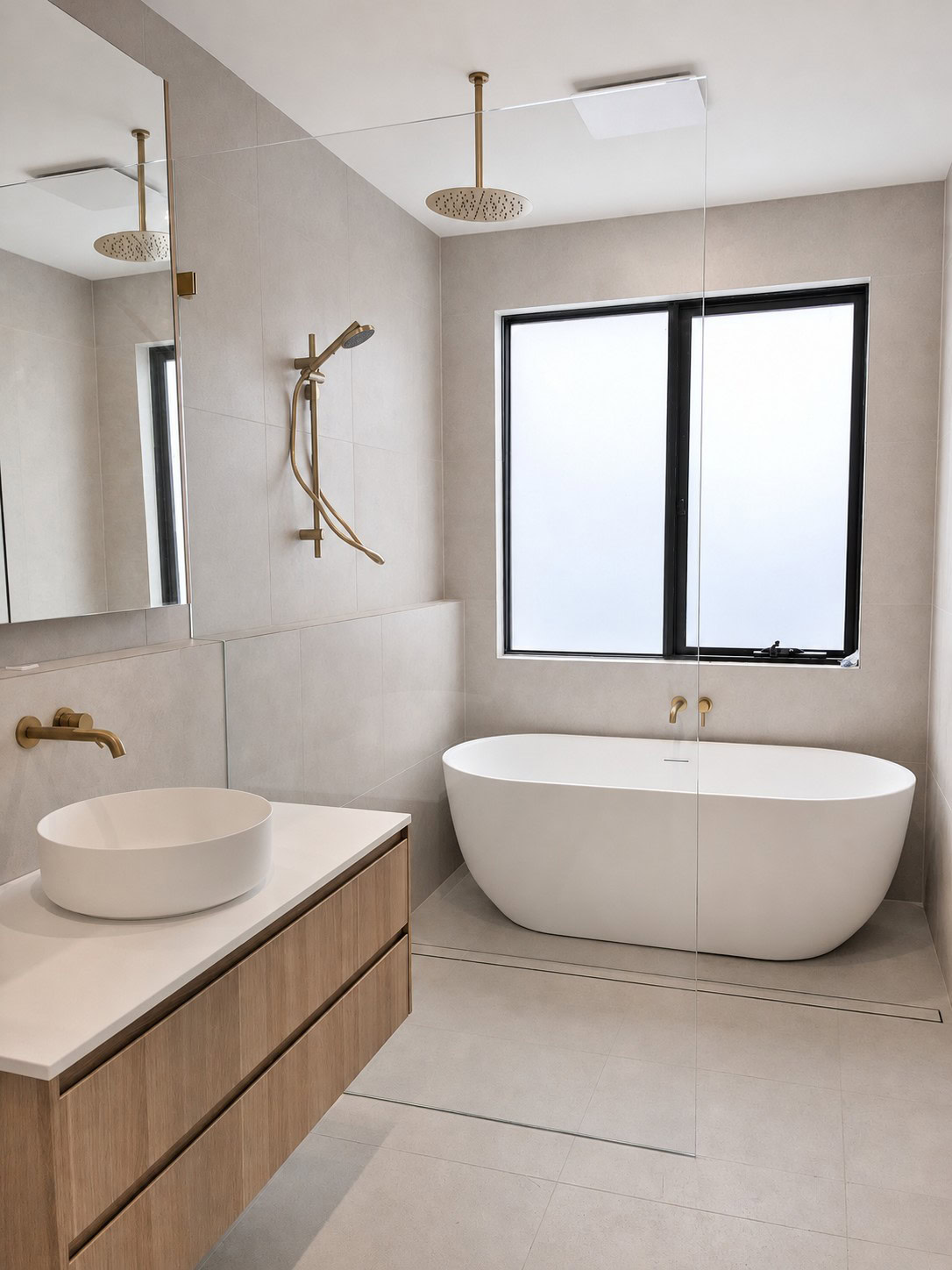
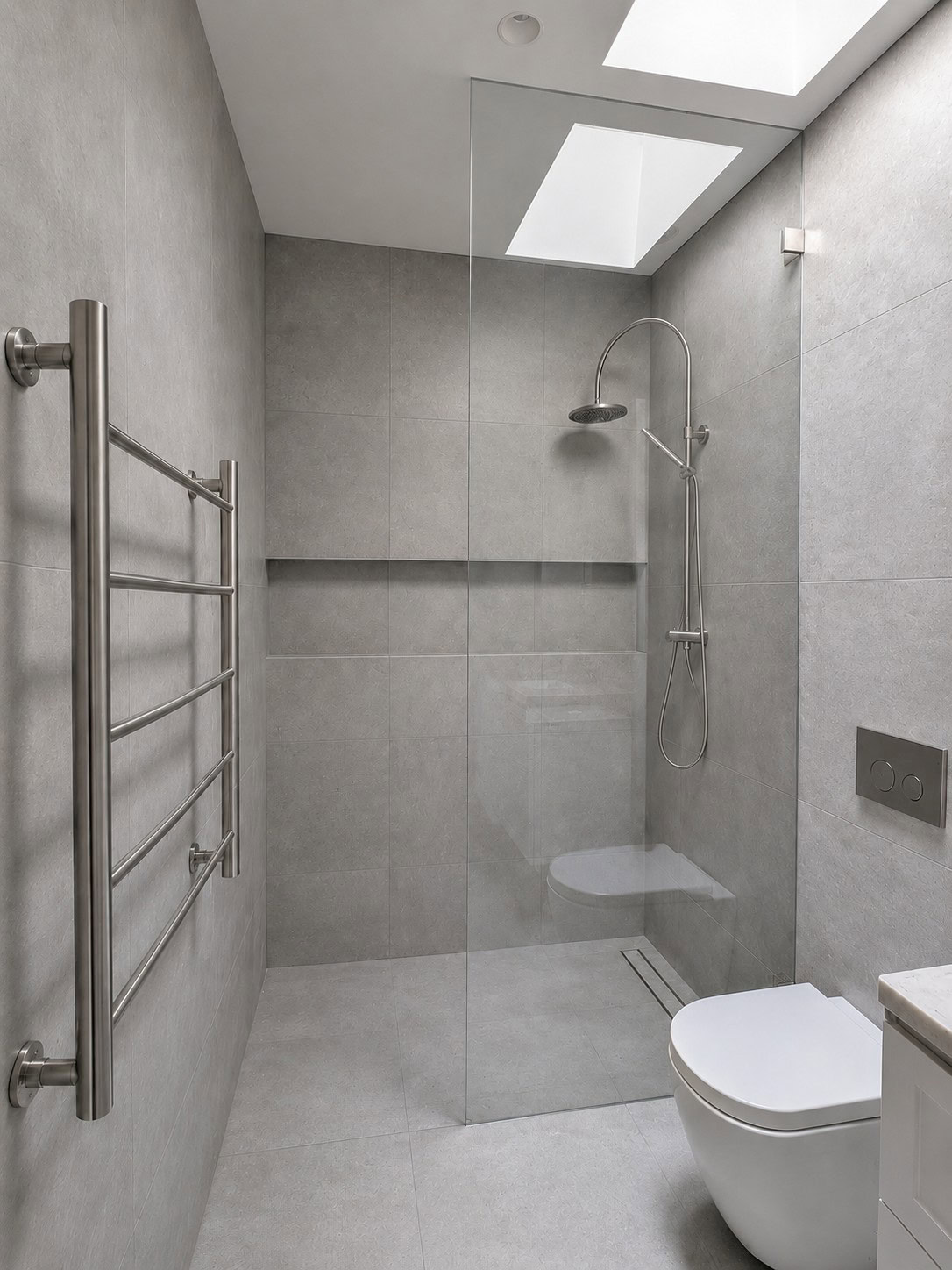
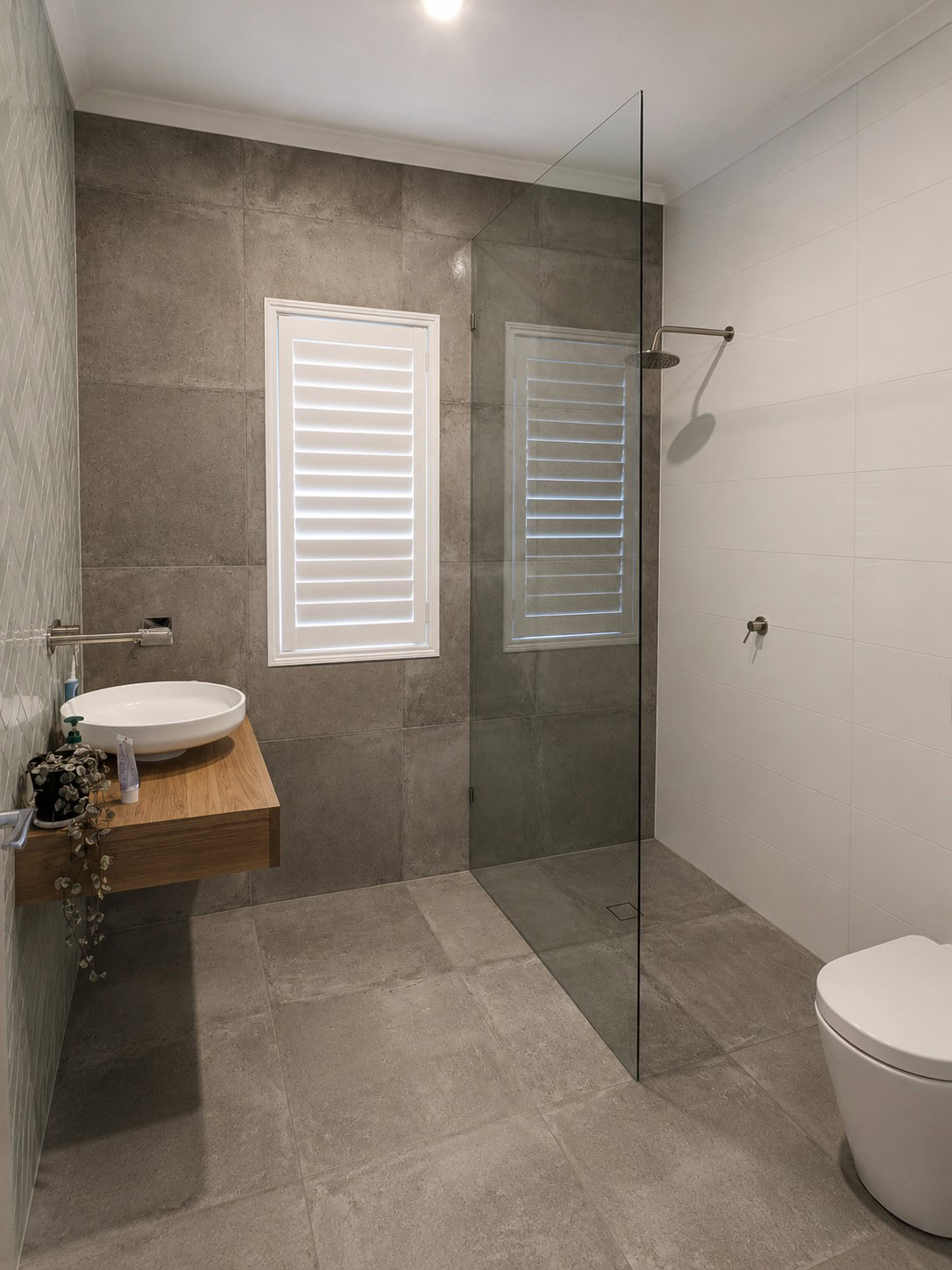
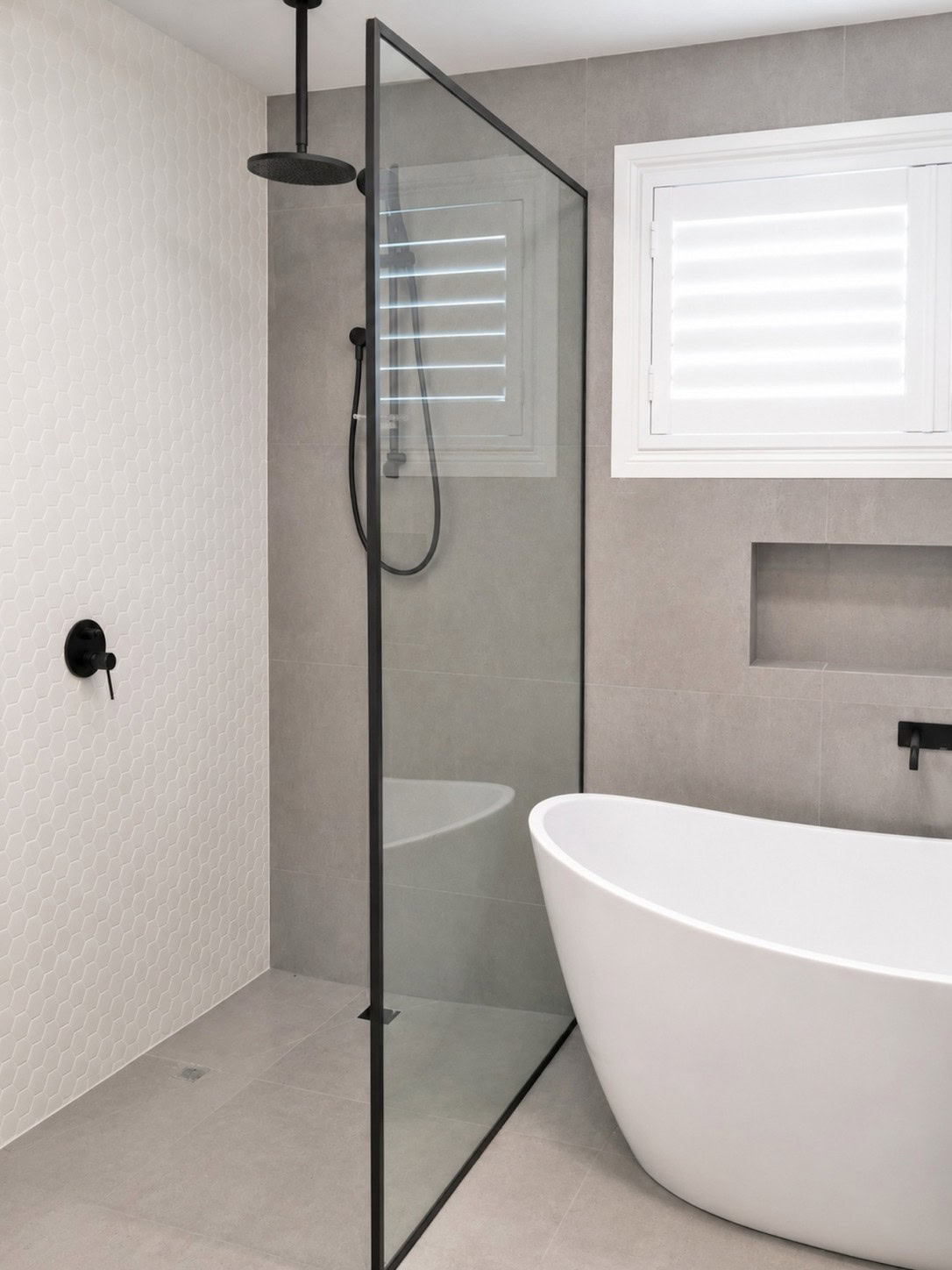
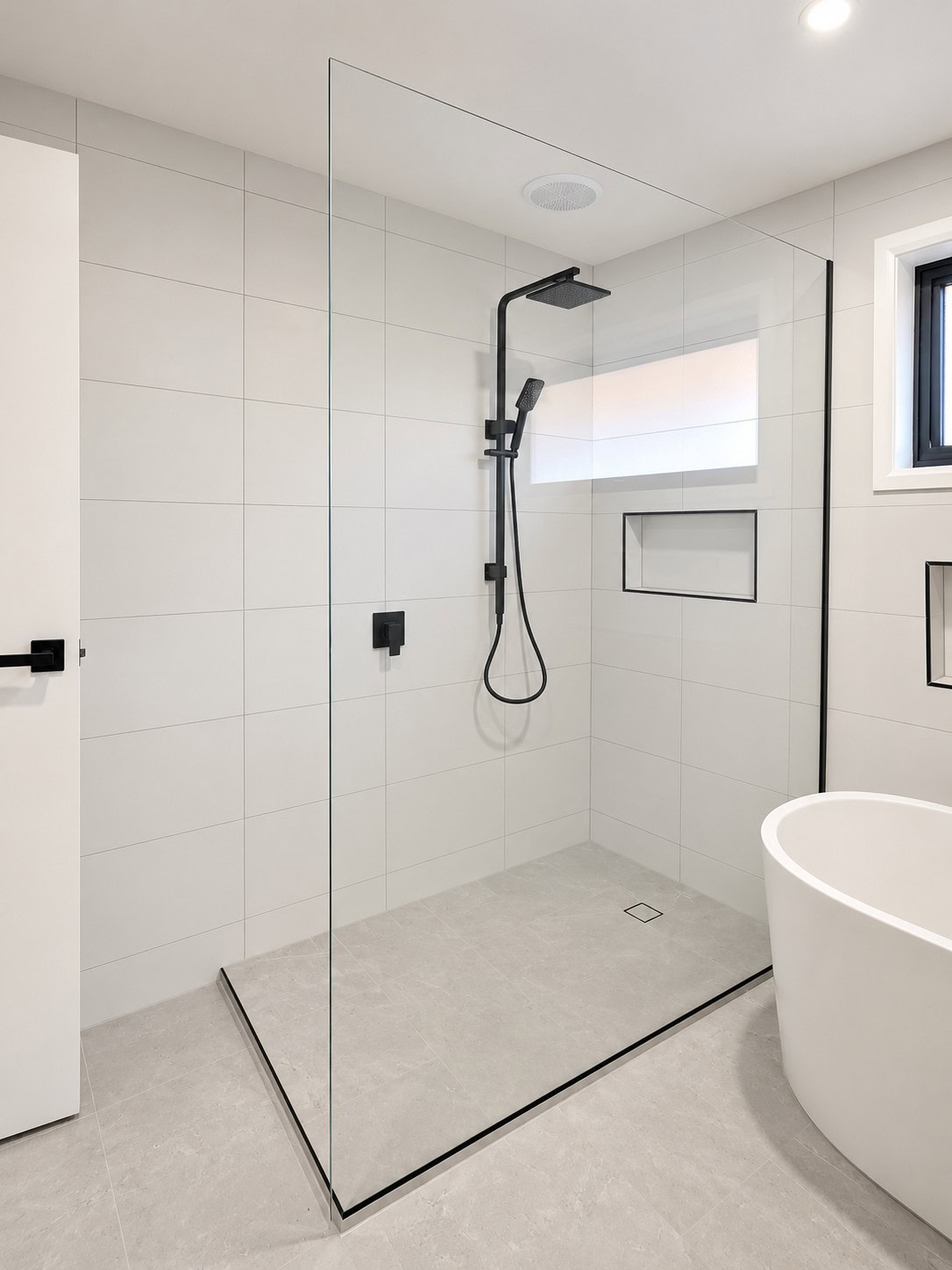
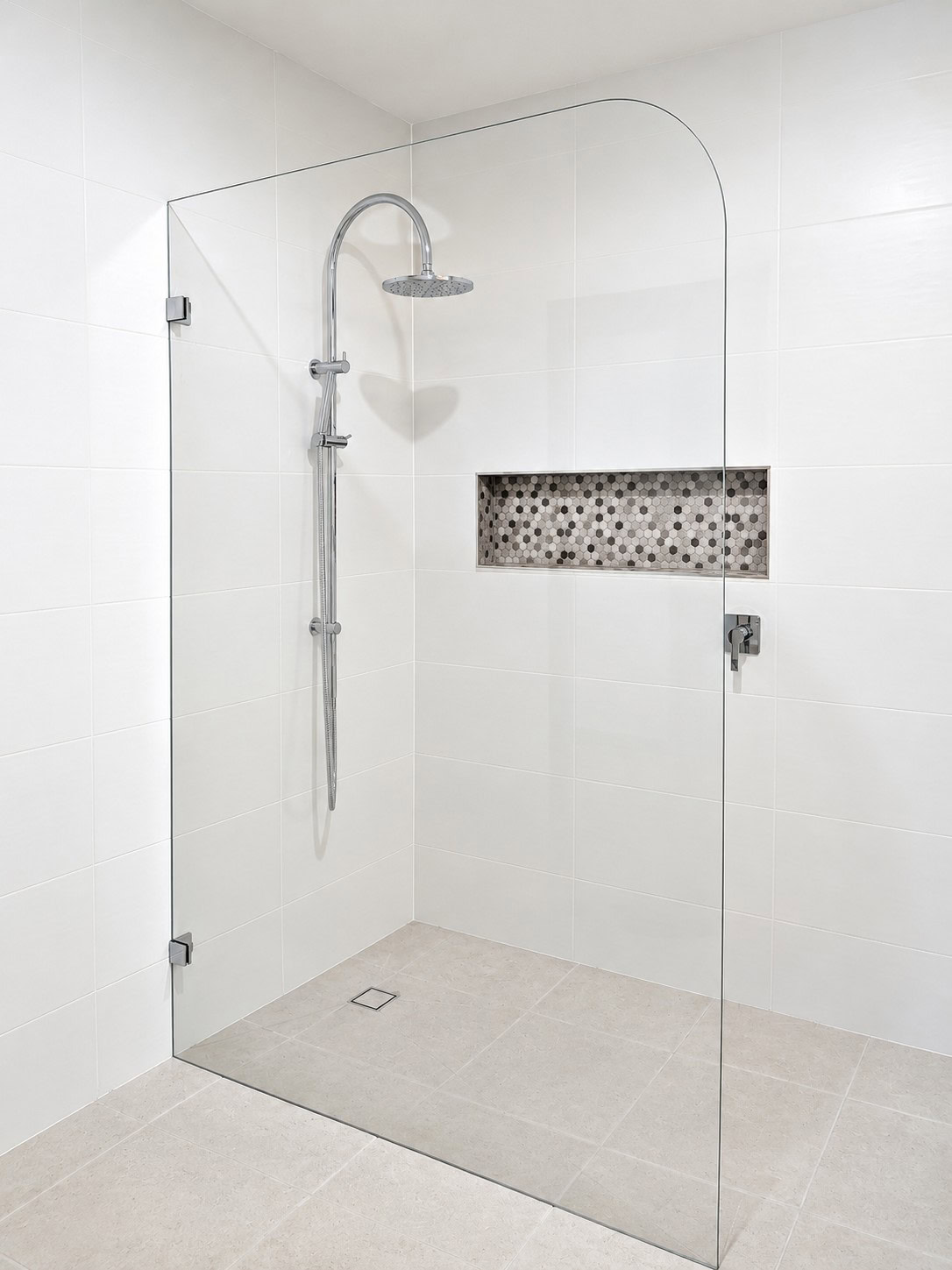
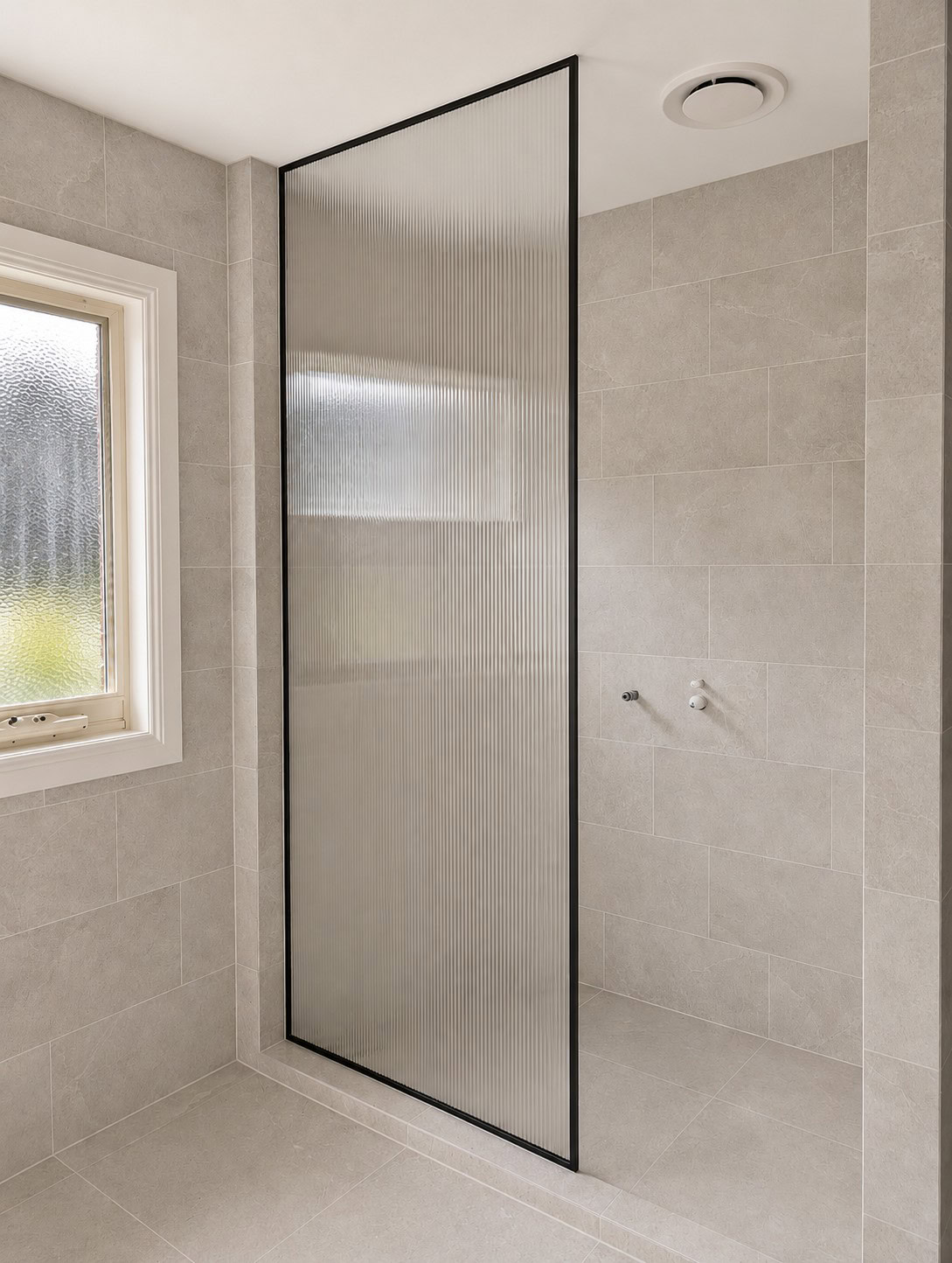
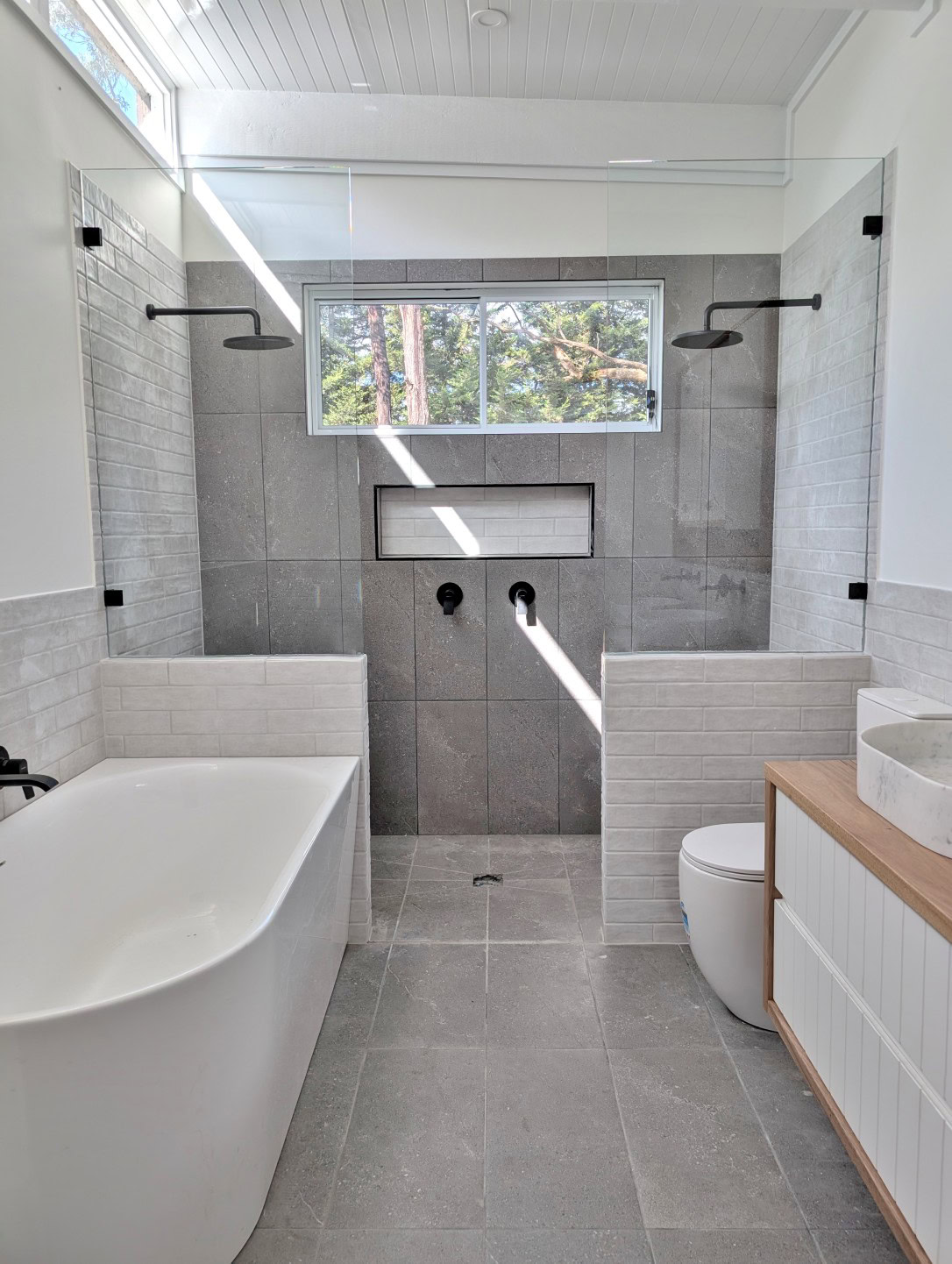
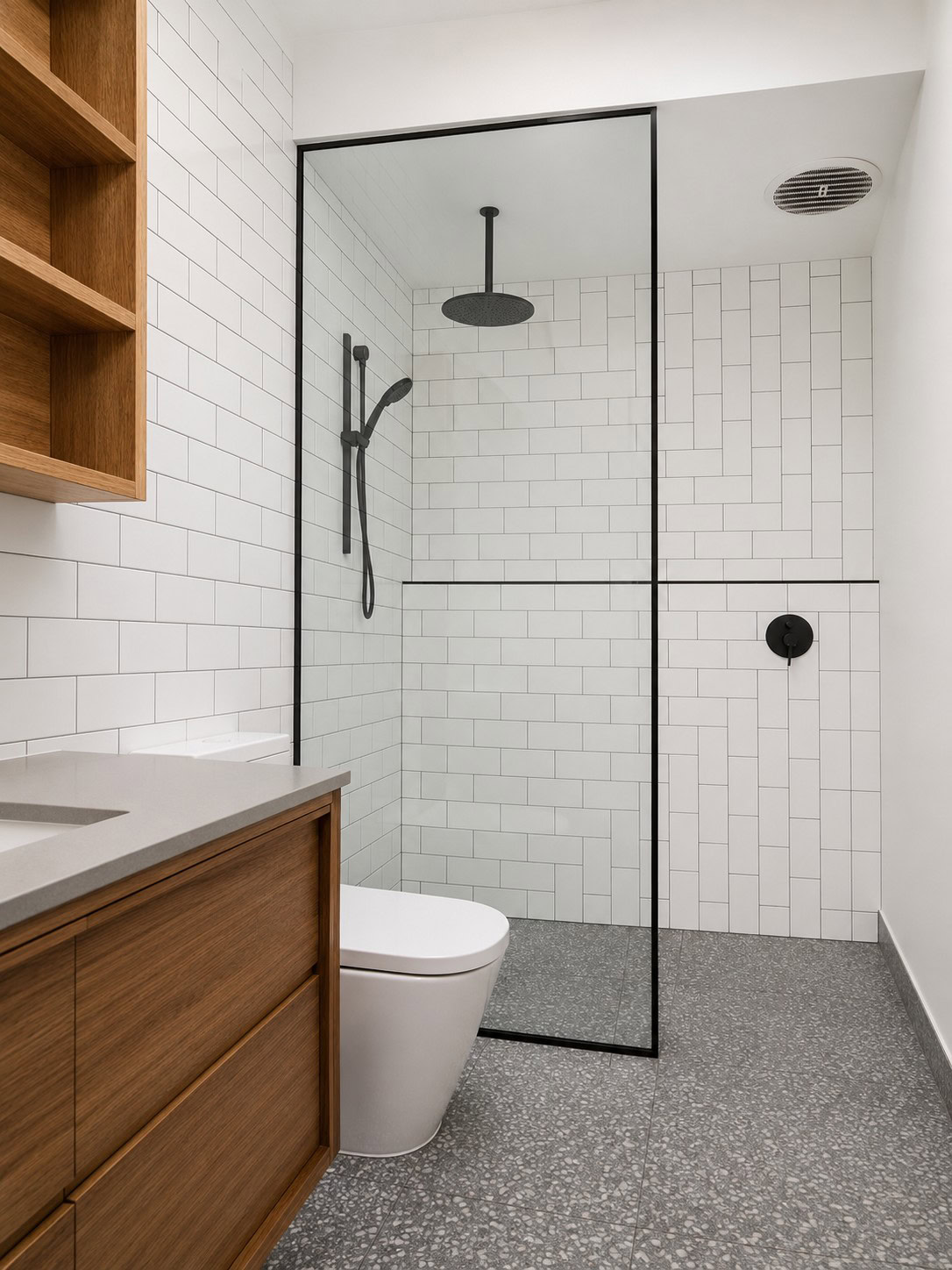
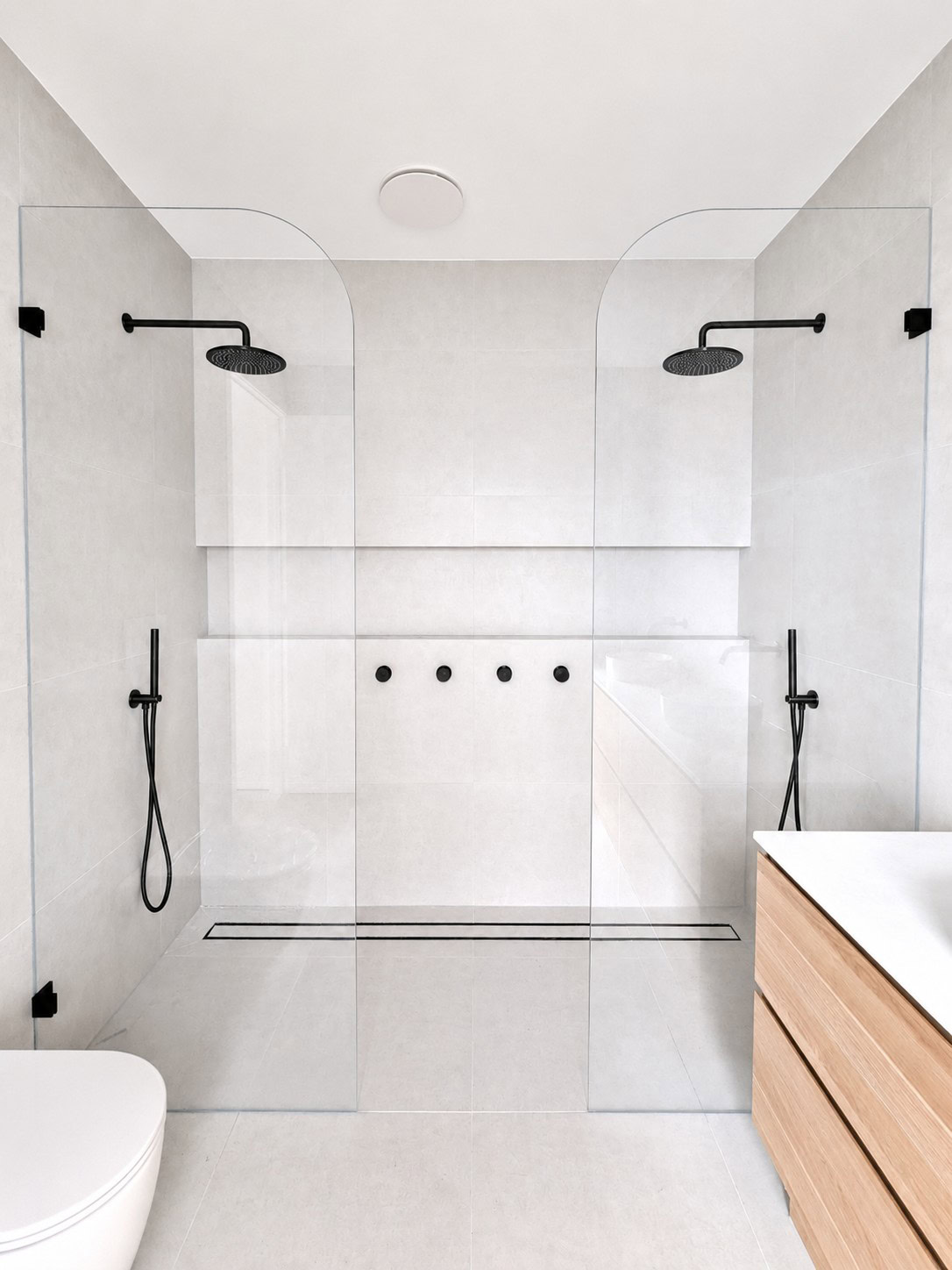
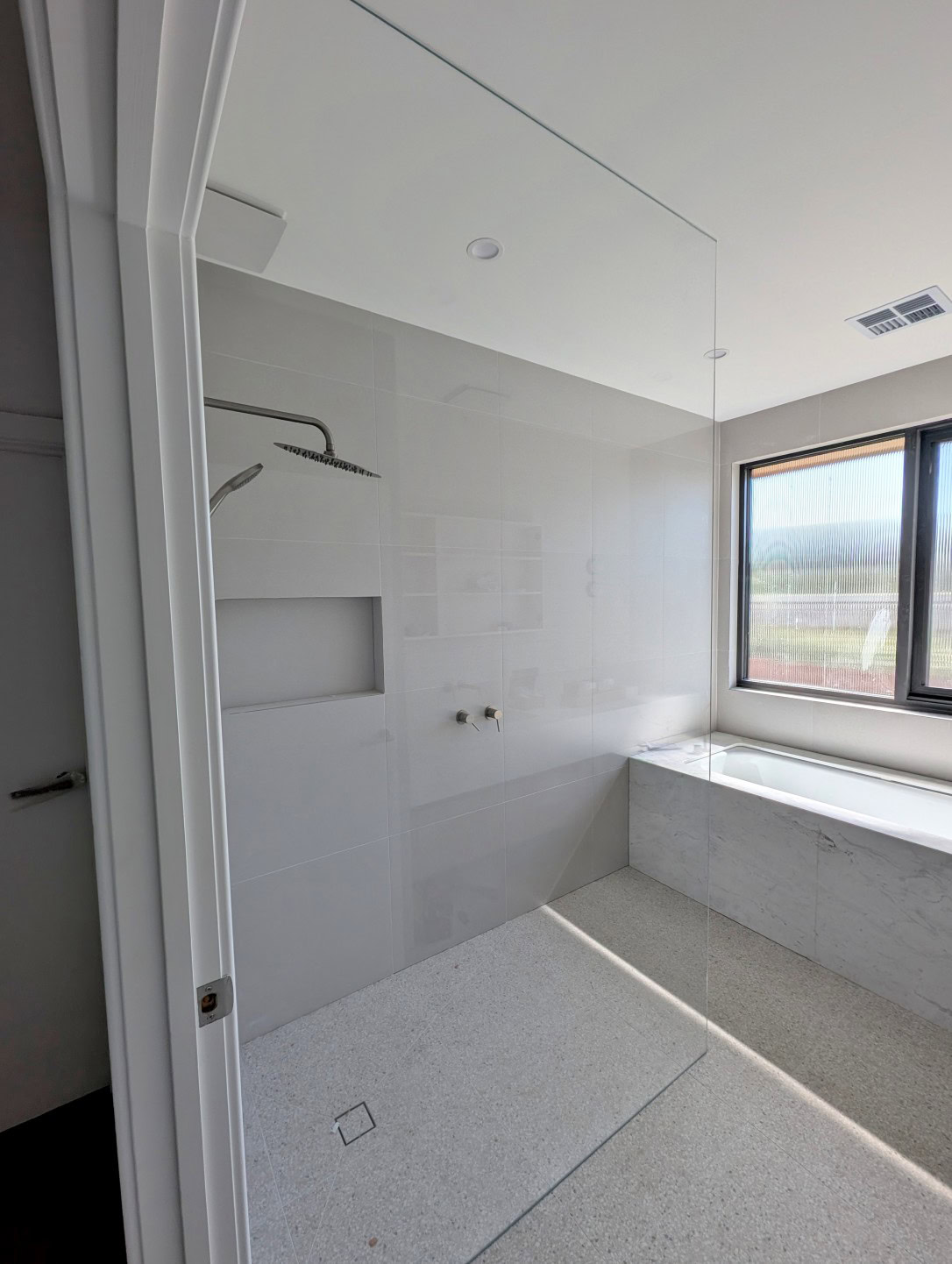
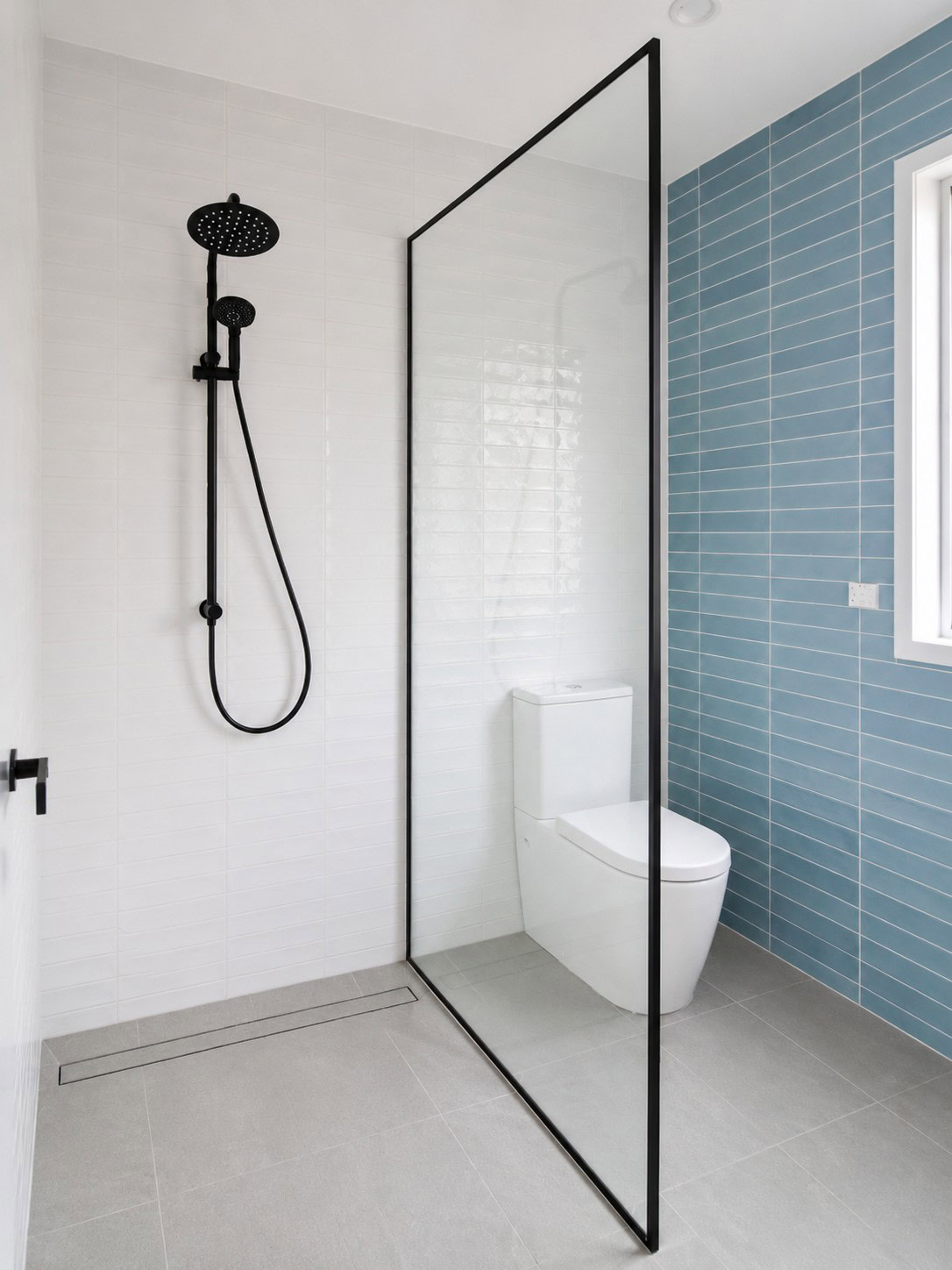
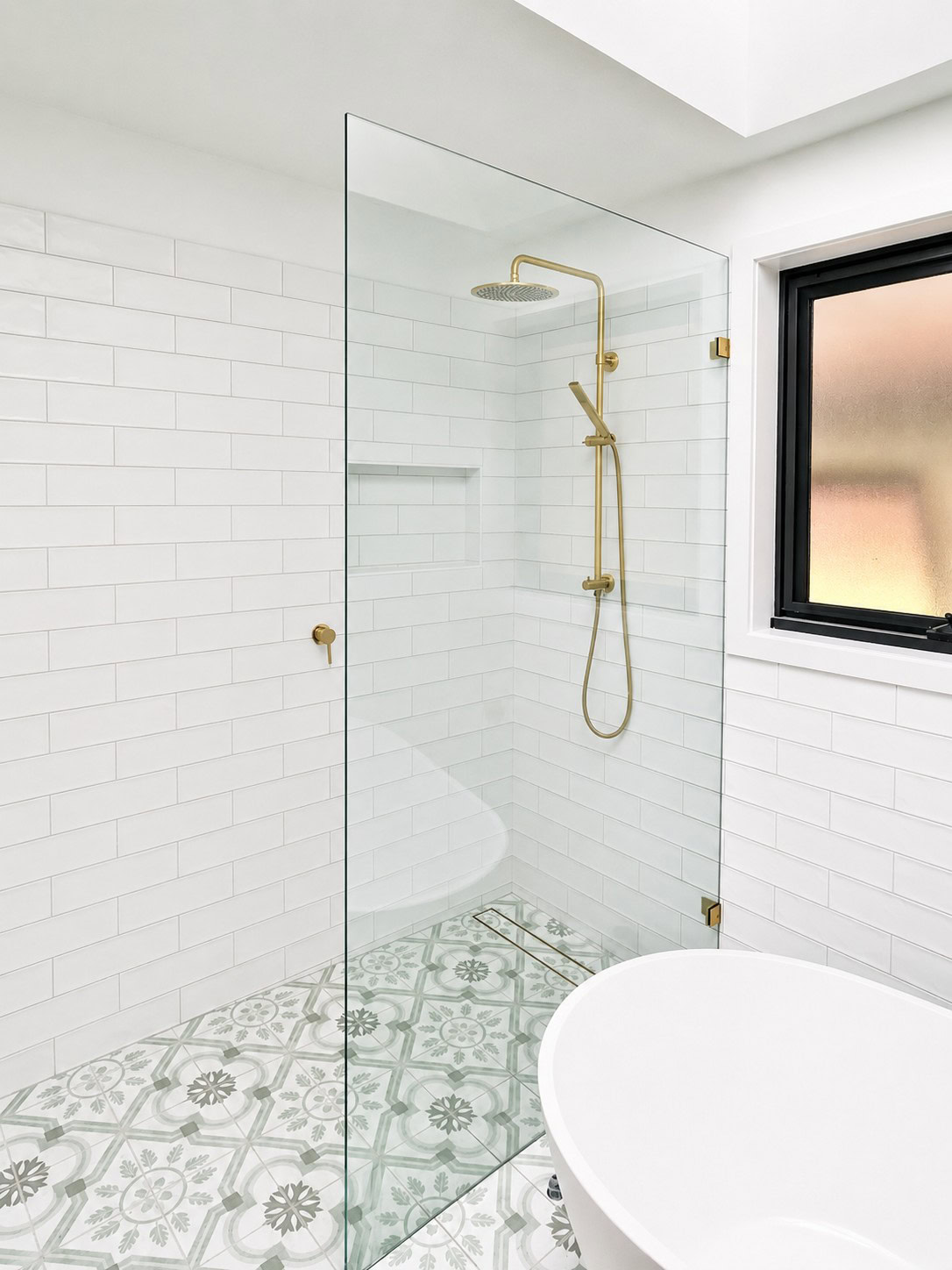
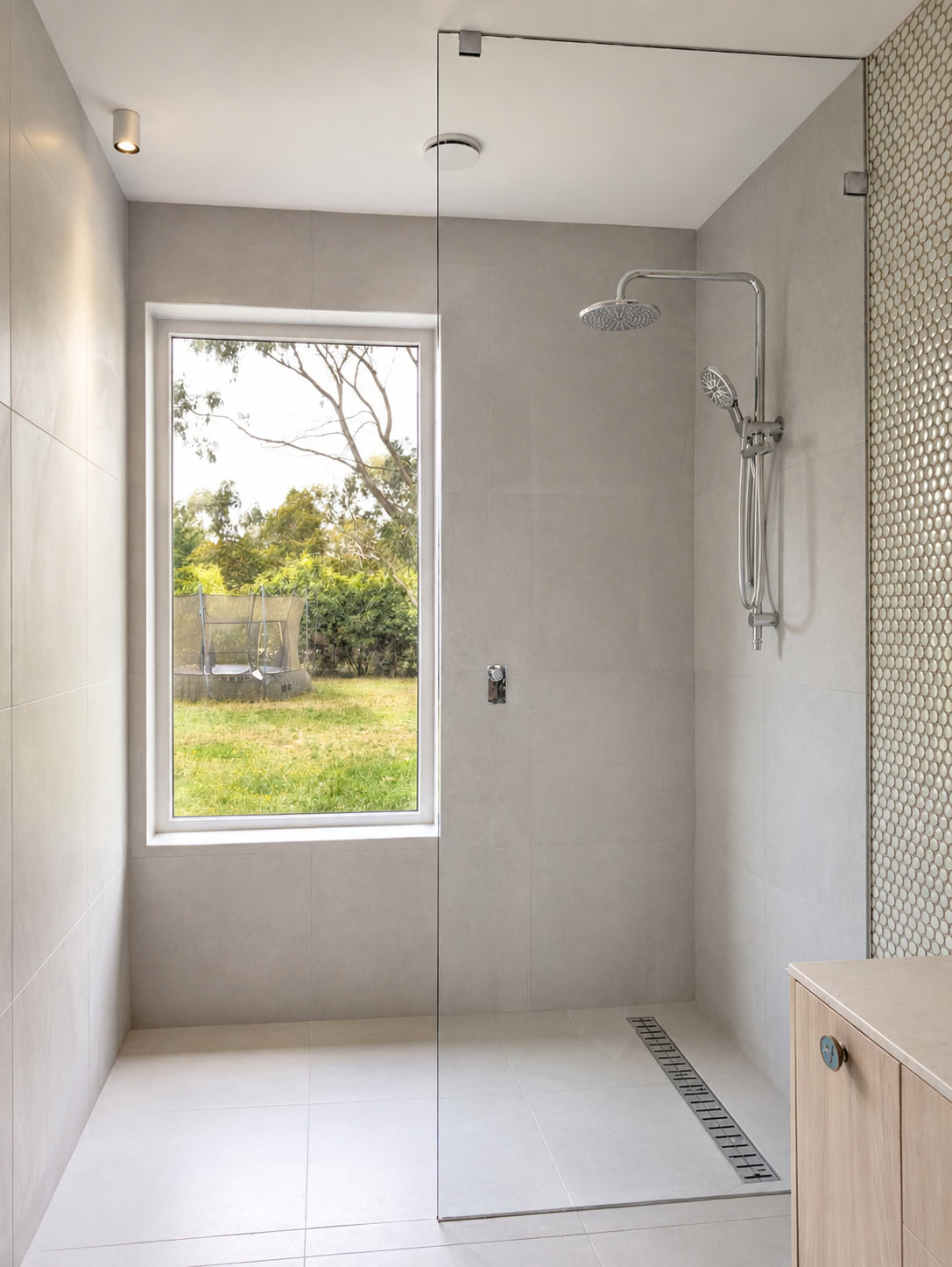
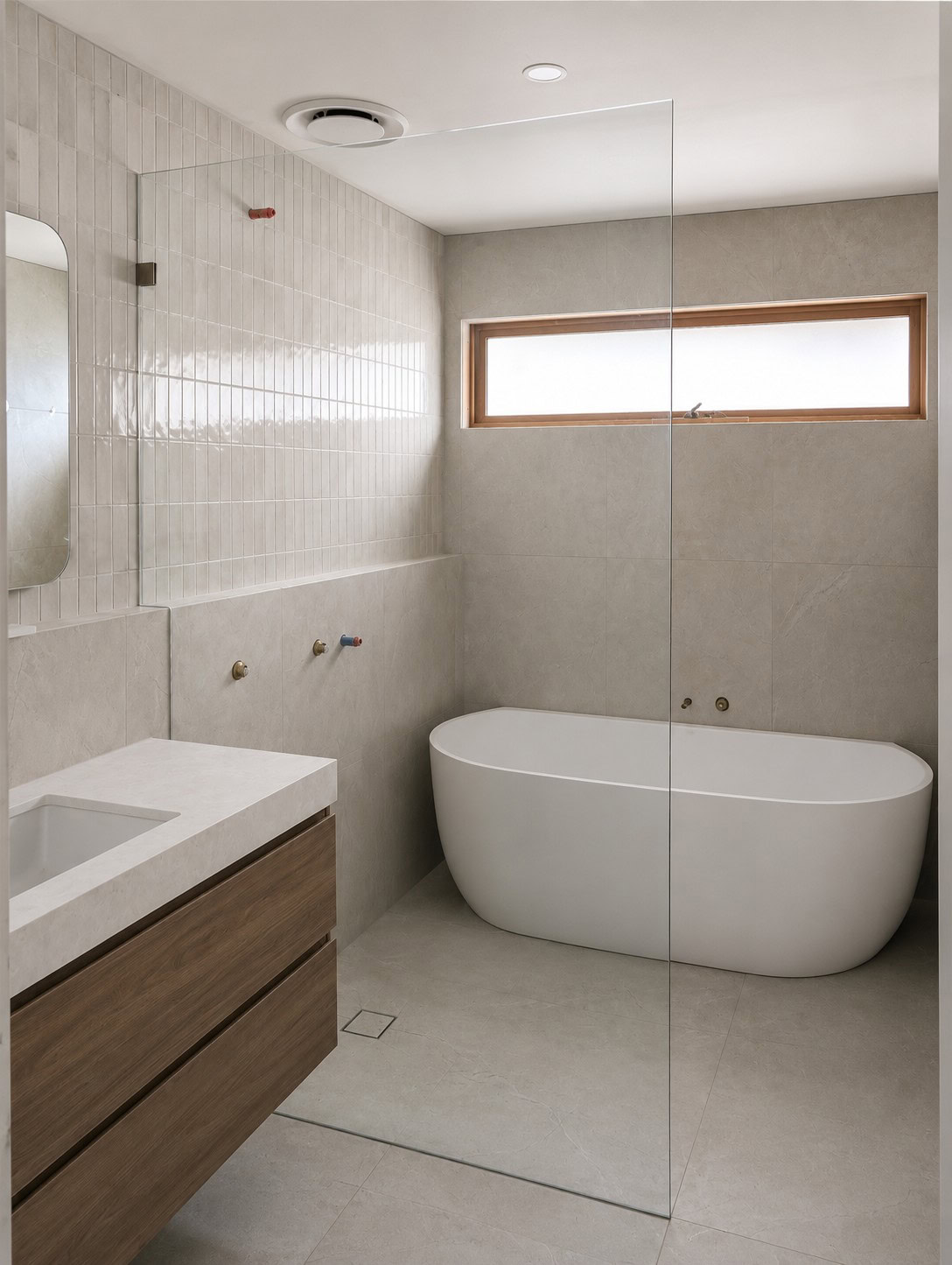
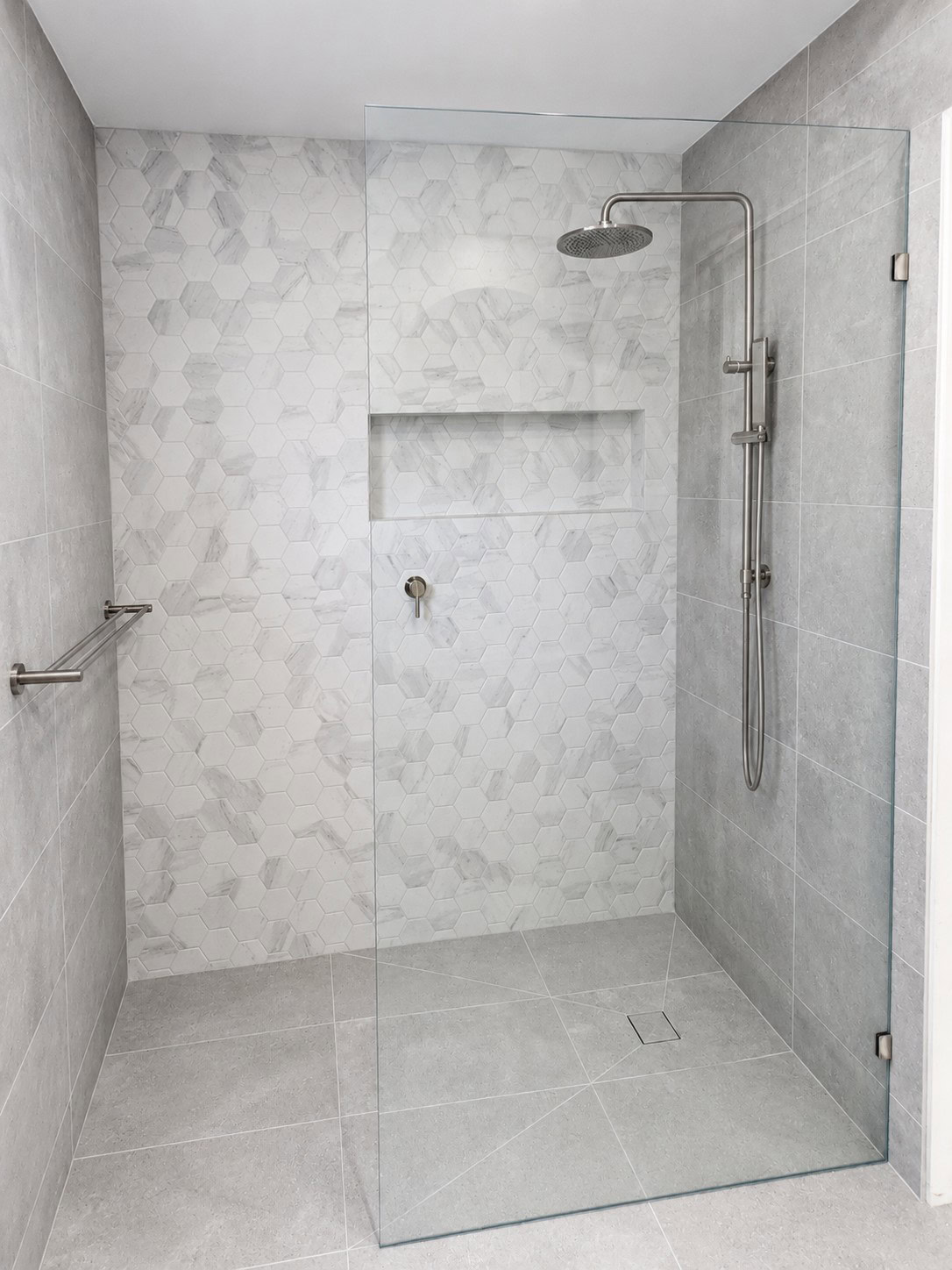
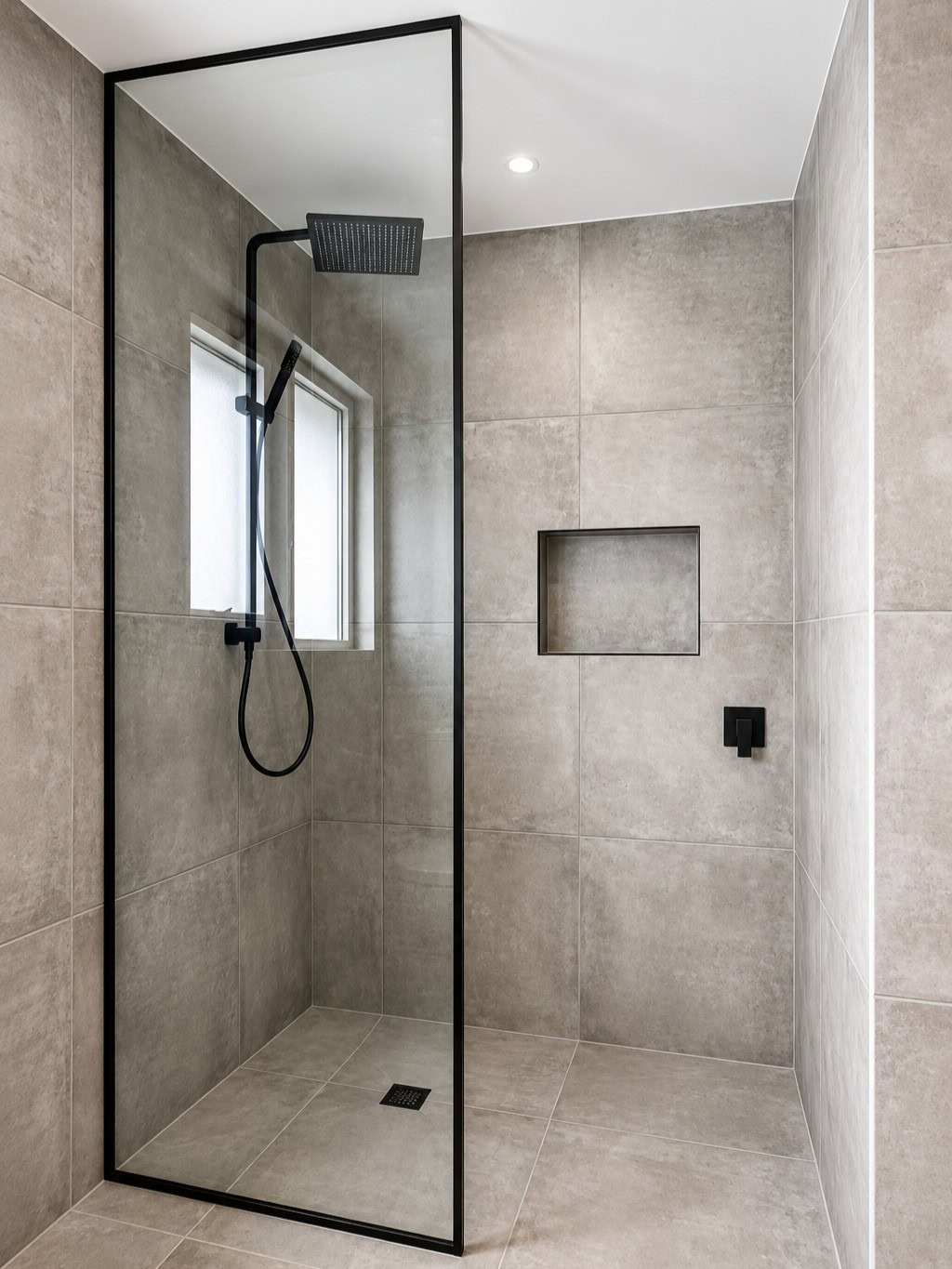
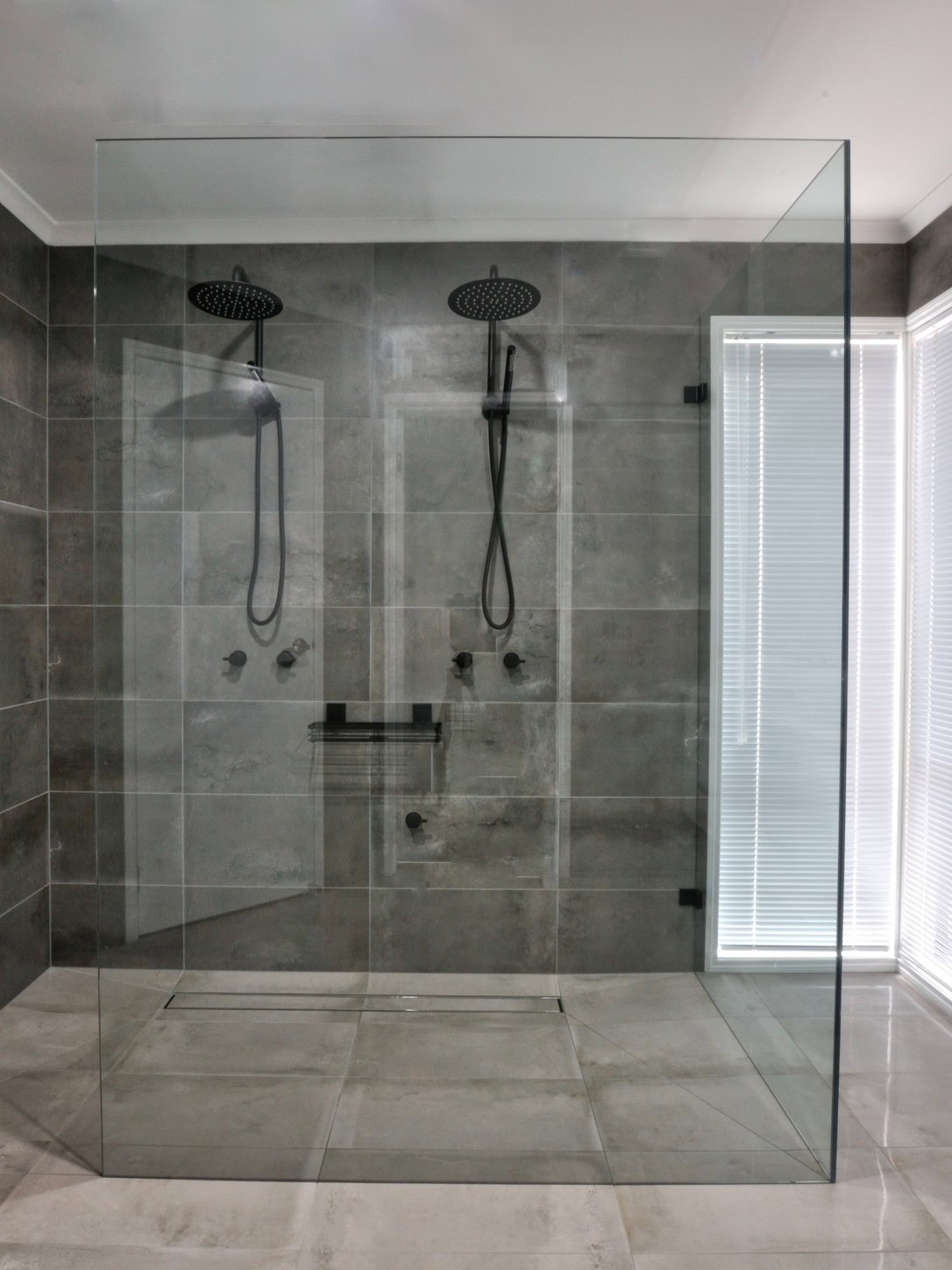
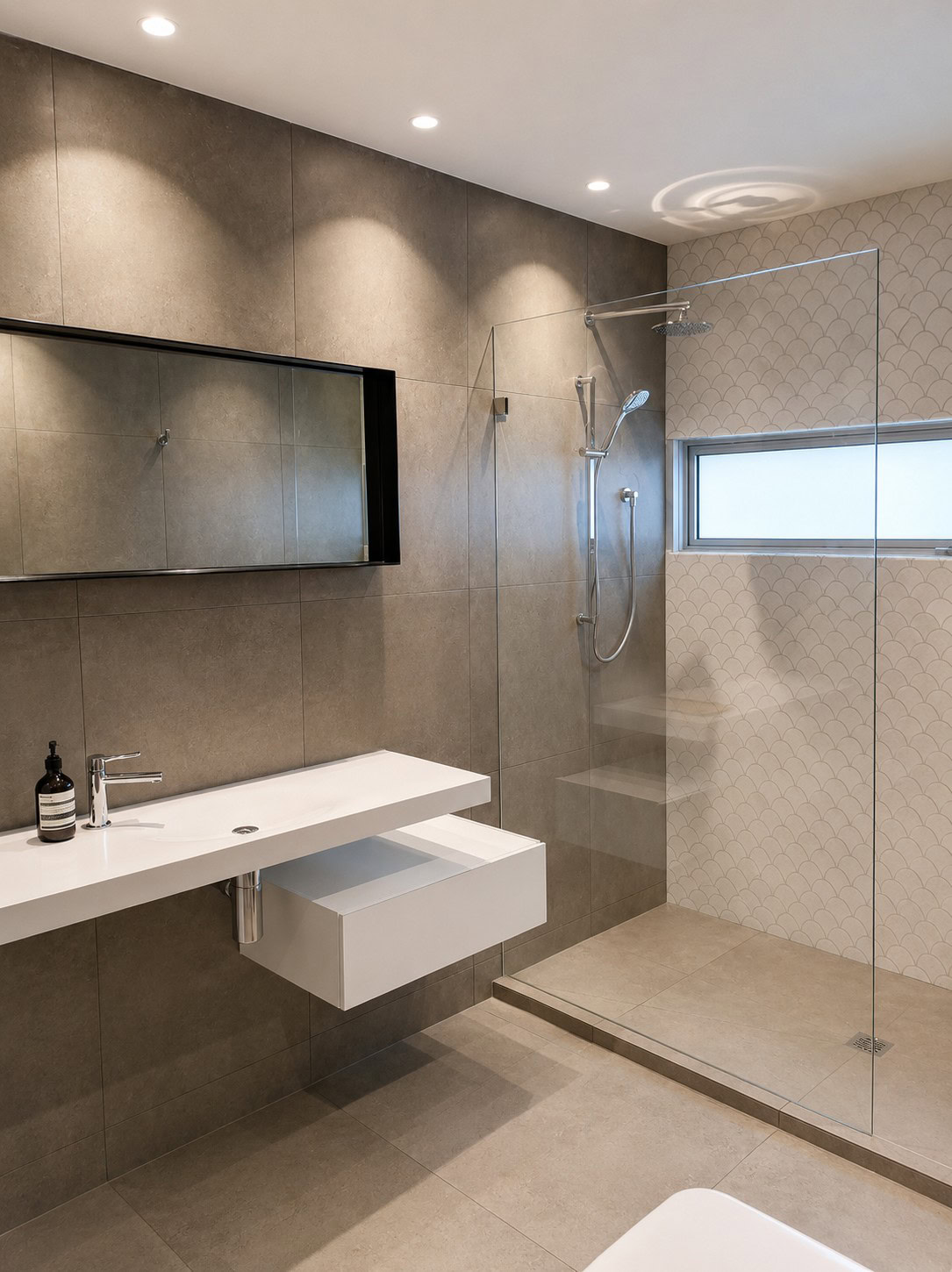
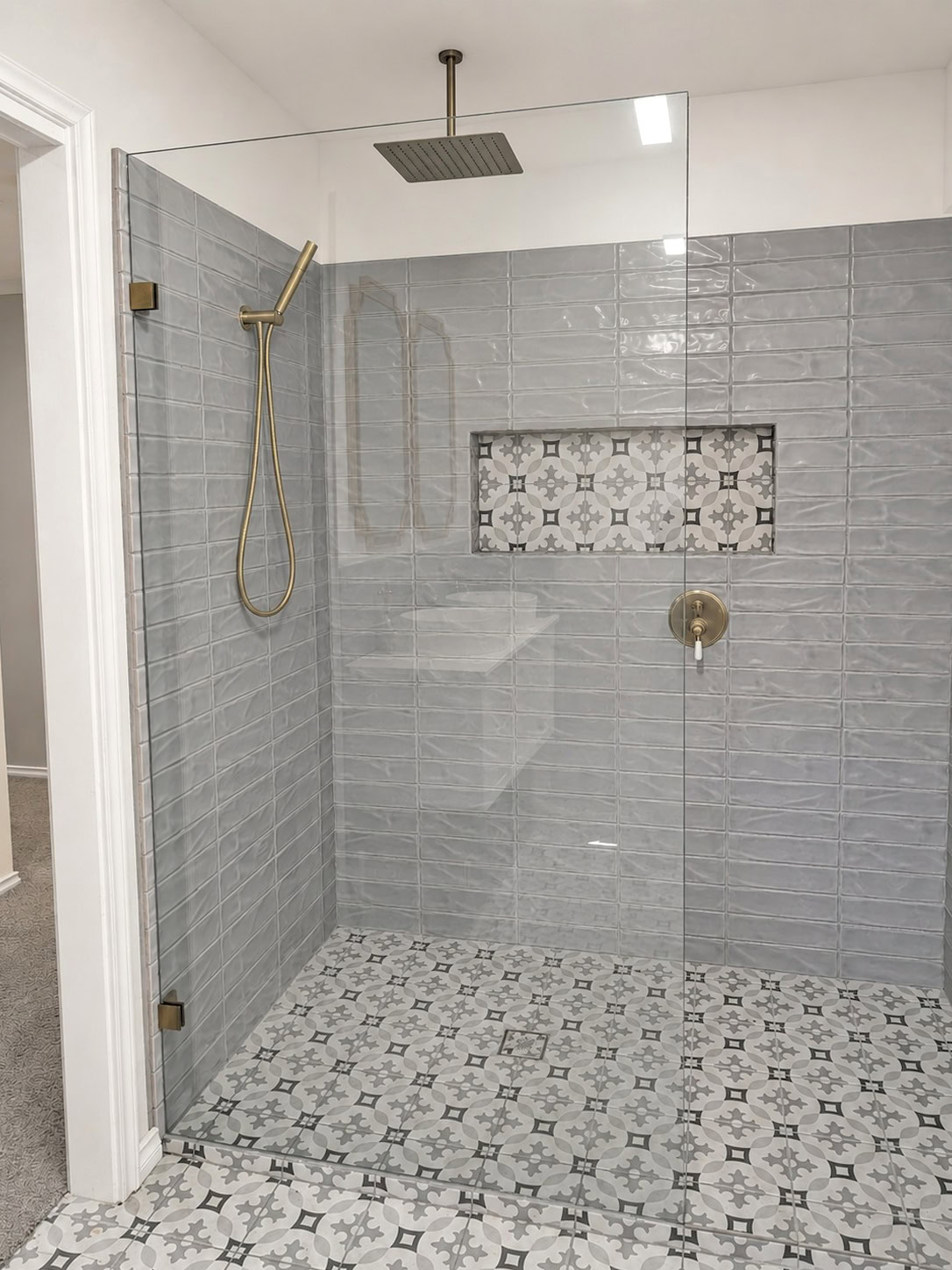
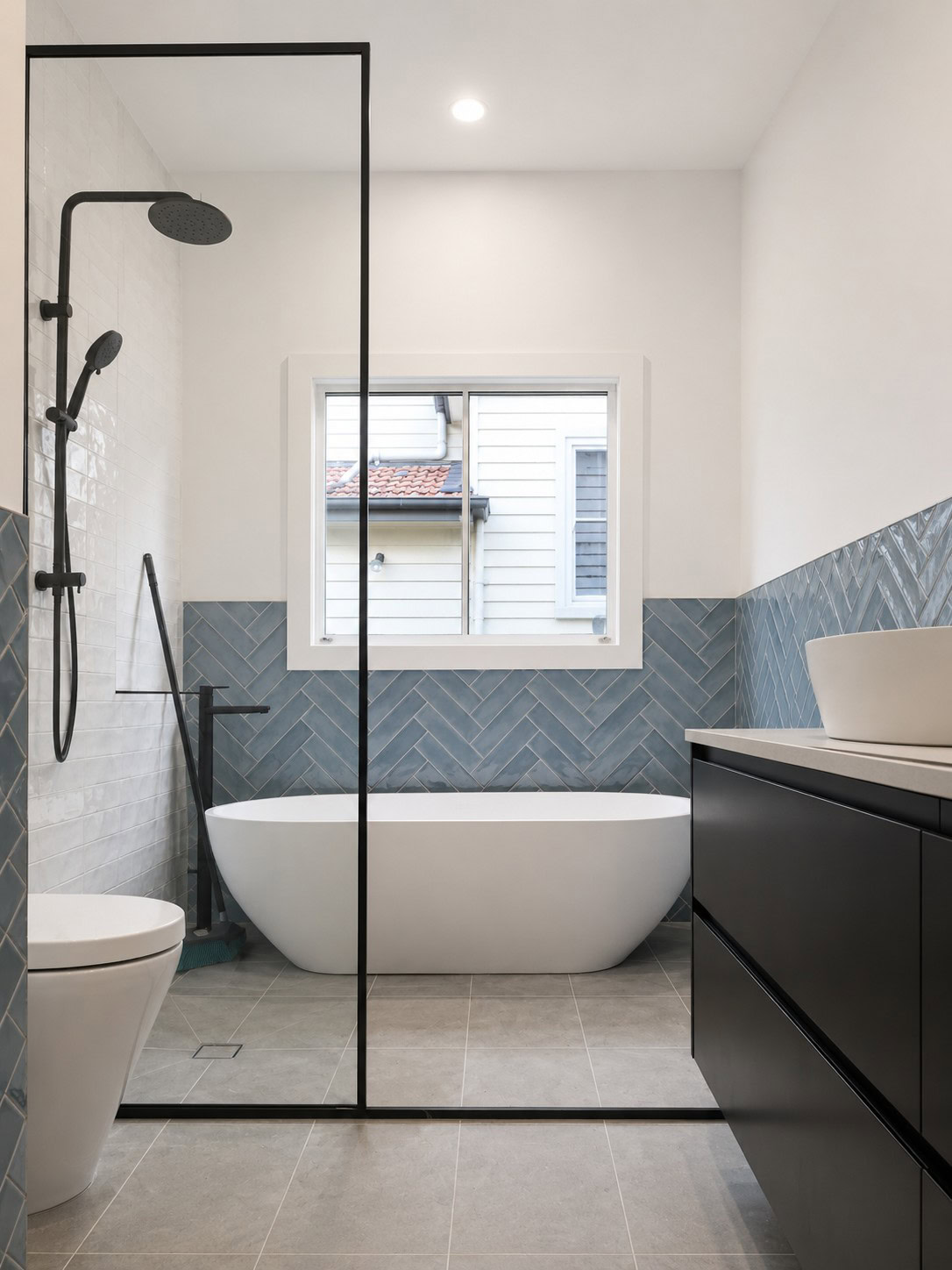
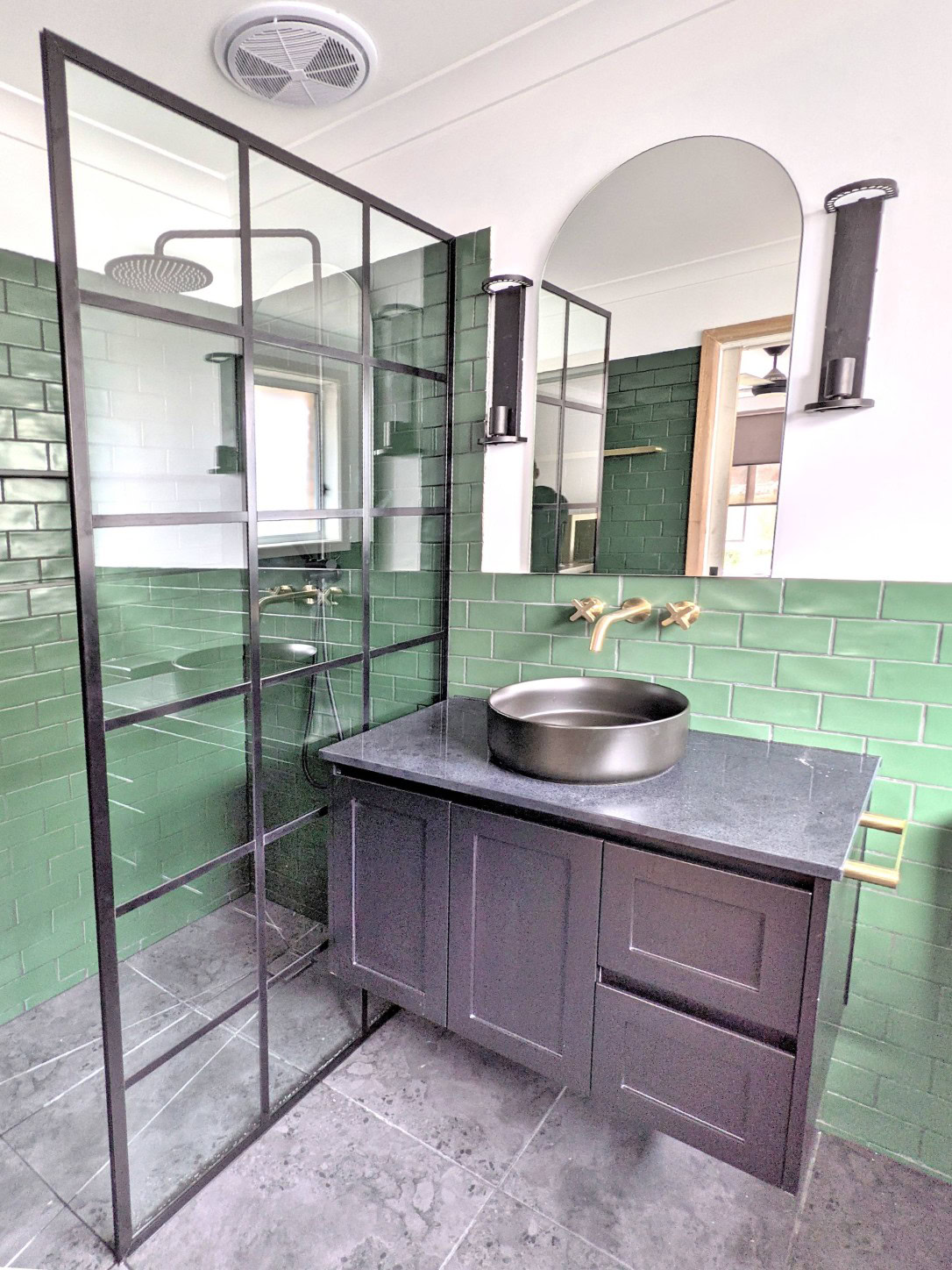
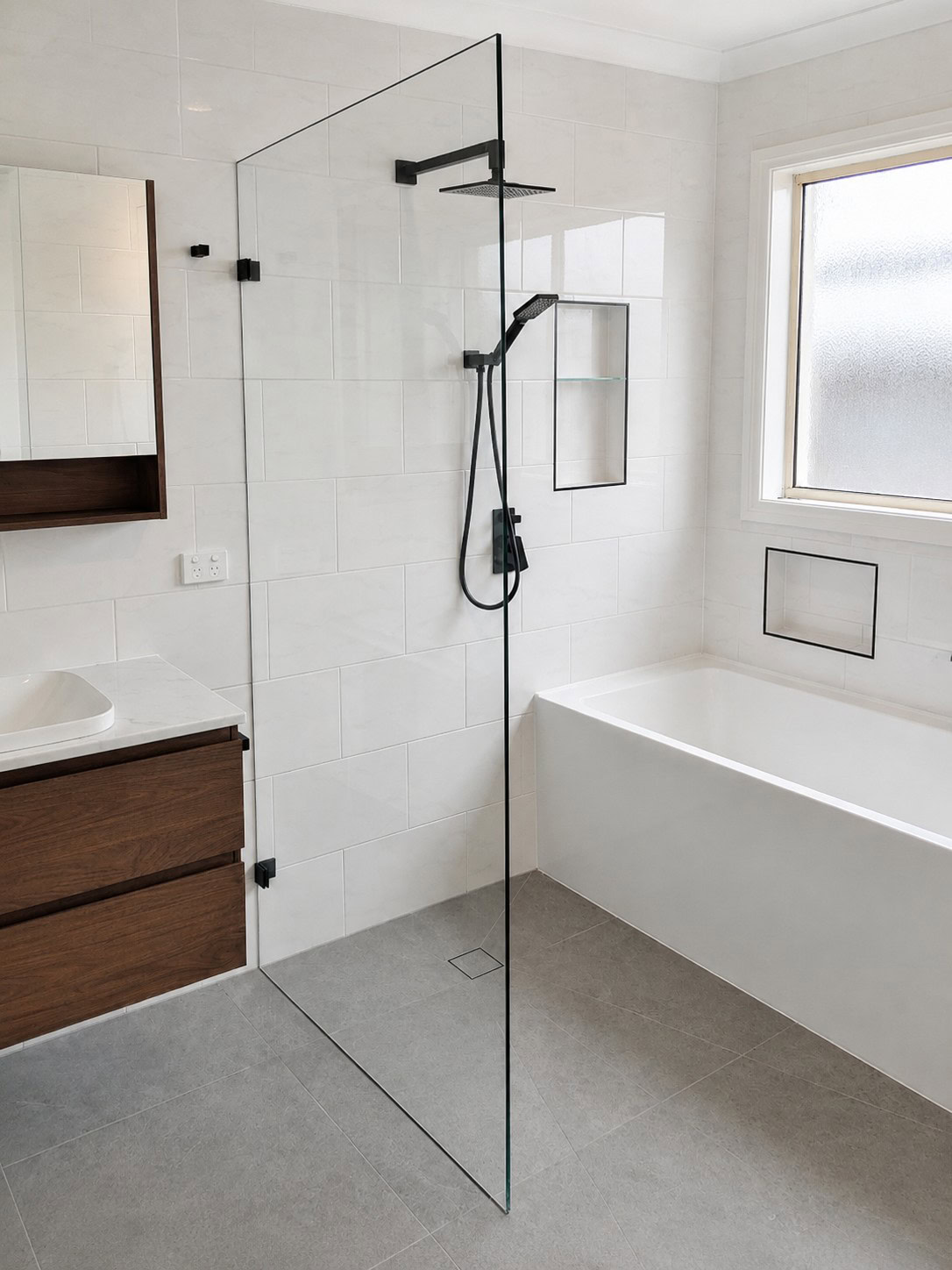
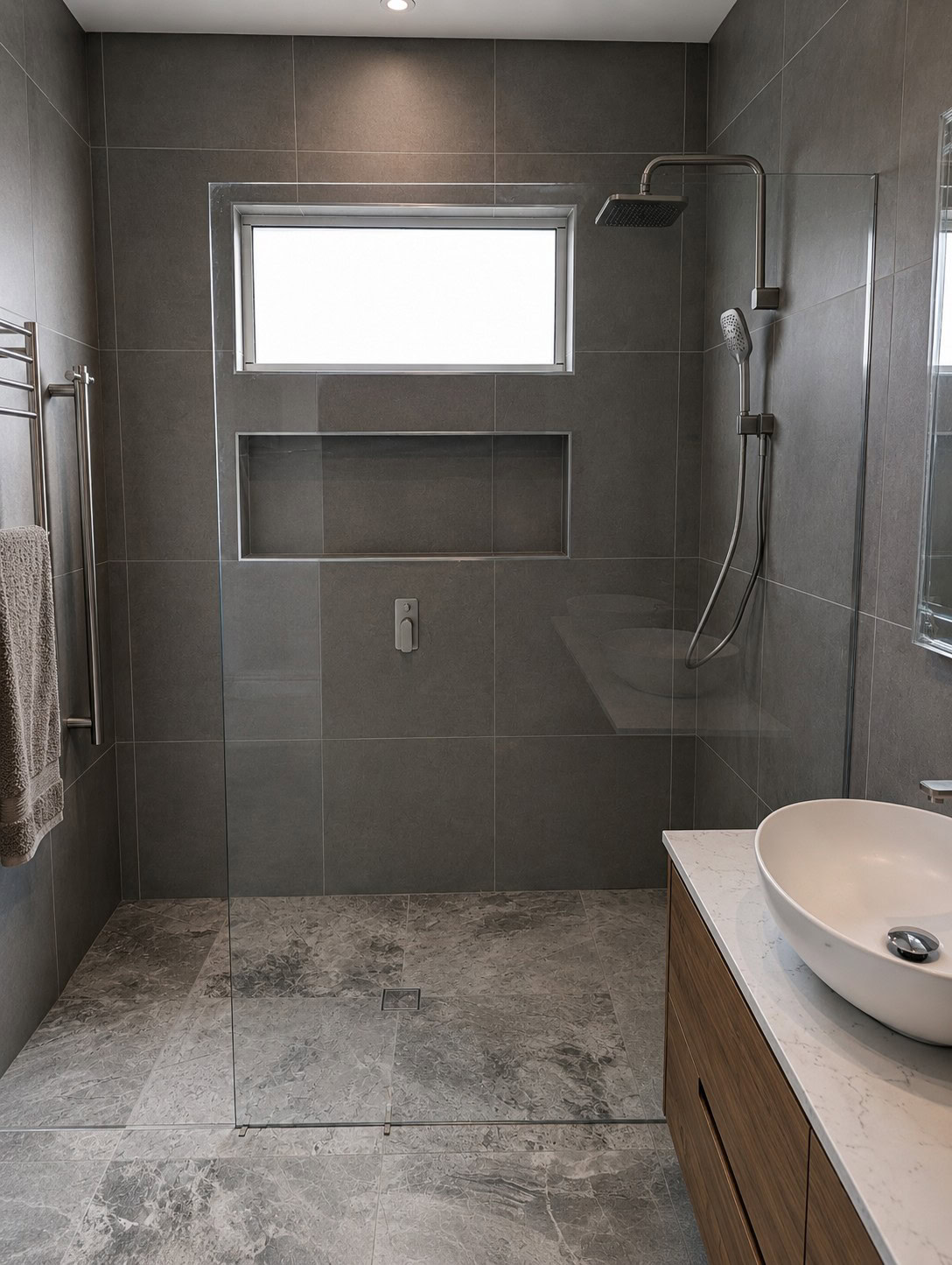
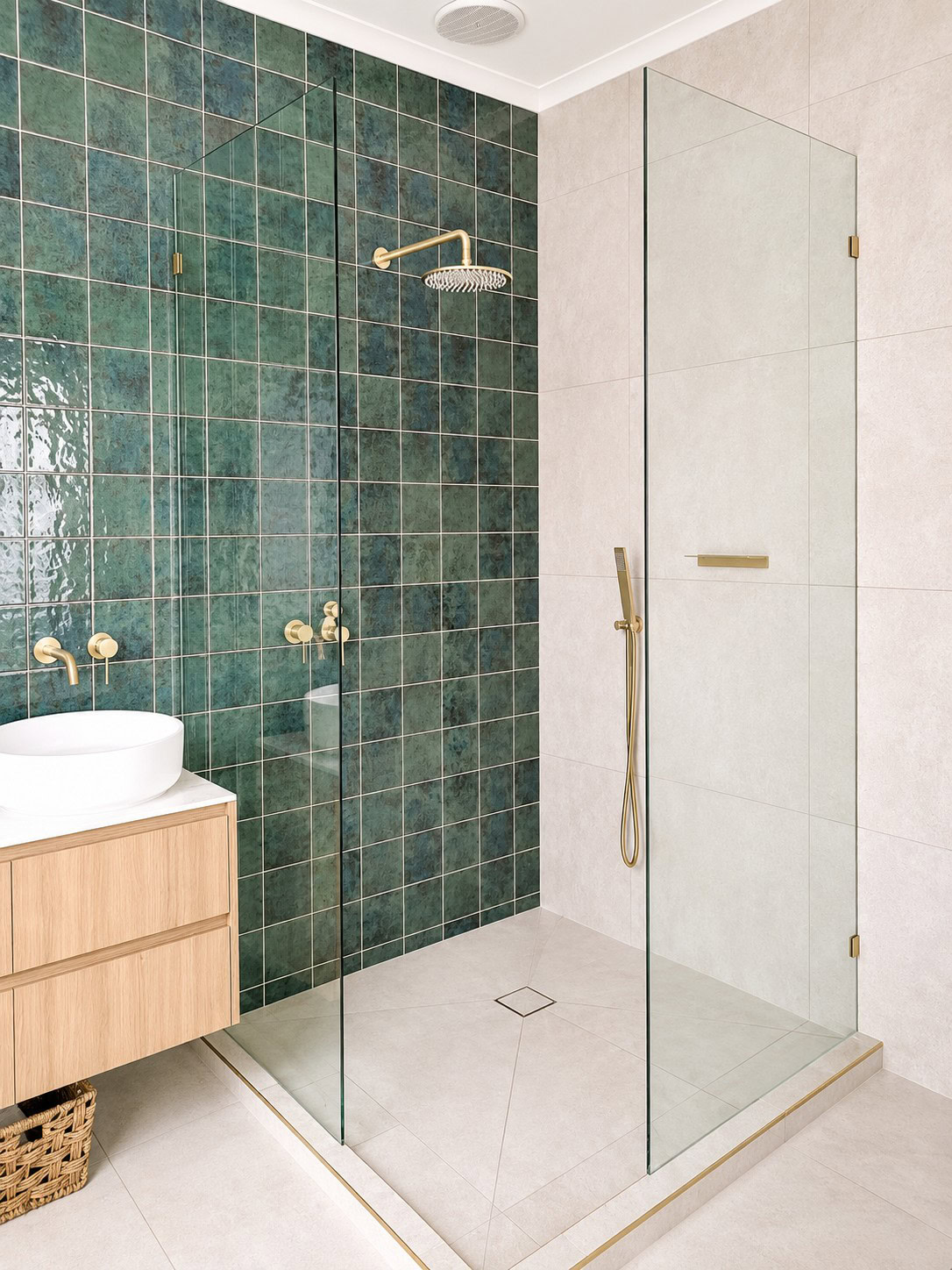
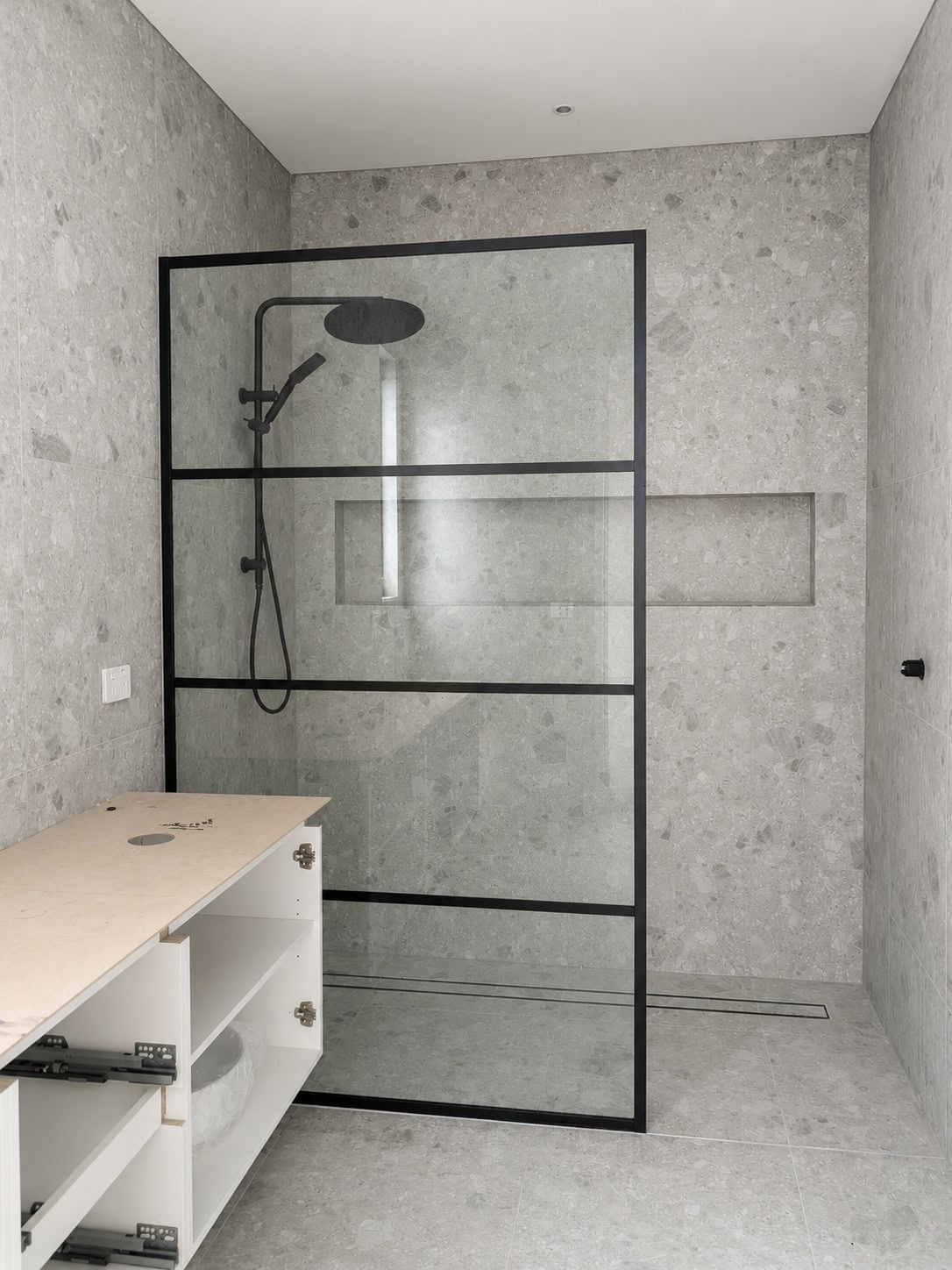
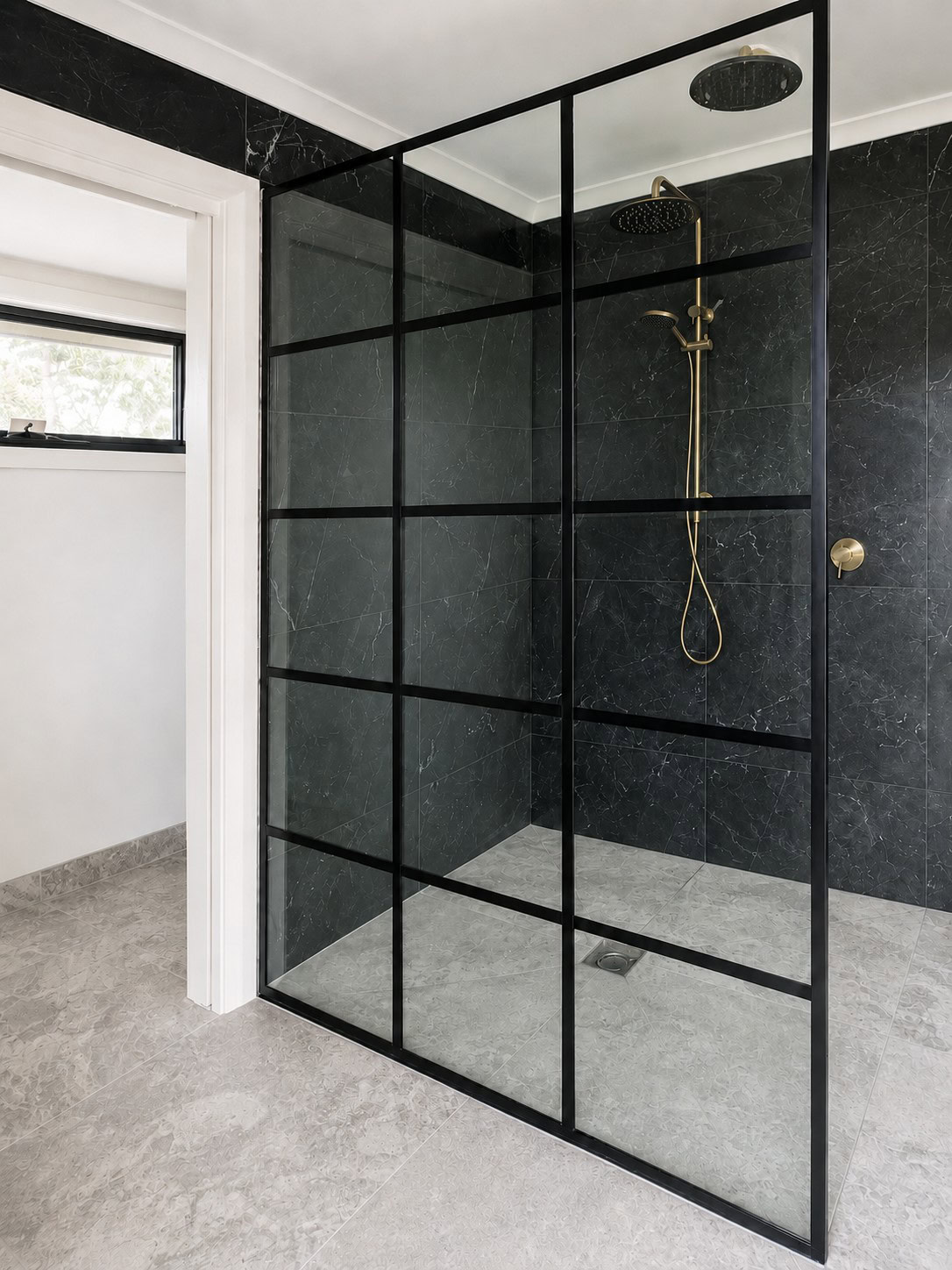
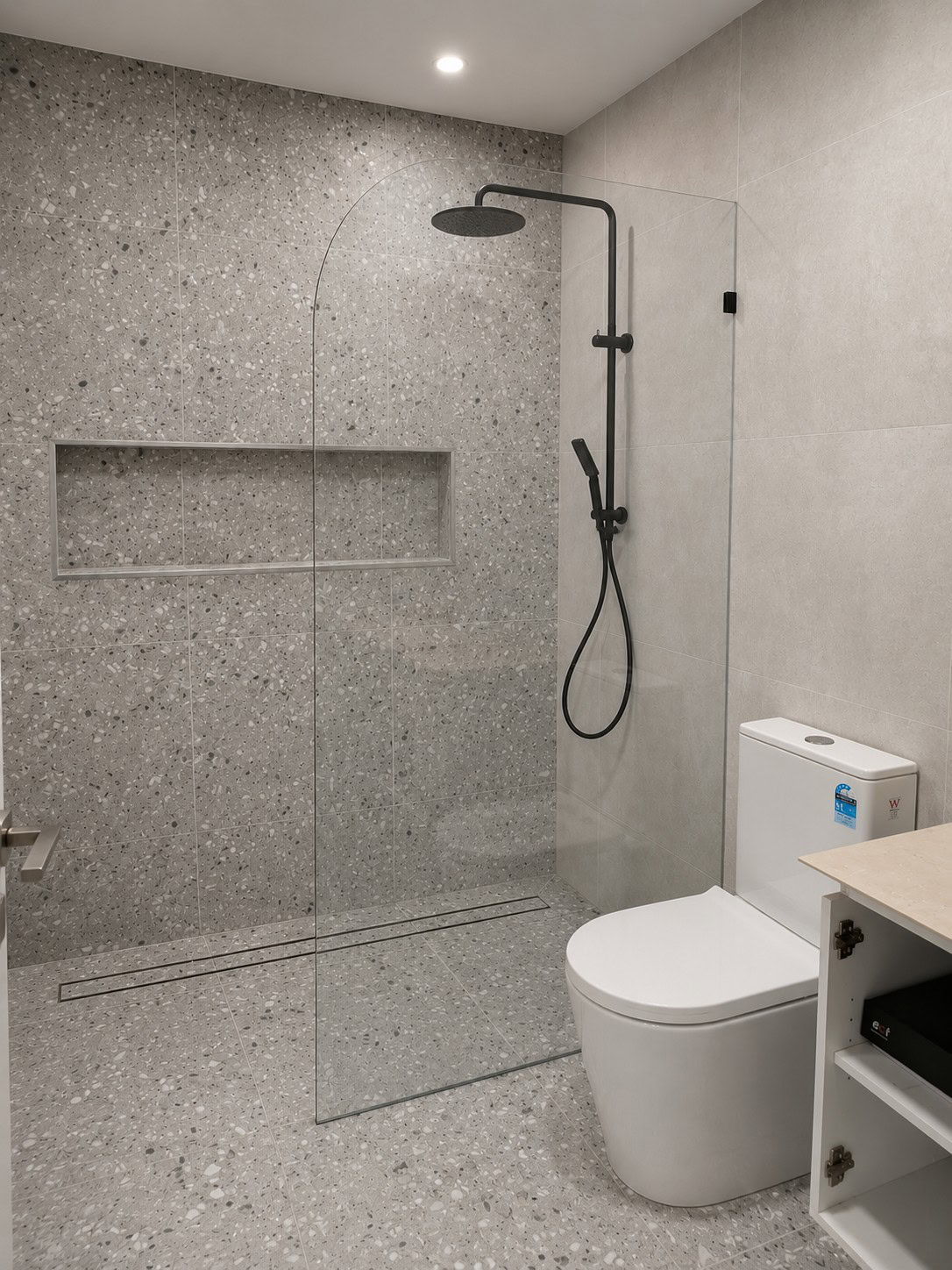
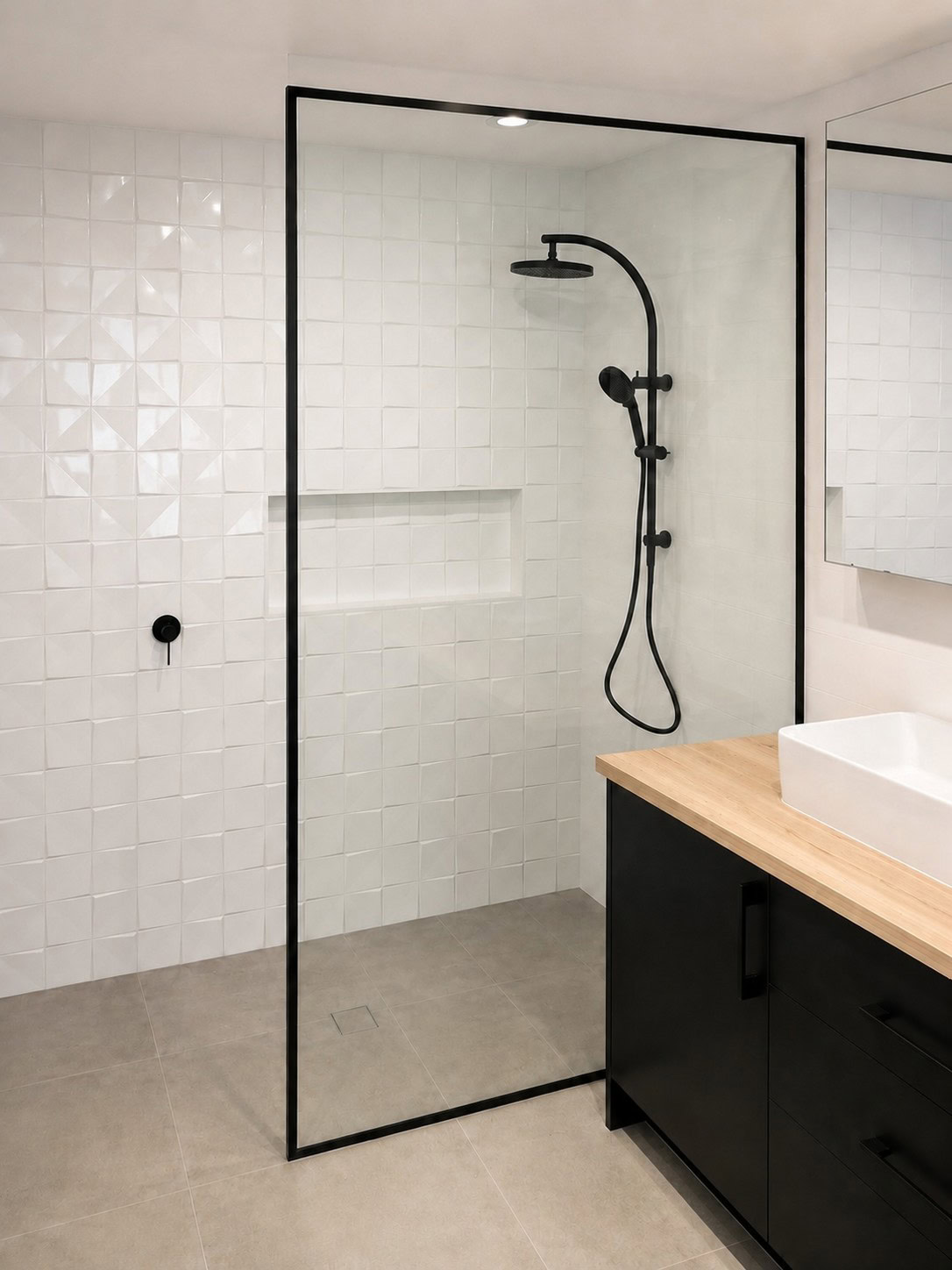
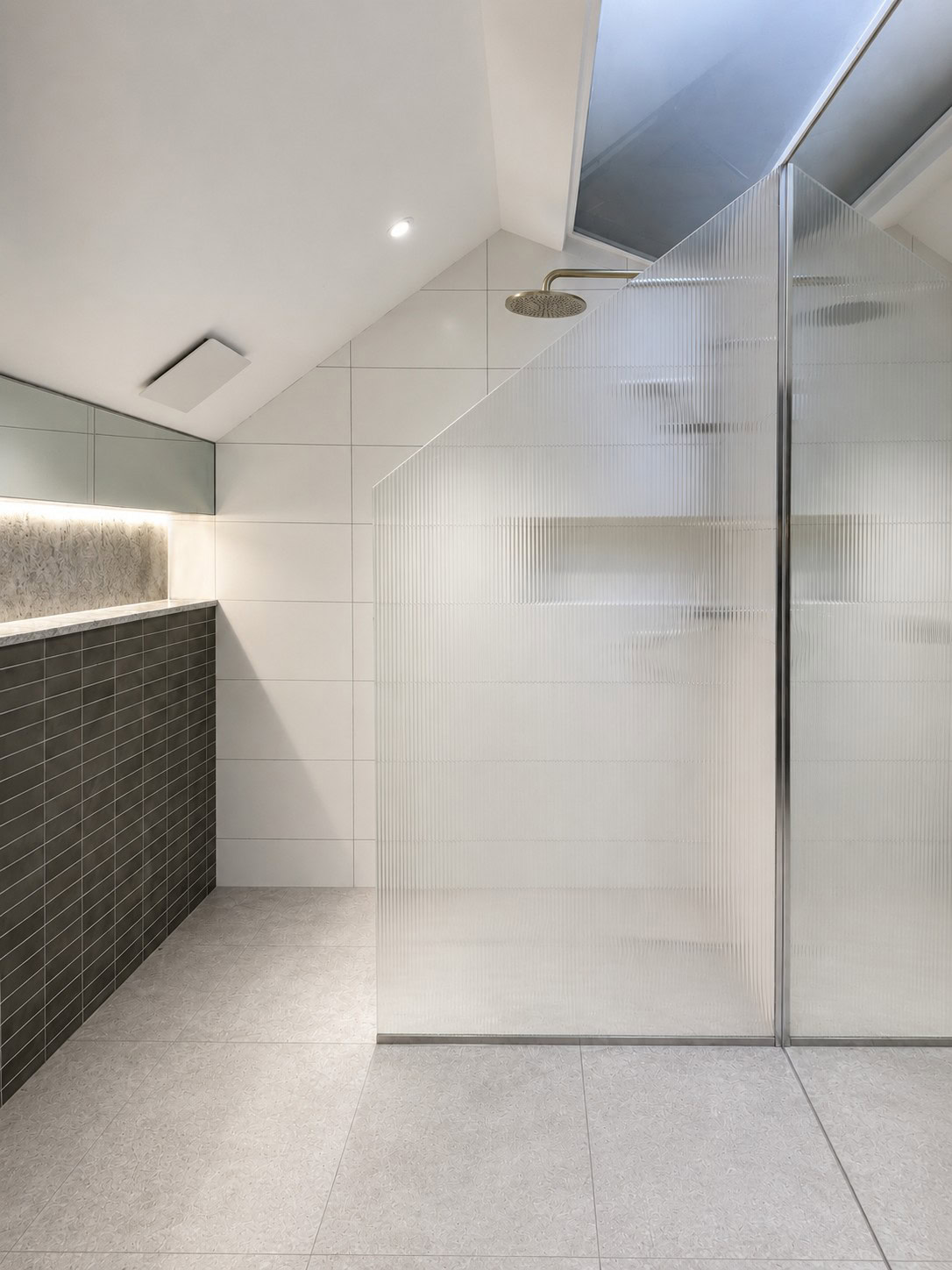
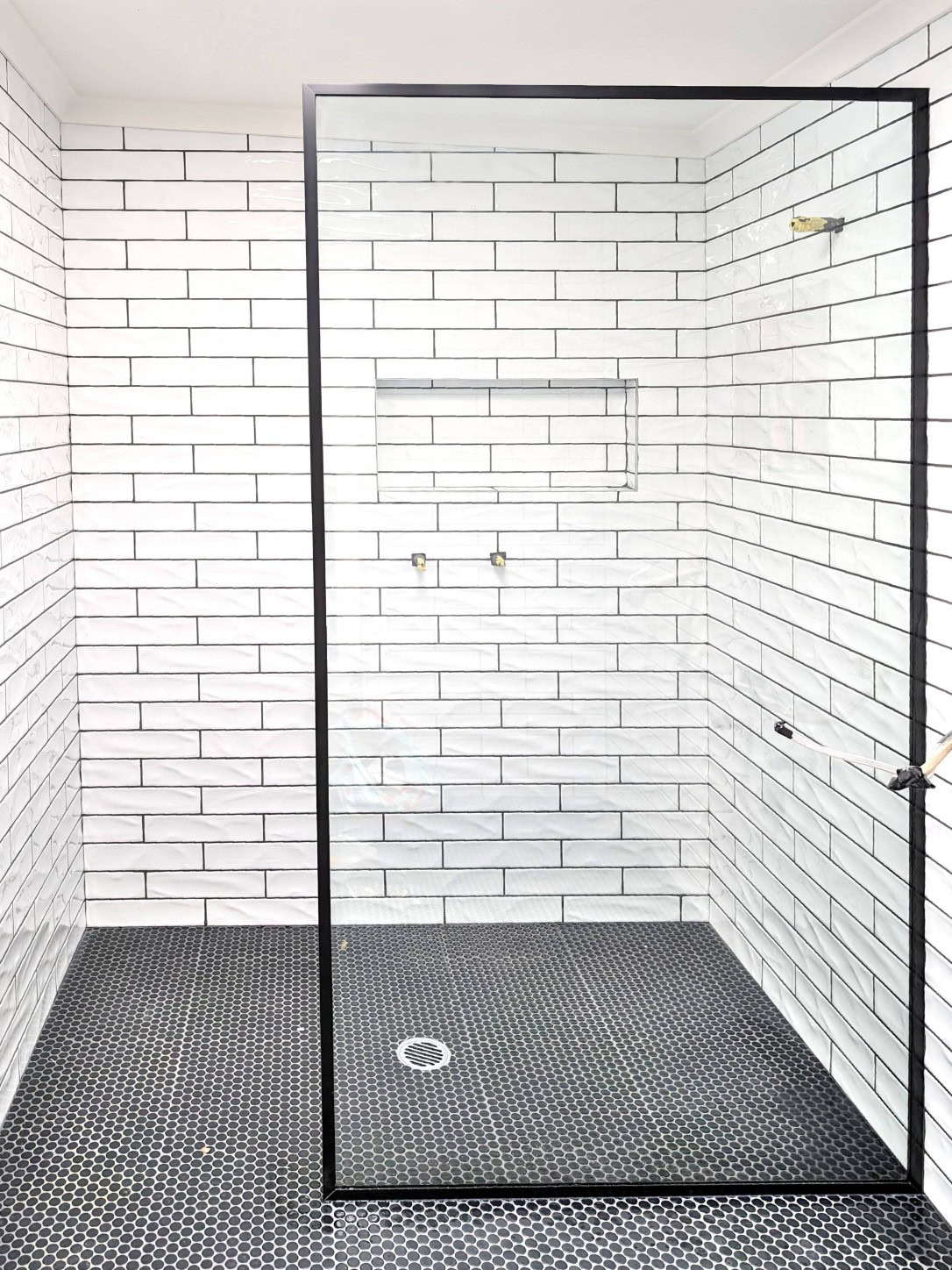
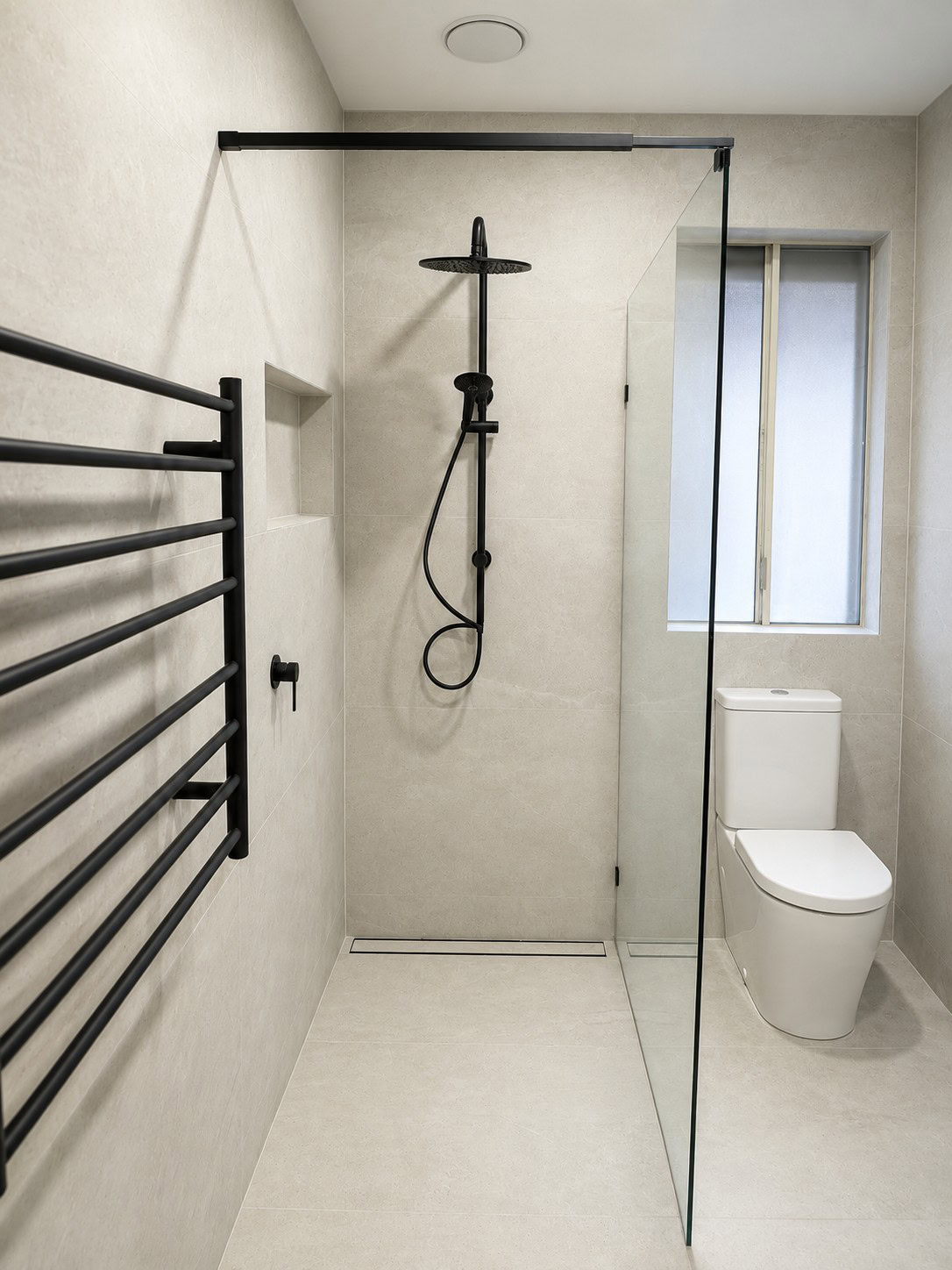
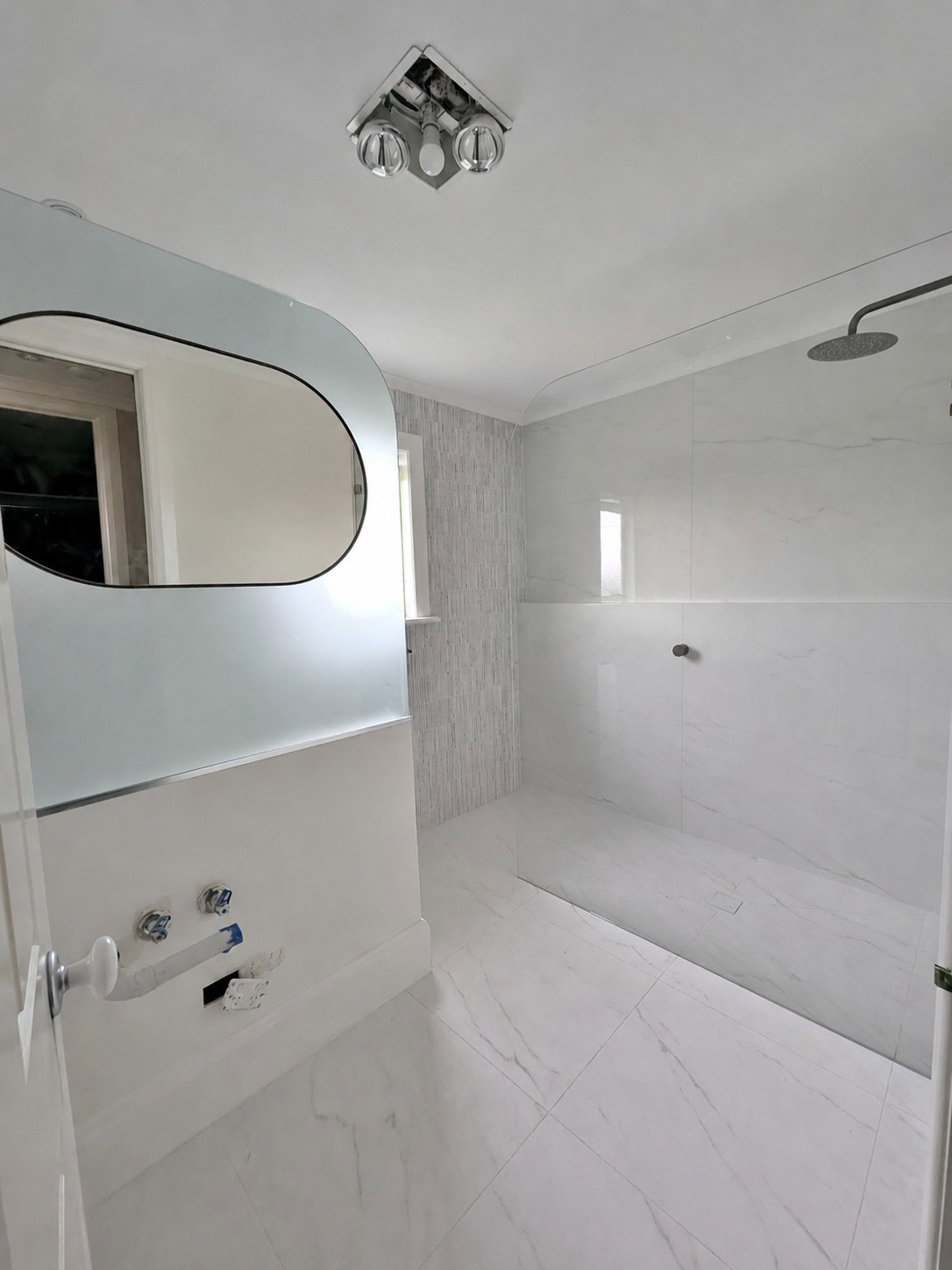
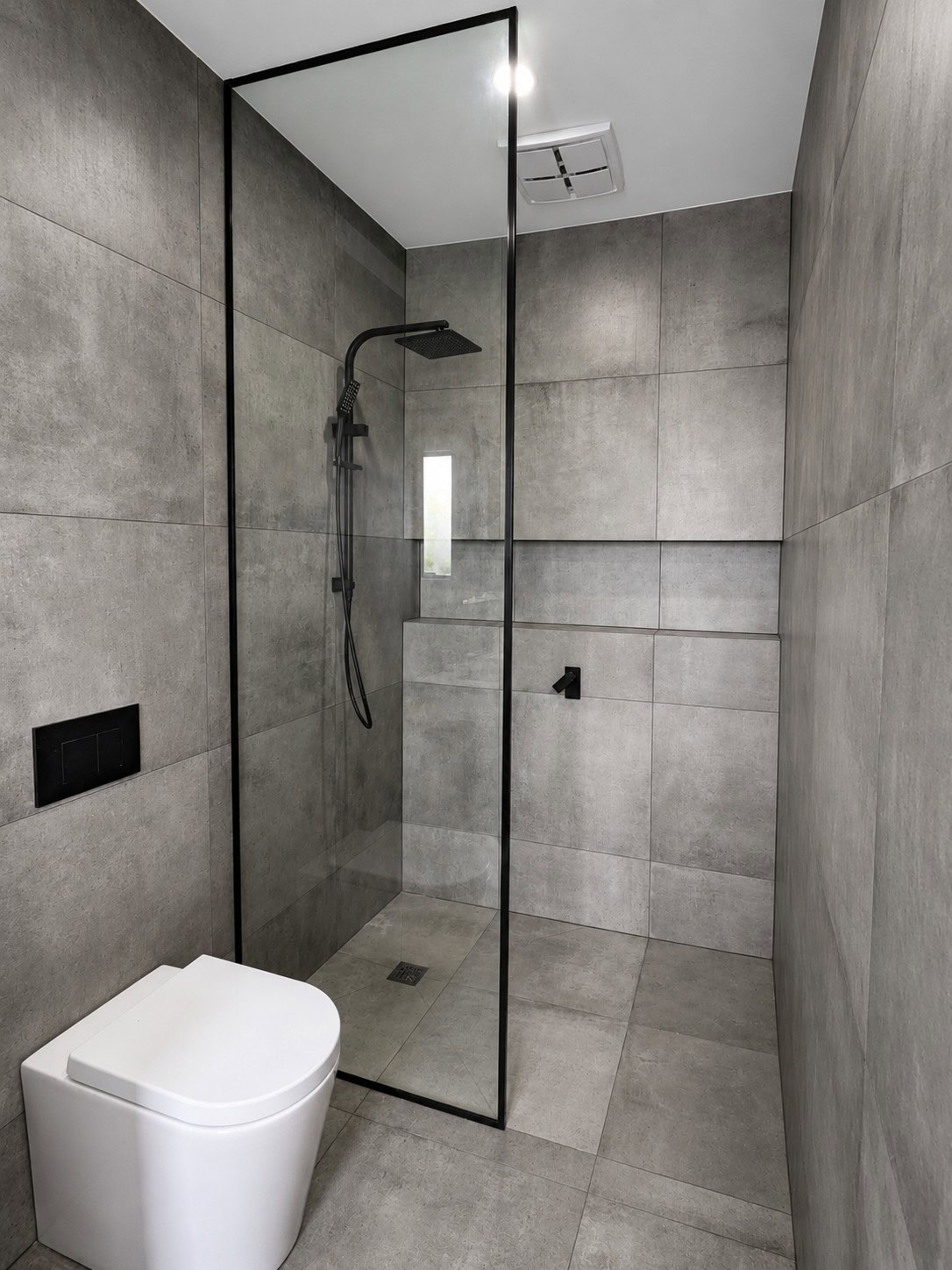
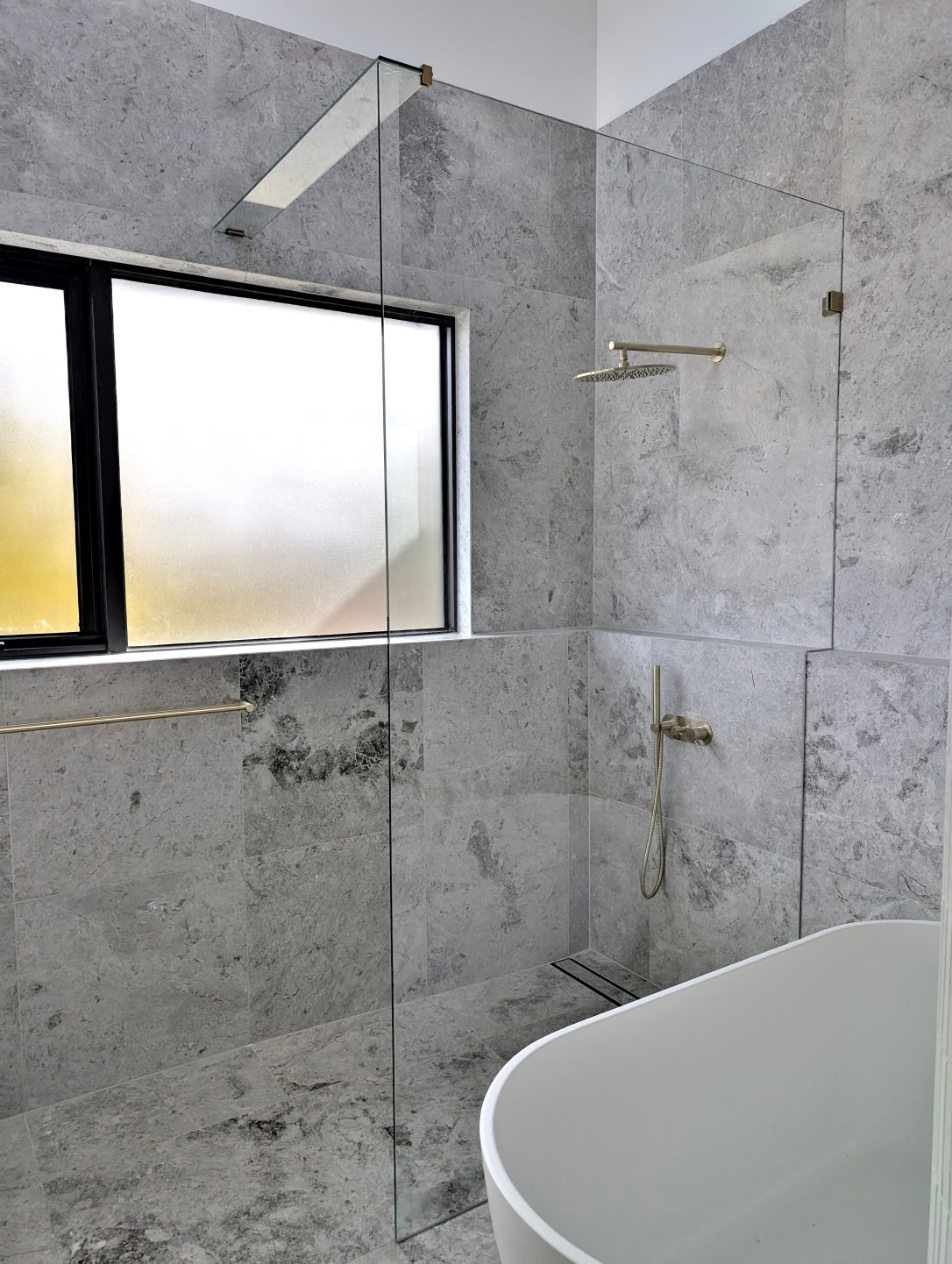
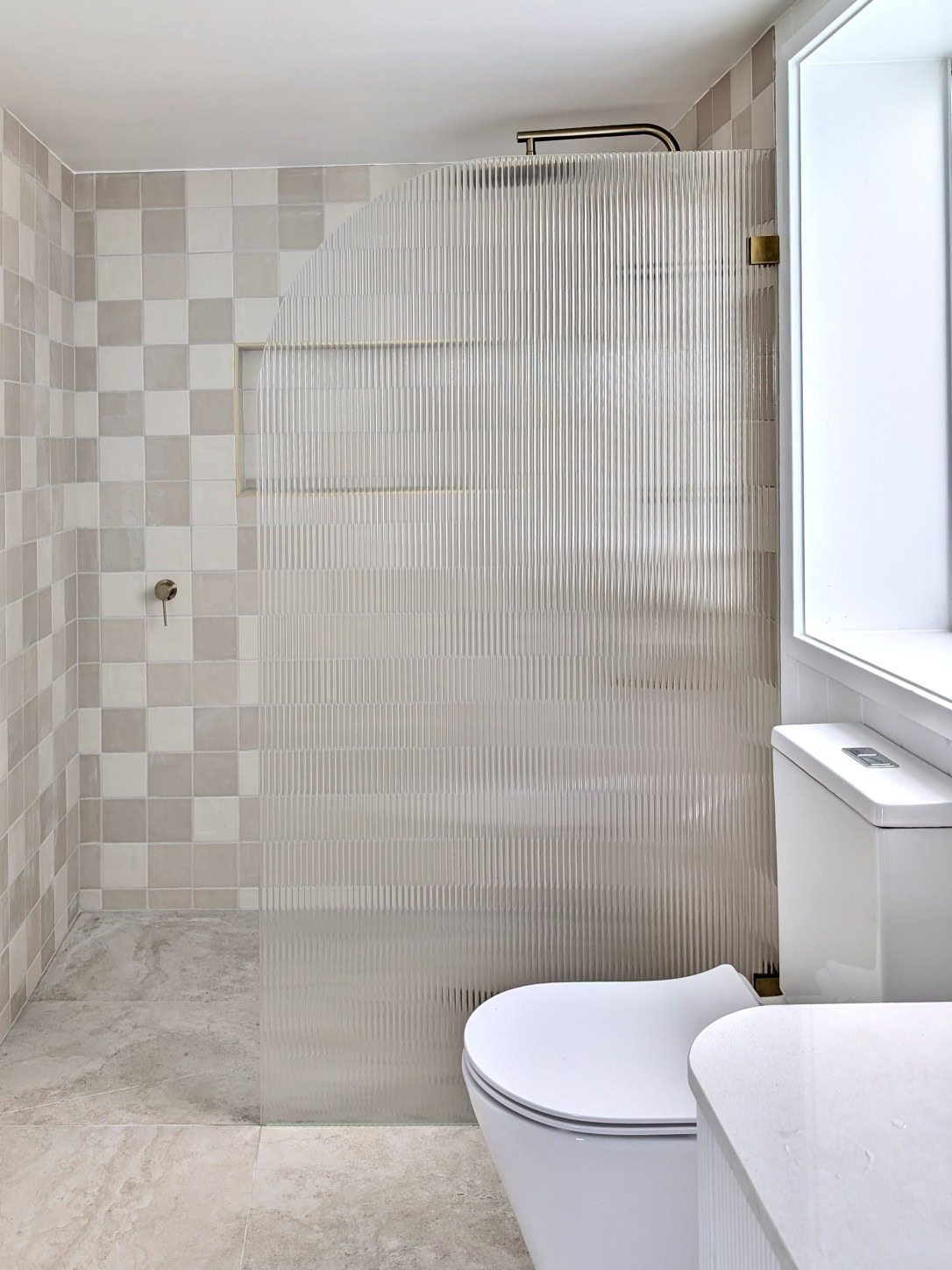
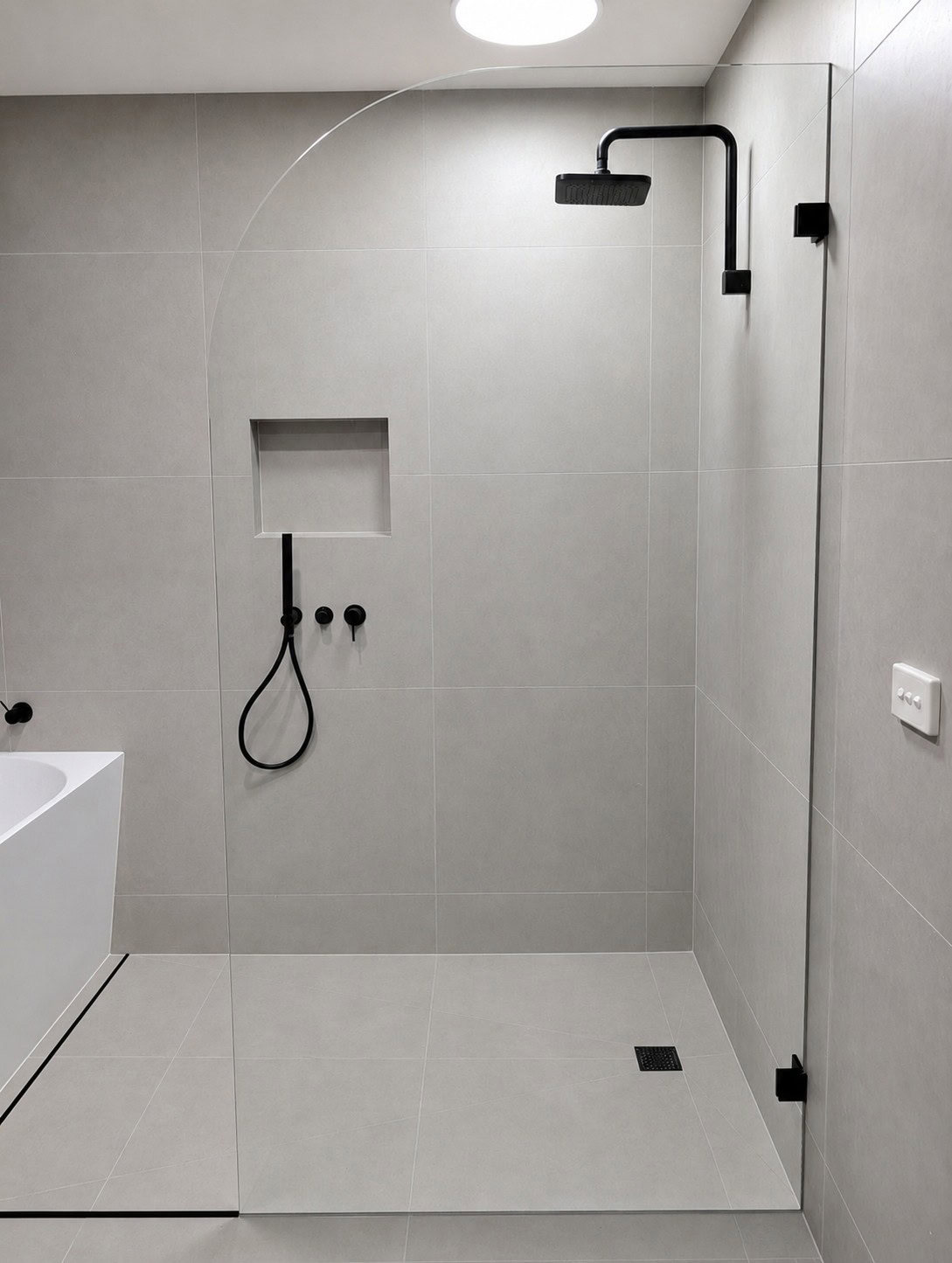
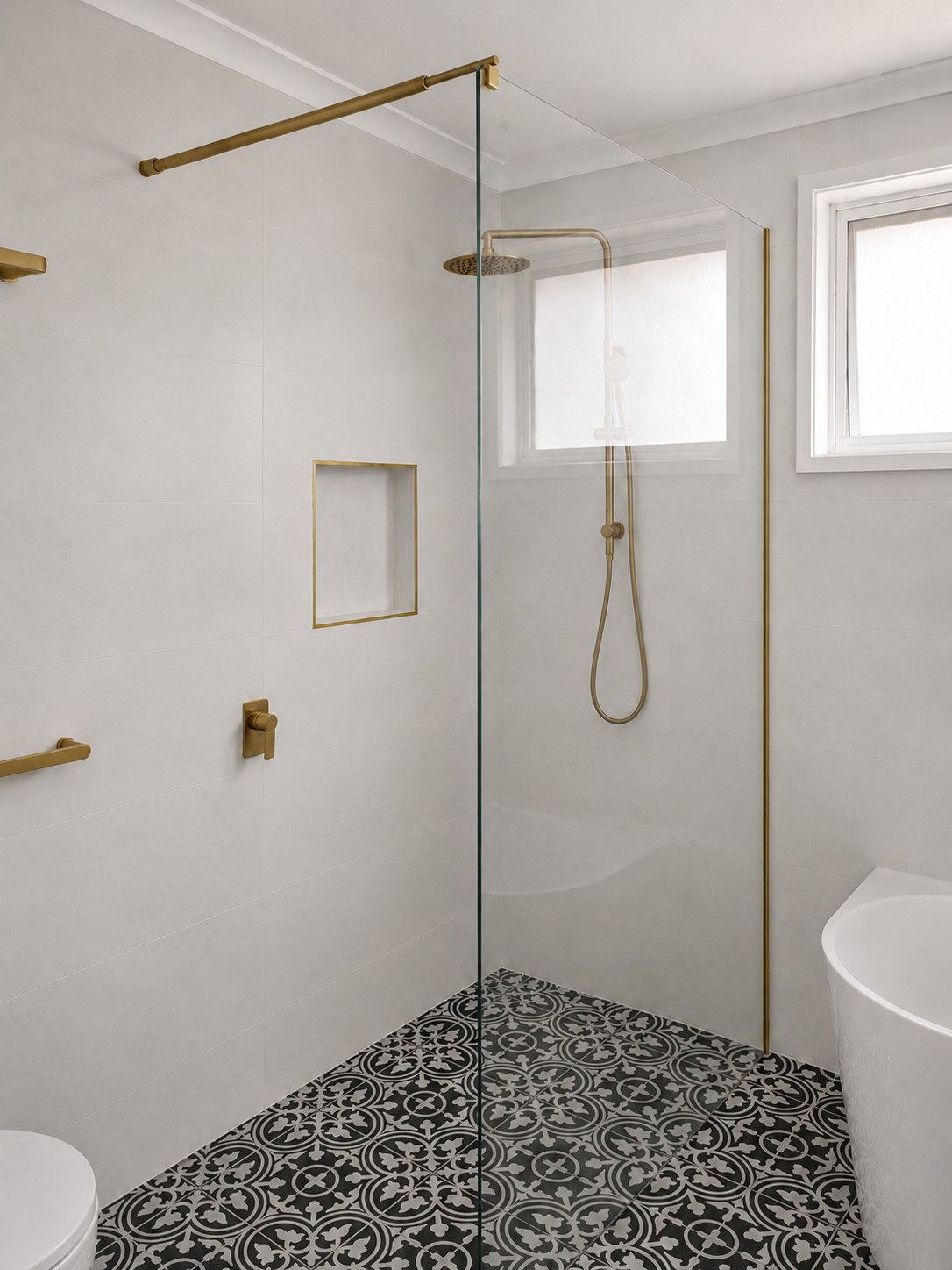
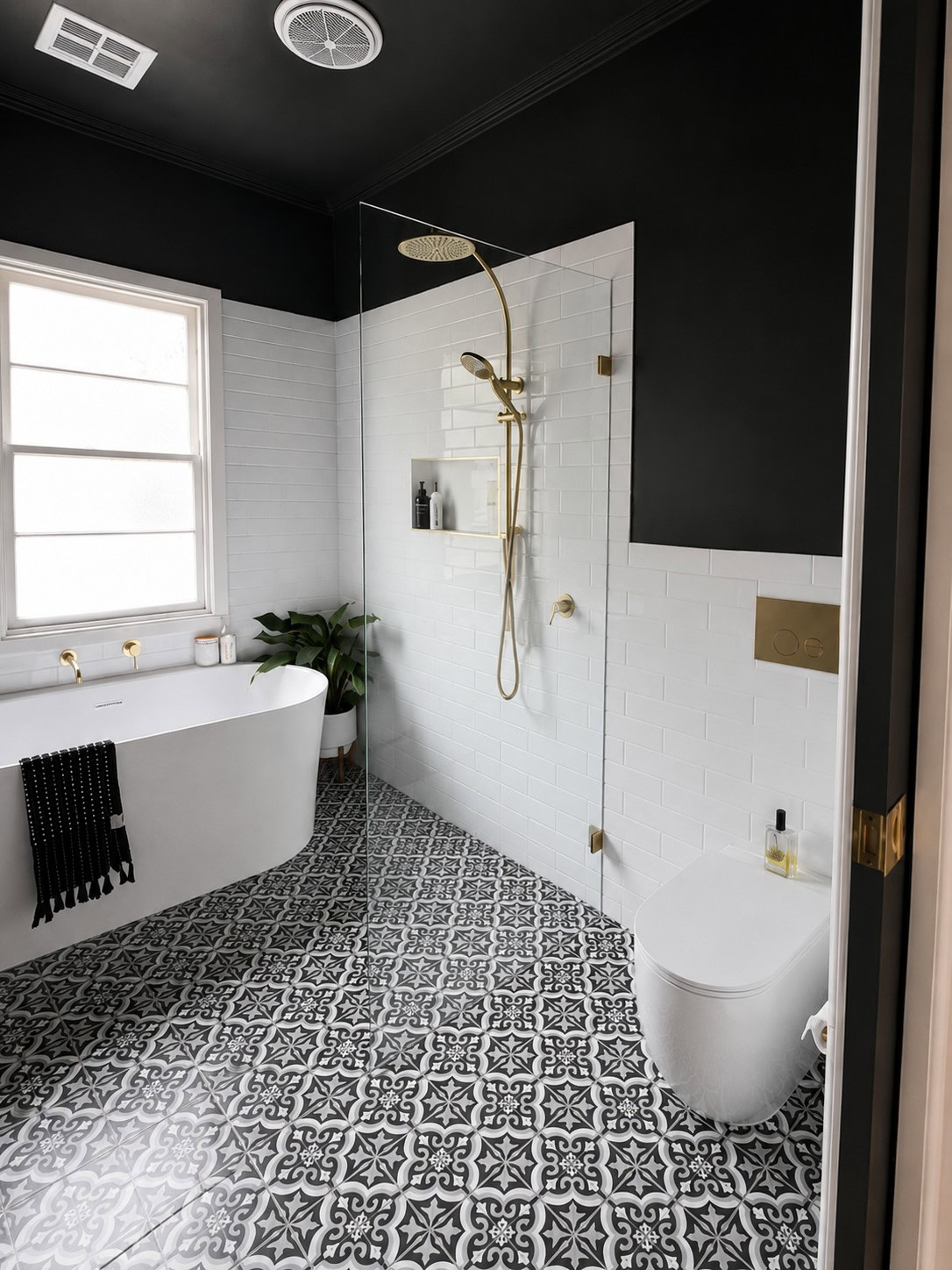
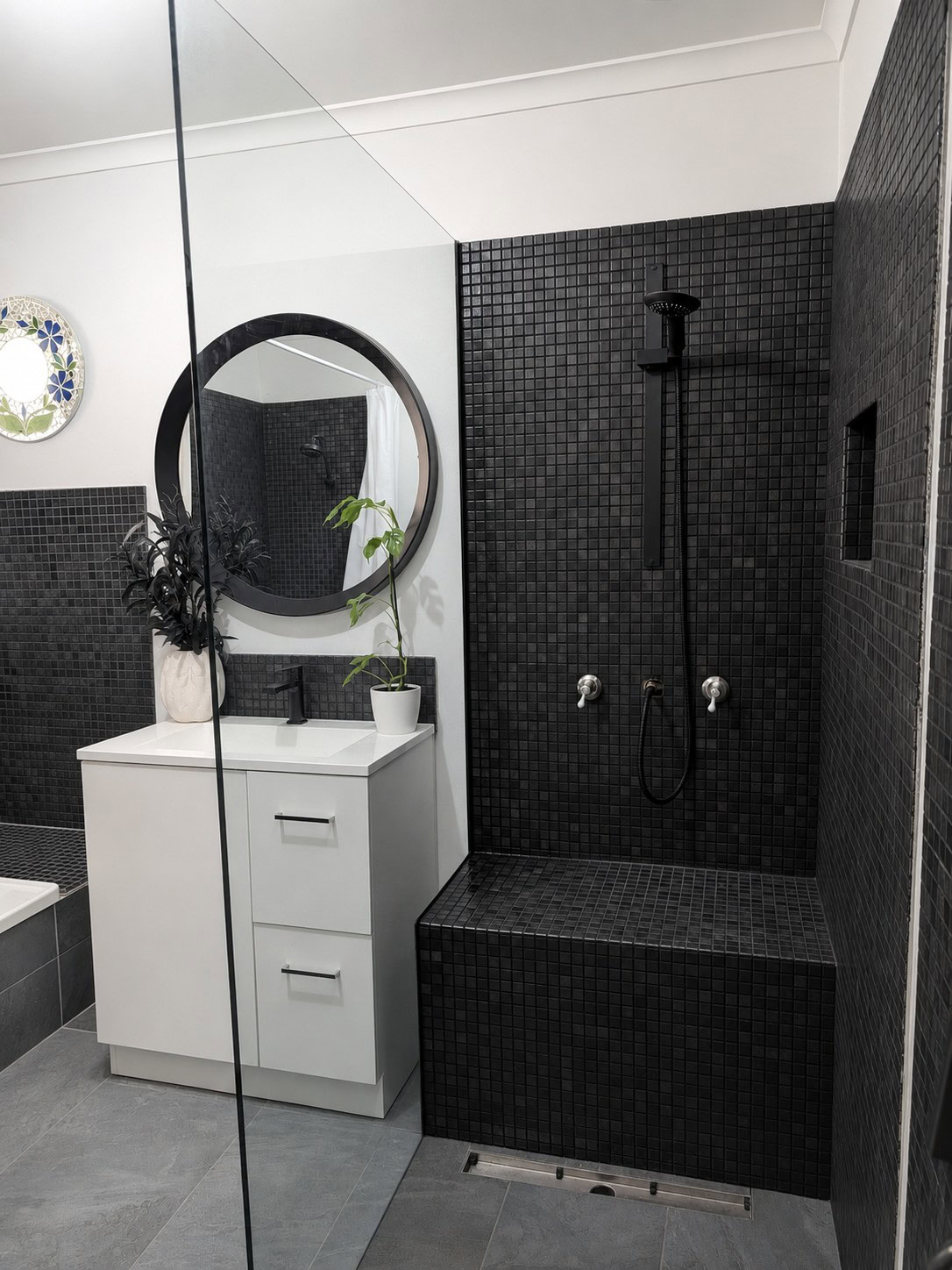
A selection of recent walk in shower screen installations across Melbourne, including fixed glass panels, curved glass, radius corners, full height layouts, low iron glass, reeded glass, black frame screens and custom hardware finishes such as chrome, brushed nickel, brushed brass, gunmetal and raw brass.
The gallery shows how different walk in shower screen layouts can be adapted to the finished bathroom, including open fixed panels, curved glass, full height screens and textured glass options.
Walk-in shower screens vs hinged and sliding shower screens
Walk-in shower screens are usually the cleanest option when the bathroom has enough room for an open entry layout, but they are not the right fit for every space. The best choice comes down to bathroom size, shower head position, floor fall, water control and how much entry space you want.
Walk-In Shower Screens
Walk-in shower screens are best when the bathroom has enough space for a fixed glass panel and open entry.
- No door or sliding track required
- Clean, minimal frameless appearance
- Open access into the shower area
- Works well in larger bathrooms and wet room style layouts
- Can work on half walls when planned early
- Needs enough shower depth and floor fall for good water control
Hinged or Sliding Screens
Hinged shower screens and sliding shower screens are often better when the shower opening needs to be closed off more. A hinged shower screen works more like a frameless glass shower door, while a sliding screen can suit tighter spaces where a door swing is not practical.
- Better suited to smaller shower openings
- Can help contain water more than an open walk-in layout
- Hinged shower doors give wide direct entry where there is swing clearance
- Sliding screens suit tighter bathrooms with limited door swing space
- Useful near vanities, toilets, baths and towel rails
- Can be considered when an existing walk-in shower is not practical
Planning a
Walk-In Shower?
Send through your plans, bathroom selections or a few photos of the space. We can help check whether a walk-in screen suits the layout, including half walls, existing panels, floor fall, glass size and hardware finish.
What happens next: we review your photos, plans or measurements, confirm the best screen option and usually come back with a price without needing a site visit first.
Walk-In
Shower
Screen
FAQs
Straight answers about walk-in shower screens, water control, panel sizing, half walls, glass options and whether an open shower layout will suit your bathroom.
How much does a walk in shower screen cost in Melbourne?
Standard size walk in shower panels generally range from $800 to $1,400. Larger panels, other glass options and selected hardware finishes cost more.
Send photos, plans or rough measurements and your preferred glass and finish for a price suited to your bathroom.
How long does a walk in shower screen take to make and install?
Manufacturing and installation is usually completed within 6 to 10 working days after final measurements. Final measurements are taken once tiling is complete.
Let us know your renovation timing when enquiring so we can plan the measure and installation.
What is a walk-in shower screen?
A walk-in shower screen is usually a fixed glass panel that separates the shower area from the rest of the bathroom without using a door. It creates an open entry shower layout with a clean, minimal look.
Walk-in screens are commonly used in larger bathrooms, ensuites and wet room style layouts where there is enough room for open access and good water control.
Are walk-in shower screens frameless?
Most walk-in shower screens we install are frameless or near frameless, using minimal fittings such as wall brackets, a slim wall channel, floor fixing or a support arm where required.
All our walk-in screens are custom made to suit the finished bathroom and can be designed as part of a frameless shower screen layout.
Do walk-in shower screens stop all water from escaping?
No. Because there is no door, water control depends on the panel size, shower head position, floor fall and how the shower is used.
Get those details right and most walk-in showers work very well. A larger fixed panel, good floor fall and a well positioned shower head will usually control water far better than a small panel in a tight layout.
How wide should a walk-in shower panel be?
As a rough guide, most walk-in shower panels are between 800mm and 1200mm wide, but the right size depends on where the shower head sits relative to the open entry.
A wider panel usually gives better water control, while a smaller panel keeps the entry more open. We measure and quote each walk-in screen based on the finished tiled bathroom rather than forcing the layout around a standard panel size.
Can walk-in shower screens be custom made?
Yes. Panel width, height, glass type, fixing method and wall alignment are all adjusted to suit the finished bathroom.
Final measurements are usually taken after waterproofing, wall tiling and floor tiling are complete so the glass can be made to the finished opening.
What glass thickness is used for walk-in shower screens?
Most frameless walk-in shower panels are made from 10mm toughened safety glass. This gives the panel a solid feel while keeping the screen clean and minimal.
Larger or full height panels may need extra planning around fixing points and support, which is why final measurements are taken on site before the glass is ordered.
Can I choose clear, low iron or fluted glass?
Yes. Walk-in shower screens can be made in standard clear glass, low iron glass or fluted / reeded glass, depending on the look and privacy level you want.
Clear glass is the most common and cost-effective option. Low iron glass gives a brighter ultra clear finish, while reeded glass adds privacy and texture.
Can a walk-in shower screen be full height?
Yes. A walk-in shower panel can be made as a full height shower screen where the design calls for taller glass or a more built in architectural look.
Full height panels need to be planned carefully around ceiling height, ventilation, fixing points and bathroom layout.
Can walk-in shower screens have black frames or grid panels?
Yes. Walk-in panels can be made with frameless glass, slim perimeter framing, black frame styling or grid style detailing depending on the look you want.
For a stronger feature look, you may also want to view our black frame shower screens.
What hardware finishes are available?
Walk-in shower panel hardware can be selected to work with your bathroom fittings, including brackets, wall channel, support arms and other visible fittings.
Common finishes include chrome, matt black, brushed brass and brushed nickel, along with gunmetal and other specialty finishes.
Are walk-in shower screens suitable for small bathrooms?
Sometimes, but not always. A walk-in shower screen needs enough space for open entry and enough glass coverage to help control water.
In tighter bathrooms, a hinged shower screen or sliding shower screen may be more practical.
Can a walk-in shower screen sit on top of a half wall?
Yes, a walk-in shower screen can often be installed on top of a tiled half wall. The glass can sit centred on the wall or closer to one side, depending on the bathroom layout, the water direction and how the wall is being used.
If the glass is positioned toward the outside of the half wall, the inside of the wall can sometimes be used more like a shelf. The important detail is fall. The top of the wall needs to allow water to run back into the shower area rather than sitting on the tiles.
Should the glass position on a half wall be planned before tiling?
Yes. The position of the glass should ideally be planned before the wall tiles and shower floor are finished. It can affect where the wall tiles finish, where the shower floor line ends and how the glass lines up with the rest of the bathroom.
Leaving the glass position until the end can limit the options, especially if the half wall is being used as a shelf or if the shower entry is close to the open end of the screen.
Can you add a door to an existing walk-in shower?
Sometimes, but it depends on the existing panel position, whether the glass is plumb, the remaining opening size, the floor fall and whether there is enough room for a practical door swing.
In some bathrooms, adding a door or extra glass is possible. In others, the better result is to remove the old panel and start again with a more practical custom layout. For existing screens, see our shower screen replacement page.
Can I replace a standard walk-in panel with a taller custom panel?
Yes. Many existing walk-in panels are standard height, often around 2000mm or 2100mm. A custom replacement can be made taller if the bathroom layout, glass size and fixing method allow it.
This can help the glass line up better with wall tiles, niches, ceiling lines or other bathroom features. It can also be a chance to change from a channel style installation to a cleaner bracketed finish. See our shower screen replacement page for more replacement options.
Have another question?
Send through your bathroom photos, plans or rough measurements and we’ll help work out the most practical option for your bathroom.